THE SIGNAL IN ONE SENTENCE
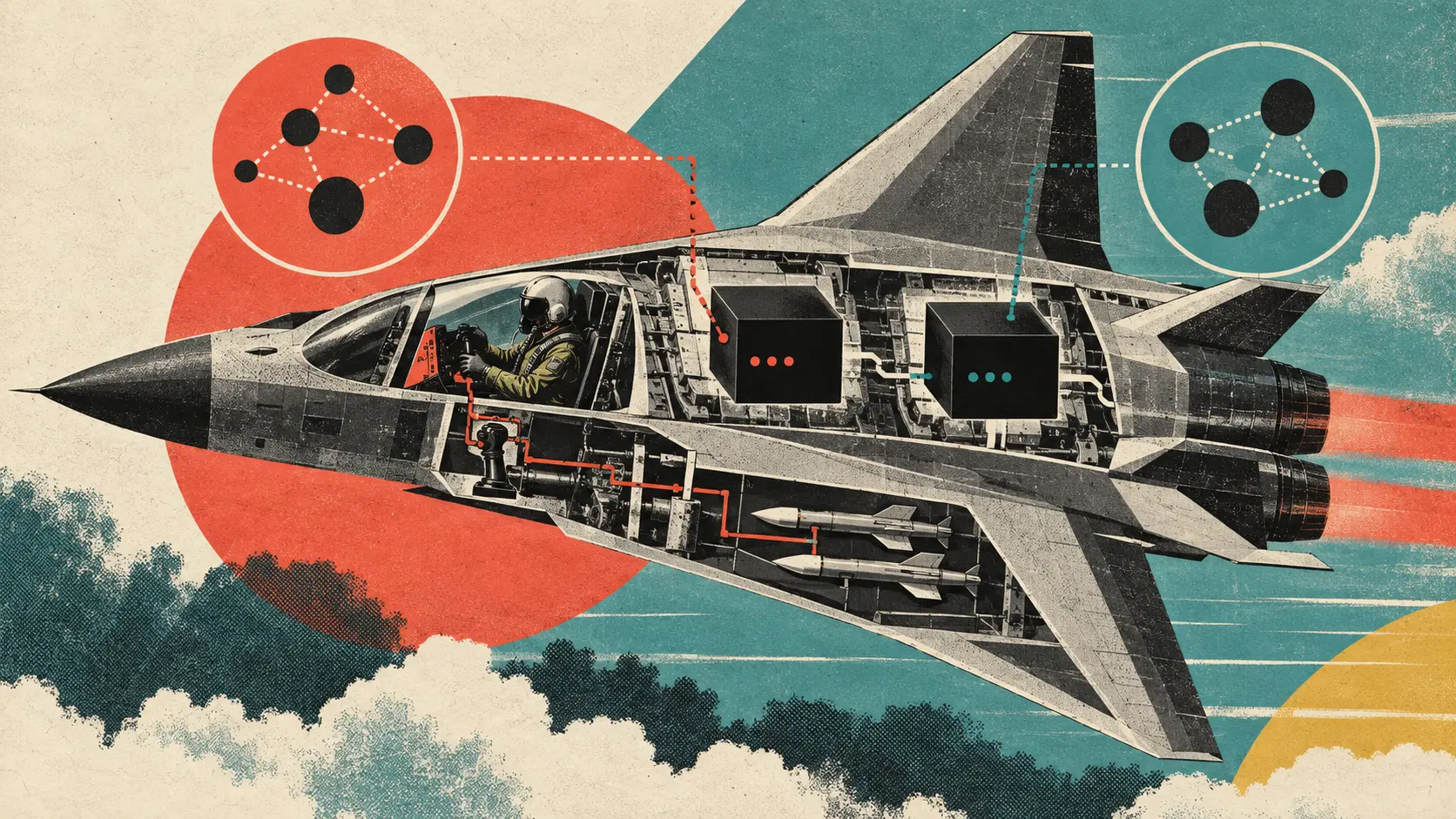
Dassault Aviation says it has flight-tested two new sovereign artificial-intelligence algorithms aboard a Rafale fighter. Dassault engineers developed one. The company developed the other with Thales and its cortAIx organization. Dassault describes the work as part of a broader effort to put controlled and supervised AI in the cockpit, serving the human crew, and says the tested functions reached enough maturity to be considered for future Rafale upgrades. That is the complete public result. The release does not say what either algorithm did. It does not say whether the software watched a sensor, sorted information, advised the crew, controlled a subsystem, changed the aircraft's flight path or touched a weapons function. It does not identify the date, place, number or duration of flights, the Rafale standard used, the test cases, the success measures, the failures, the computing hardware or the crew's authority to reject an output. Reuters separately reported the tests and the same lack of detail. This gap creates an unusually important grammar lesson. An AI algorithm flying aboard a fighter is not the same thing as AI flying the fighter. Running software in an airborne environment can show that it executes on embedded hardware under real vibration, temperature, power and latency constraints. It does not by itself show that the software is accurate, useful, safe, certified, connected to a consequential control or ready for combat. Dassault says access to real or simulated operational data, cooperation between AI specialists and aeronautical experts, and efficient use of constrained onboard computing were central challenges. Those are believable engineering problems. They are not performance results. The plain signal is that France's flagship combat-aircraft maker has moved two AI functions out of the laboratory and into flight, while withholding the category of work needed to interpret the milestone. National security can justify keeping tactics, thresholds and sensor details secret. It does not require the public to confuse presence with authority. A useful minimum disclosure would name the functional class, inputs, outputs, human confirmation rule, failure boundary and certification path without revealing how to defeat the system.
01
WHAT ACTUALLY CHANGED
Dassault Aviation announced on September 22 that it had flight-tested two sovereign AI algorithms aboard a Rafale combat aircraft.
Dassault engineers developed the first algorithm. The second was developed jointly with Thales through the cortAIx organization.
The company places the tests inside a broader effort to integrate controlled and supervised AI into the cockpit in support of the human crew.
Dassault says the tested functions reached a maturity level that makes them eligible for possible future Rafale upgrades. Eligible is not selected, certified, deployed or operational.
The primary release identifies access to real or simulated operational data, cooperation between AI and aeronautical experts, and efficient use of limited embedded computing resources as major engineering challenges.
The company does not identify the algorithms' functional category, inputs, outputs, model type, training method, level of authority or connection to any aircraft subsystem.
No public test card states the flight date, location, aircraft standard, number of sorties, flight hours, weather, scenarios, baseline, success threshold or observed failures.
No public result shows accuracy, latency, reliability, false alarms, missed events, crew workload, disengagements, safe-state behavior or performance under degraded sensors and communications.
The release does not say that either algorithm controlled the aircraft, selected a target, released a weapon or coordinated an uncrewed aircraft. None of those conclusions is supported by the announcement.
Reuters independently reported the announcement and noted that Dassault supplied no details about the tests or the roles of the algorithms.
Dassault's official Rafale material describes the aircraft as a multi-role combat platform with an integrated sensor and mission system. That complexity makes the missing functional boundary more important, not less.
There is no disclosed operational fielding decision, customer order, military acceptance, airworthiness approval or timetable for an upgrade containing either function.
02
WHY THIS MATTERS
Military AI is not one thing. A maintenance predictor, radar-image classifier, threat-prioritization aid, navigation assistant and flight-control agent create radically different hazards. The function determines the evidence required.
Presence is the lowest rung of the authority ladder. Software can run aboard an aircraft without being allowed to recommend an action, and it can recommend an action without being allowed to execute one.
A flight test can answer questions that a laboratory cannot. Vibration, electromagnetic interference, heat, power limits, intermittent data and timing pressure all matter. It still needs a defined task and measurement plan before the result means much.
The phrase controlled and supervised AI sounds reassuring, but it does not define control. Readers need to know whether supervision occurs before every consequential action, after an action begins, only when the system asks for help or through a final emergency override.
Human in command is stronger than human in the loop. A crew member can technically sit inside a loop while facing an opaque recommendation, a two-second deadline and an interface designed to encourage acceptance.
Cockpit automation can reduce workload and also create automation surprise. If the system changes modes, hides uncertainty or behaves differently at the edge of its training data, the crew may discover its limits during the worst possible minute.
Embedded hardware forces tradeoffs. A model that fits the aircraft's power, cooling and latency budget may differ from the model tested on a ground server. The deployed version and its exact configuration need to be pinned and logged.
Sensor data can be incomplete, contradictory, spoofed or intentionally manipulated. A military system needs tests for deceptive inputs, GPS denial, communications loss and disagreements among sensors, not only clean demonstration cases.
Sovereign AI usually signals national control over technology, data, suppliers or decision-making. It does not establish accuracy, safety, explainability or compliance with the law of armed conflict.
Classification creates a real disclosure constraint. The answer is layered evidence: keep tactical parameters secret while an authorized independent body inspects the full system and the public receives a category-level account of authority and assurance.
Version control is an airworthiness issue. A change to weights, prompts, preprocessing, sensor calibration or routing can alter behavior even when the cockpit label stays the same.
The useful question is not whether AI flew. It is what decision the software was permitted to influence, what evidence supported that decision, who could stop it and what happened when the software was wrong.
03
WHERE IT COULD HELP
- Publish the functional category for each algorithm, such as sensor processing, information prioritization, navigation support, maintenance prediction or control, without revealing tactical parameters.
- Draw an authority map that names every input, intermediate recommendation, output, affected subsystem, human confirmation step and hard prohibition.
- Pin the model, preprocessing code, sensor configuration and compute stack used in every sortie so a later result can be reproduced against the exact airborne version.
- Begin with shadow mode, where the algorithm observes the flight and records recommendations but cannot change the aircraft or crew display.
- Compare outputs with a defined baseline and expert judgment, then report misses, false alarms, latency and calibration instead of one blended success score.
- Inject sensor dropouts, conflicting tracks, spoofed signals, communications loss, timing delays and out-of-distribution conditions before widening authority.
- Measure crew workload, mode awareness, trust calibration, reaction time and recovery after a bad recommendation with representative pilots and mission scenarios.
- Require a clear safe state, a physical or software disengagement path and a rule that loss of confidence cannot silently increase system authority.
- Keep tamper-evident logs of inputs, outputs, model version, confidence, human decisions, overrides and subsystem actions for every test and operational use.
- Separate the development team from the acceptance authority. Give military test organizations and airworthiness specialists access to the full evidence, including failures.
- Define the update process before deployment. A new model or data pipeline should trigger regression testing, configuration review and renewed approval where behavior can change.
- Report the number of sorties, flight hours, scenario coverage, disengagements, aborted tests and unresolved anomalies, even when the tactical details remain classified.
- Do not connect the system to weapons or flight controls merely because a less consequential advisory task performed well. Each increase in authority needs its own evidence.
- Give crews an interface that shows system mode, permitted authority, uncertainty, data quality and the reason a recommendation matters without burying them in machine telemetry.
KEEP A HAND ON THE WHEEL
Dassault's September 22 announcement verifies that two AI algorithms were flight-tested aboard a Rafale, identifies their developers and frames them as controlled and supervised support for the human crew. It does not disclose what either function did. There is no public evidence that an algorithm controlled the aircraft, selected or engaged a target, operated a weapon, directed an uncrewed aircraft or made an autonomous combat decision. The company does not publish flight dates, location, number of sorties, aircraft configuration, model architecture, training data, inputs, outputs, authority level, evaluation protocol, comparison baseline, accuracy, latency, false alarms, misses, failures, pilot workload, overrides, compute hardware, certification work or independent validation. The claim that the functions reached maturity for potential future upgrades is a company judgment, not an operational acceptance decision. Reuters confirms the announcement and the missing role details, but it is not a technical test report. National-security restrictions may reasonably protect tactics and system parameters. They do not convert an unspecified airborne test into proof of effectiveness or safe autonomy. Watch for a functional category, authority boundary, flight-test record, human-factors results, airworthiness pathway, independent military evaluation, named upgrade standard and evidence that failure leaves the crew with a predictable aircraft.
04
TERMS WORTH KEEPING
SOURCES AND VERIFICATION STATUS
This article was written from the materials below. Product claims and dates were checked against those sources on September 23, 2026.
PUBLICATION RECEIPT: Revision 1. Published September 23, 2026.
THE PUBLICATION ENGINE
WANT A SIGNAL OF YOUR OWN?
We build source-grounded publications, private briefings, and editorial systems for organizations with something useful to say.
WORK WITH US