THE SIGNAL IN ONE SENTENCE
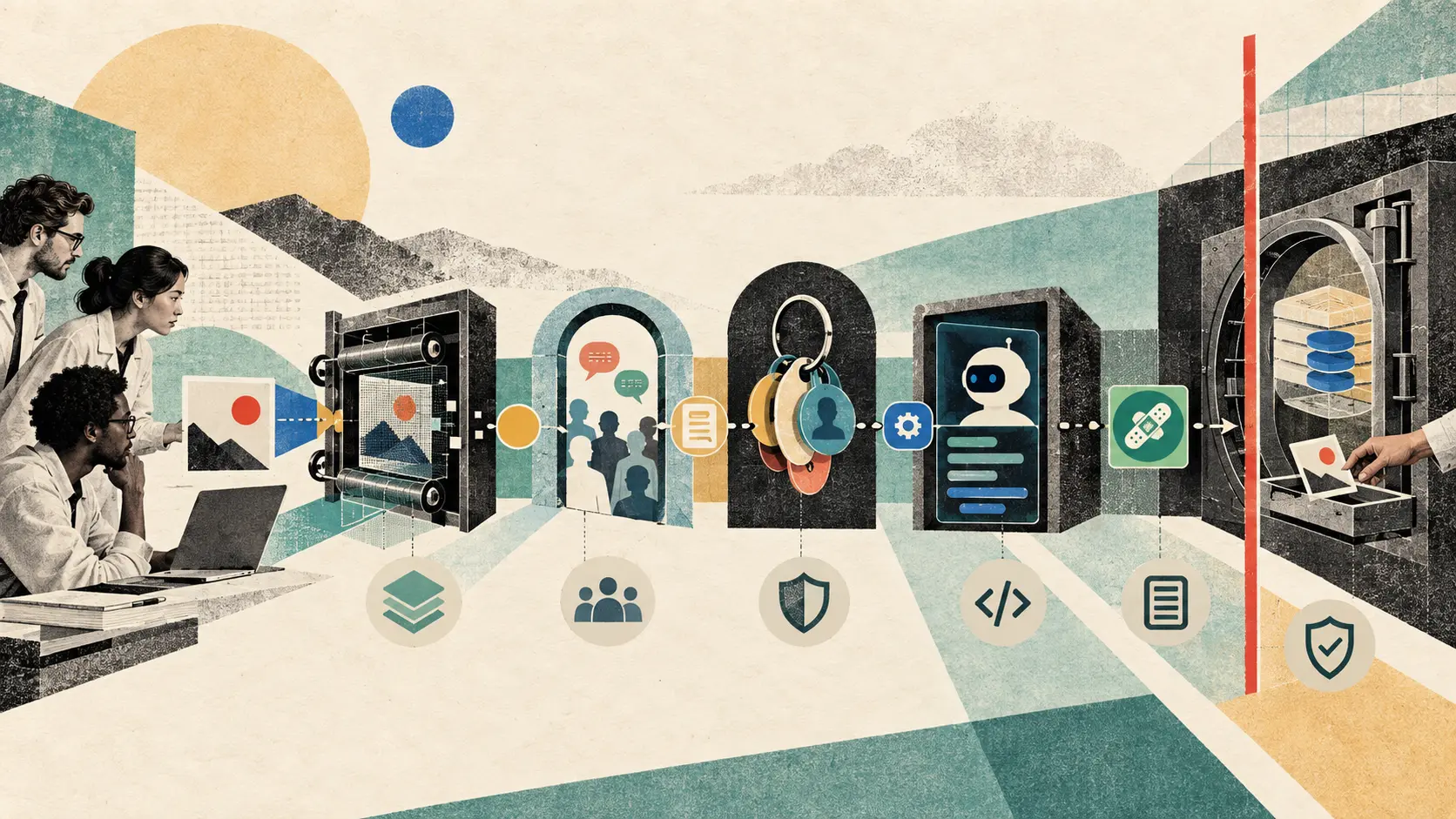
Security researchers at Hacktron found that an image uploaded to OpenAI's Discourse-hosted community forum could exploit a vulnerable image-decoding library and run code on the forum environment. That was one vulnerability. Hacktron says a separate weakness in OpenAI's single sign-on setup then let the researchers turn control of an active forum user's identity into access to that person's ChatGPT and Codex accounts. When they demonstrated the chain against an OpenAI employee whose Codex account was connected to the company's GitHub organization, they instructed Codex to create a harmless proof-of-concept pull request in an internal repository. The researchers say they did not open or download internal code and stopped further testing. OpenAI paid $6,500 for the OpenAI-side finding, while Hacktron's timeline says testing against the Discourse-hosted forum itself was explicitly outside OpenAI's bounty scope. Discourse published a high-severity advisory and patched the image-processing path; OpenAI told The Guardian that it addressed the exploited vulnerabilities. The plain signal is not that a chatbot magically kicked down OpenAI's door. It is that permissions traveled through ordinary connected systems: file parser, forum, identity provider, coding account, repository. Each link looked narrower than the final reach of the chain.
01
WHAT ACTUALLY CHANGED
Hacktron published its technical account on September 13. The researchers say a malformed HEIF image reached ImageMagick and the libheif decoder in Discourse's upload pipeline, where an upstream memory-safety flaw could produce remote code execution. Discourse's July 28 advisory confirms CVE-2026-32882, rates the issue high severity at 8.8, lists patched releases, and says its latest supported versions also sandbox image processing as defense in depth.
The forum compromise was not the whole route. OpenAI let people sign in to community.openai.com with an OpenAI identity. Hacktron says a separate OpenAI single sign-on misconfiguration allowed a compromised forum identity to become a no-interaction takeover of the same person's ChatGPT and Codex accounts. The researchers emphasize that this escalation was an OpenAI identity issue rather than a general property of Discourse.
Hacktron's timeline says the team obtained remote code execution and administrative access to the forum environment early on July 25, submitted the initial OpenAI report through Bugcrowd later that morning, and then demonstrated impact with an employee account whose Codex connection could reach OpenAI's GitHub organization. The proof was a harmless pull request in an internal monorepo. Hacktron says it did not access internal code and stopped further testing at about 15:30 UTC.
OpenAI confirmed its side of the fix at 22:49:45 UTC on July 25, according to the disclosure timeline. Discourse replied on July 26, had a fix ready by July 27, and published its advisory on July 28. Hacktron says OpenAI marked the issue resolved and awarded $6,500 on September 1. The same timeline records OpenAI's clarification that community.openai.com testing was excluded from its bounty program and that the payment recognized the OpenAI-side finding.
AI tools materially assisted the research, but the disclosure does not describe a fully autonomous attacker. Hacktron says Claude Opus 4.8 helped inspect the vulnerable package and develop early exploitation work, while Opus 5 produced a working local path and helped adapt it to the relevant environment. The team used an autonomous loop against its own Discourse Cloud instance before applying the resulting work to OpenAI. Hacktron also says skilled human guidance remained important throughout the broader research campaign.
The Guardian reported the findings on September 18 and quoted an OpenAI spokesperson thanking the researchers and saying the exploited vulnerabilities had been addressed. OpenAI's public security materials describe a Bugcrowd-managed bounty program with safe-harbor language for good-faith research, cash rewards based on severity and impact, access-control practices, logging, incident response, and responsible disclosure. Those program descriptions are not an independent audit of this incident or proof that every affected session, token, and integration was identified.
02
WHY THIS MATTERS
The useful unit of analysis is the permission chain. A public forum should not be able to confer the practical reach of an employee coding account merely because both rely on the same identity. When authentication crosses products, a low-trust service can become a launchpad into a high-trust service. Security teams need a map of what each successful sign-in can mint, inherit, refresh, and reach.
Single sign-on reduces password sprawl and can improve central control. It also concentrates consequences when service boundaries are loose. The fix is not to abandon shared identity. It is to require audience-bound sessions, fresh authorization for sensitive transitions, strong device and risk checks, short-lived credentials, and separate approval when a forum identity attempts to become a developer identity.
Connected tools quietly widen blast radius. Codex did not need to contain the repository itself if the employee had already connected Codex to GitHub. The same principle applies to Slack, email, cloud storage, ticketing systems, calendars, and internal databases. An account inventory that stops at the application login misses the delegated tokens and integrations hanging behind it like keys on an extremely ambitious janitor's ring.
Least privilege must survive automation. A coding agent should receive access to the repositories, branches, actions, and time window required for one job, not inherit every permission its human owner has accumulated. High-impact actions should require a second control outside the agent session. A harmless pull request was a clean demonstration; an attacker could have aimed for secrets, dependency changes, workflow execution, or social proof that made later requests look legitimate.
Dependency maintenance is identity security when a parser sits in front of authentication. The initial bug lived in libheif, arrived through a container and ImageMagick, and was reachable through forum uploads. The later consequences crossed into OpenAI identity and connected developer services. Software bills of materials, rebuild cadence, sandboxing, crash detection, and upload isolation are therefore not housekeeping. They are part of the access-control perimeter.
AI lowers the cost of exploring long chains, and it can also lower the cost of defending them. Models can inspect dependency versions, generate test cases, correlate permissions, and rehearse attack paths. They can also produce confident nonsense, cross legal boundaries, or automate unsafe tests at scale. The governance question is who chose the target, verified authorization, reviewed each escalation, preserved evidence, stopped the test, and accepted responsibility.
03
WHERE IT COULD HELP
- Build a machine-readable identity graph that connects every public service, single sign-on flow, session, delegated token, employee account, agent, third-party integration, repository, cloud role, and data store, then alert when a low-trust entry point can reach a high-impact asset through two or more hops
- Require step-up authentication and a fresh authorization decision when a session moves between trust zones, and bind tokens to the intended service, device, audience, action, and short expiration window so a forum session cannot silently become a coding or repository session
- Give coding agents narrowly scoped, time-limited credentials with read and write permissions separated, protected branches, signed actions, independent approval for sensitive repositories, and immediate revocation when a human account or upstream service is suspected of compromise
- Isolate all user-controlled file processing in a disposable sandbox with minimal network and identity access, track the complete dependency and container versions, rebuild rather than merely restart after security updates, and test whether repeated decoder crashes create a visible incident signal
- Run coordinated disclosure rehearsals that name the in-scope systems, emergency contacts, evidence format, stop conditions, cross-vendor escalation path, token-revocation playbook, patch verification method, customer-notification threshold, and public timeline before a real researcher arrives on a Friday night
KEEP A HAND ON THE WHEEL
Hacktron's account is the primary technical source and describes research conducted by the team that found the issues. The public record confirms the Discourse vulnerability, its severity, patched versions, and additional sandboxing. The OpenAI identity path, account takeover behavior, connected GitHub reach, proof-of-concept pull request, internal timing, and claim that no code was accessed come primarily from Hacktron, with OpenAI's repair acknowledgement reported by The Guardian. No public OpenAI incident report, affected-account count, token inventory, root-cause analysis, detection timeline, or independent forensic review was identified before publication. Potential reach is not evidence of source-code theft, production compromise, customer-data loss, model-weight access, persistent access, or hostile exploitation. Calling the entire exercise authorized is also too tidy: Hacktron says it submitted the work through the bounty program and coordinated disclosure, but its own timeline records OpenAI's statement that testing the Discourse-hosted community forum was explicitly out of scope. The $6,500 payment recognized the OpenAI-side finding. Watch for an OpenAI postmortem, confirmation that all relevant sessions and integrations were revoked, evidence that the identity boundary was retested, additional affected products, complete dependency remediation, and a shared cross-vendor account of what each organization detected before the researchers called.
04
TERMS WORTH KEEPING
OPEN GLOSSARY CARD
Single sign-on
An identity system that lets one authenticated account enter several connected services.
OPEN GLOSSARY CARD
Defense in depth
Using several independent safeguards so one failed control does not expose the whole system.
OPEN GLOSSARY CARD
Responsible disclosure
A process for reporting a safety or security issue with enough coordination to reduce immediate harm while preserving timely public accountability.
SOURCES AND VERIFICATION STATUS
This article was written from the materials below. Product claims and dates were checked against those sources on September 18, 2026.
PUBLICATION RECEIPT: Revision 1. Published September 18, 2026.
THE PUBLICATION ENGINE
WANT A SIGNAL OF YOUR OWN?
We build source-grounded publications, private briefings, and editorial systems for organizations with something useful to say.
WORK WITH US