THE SIGNAL IN ONE SENTENCE
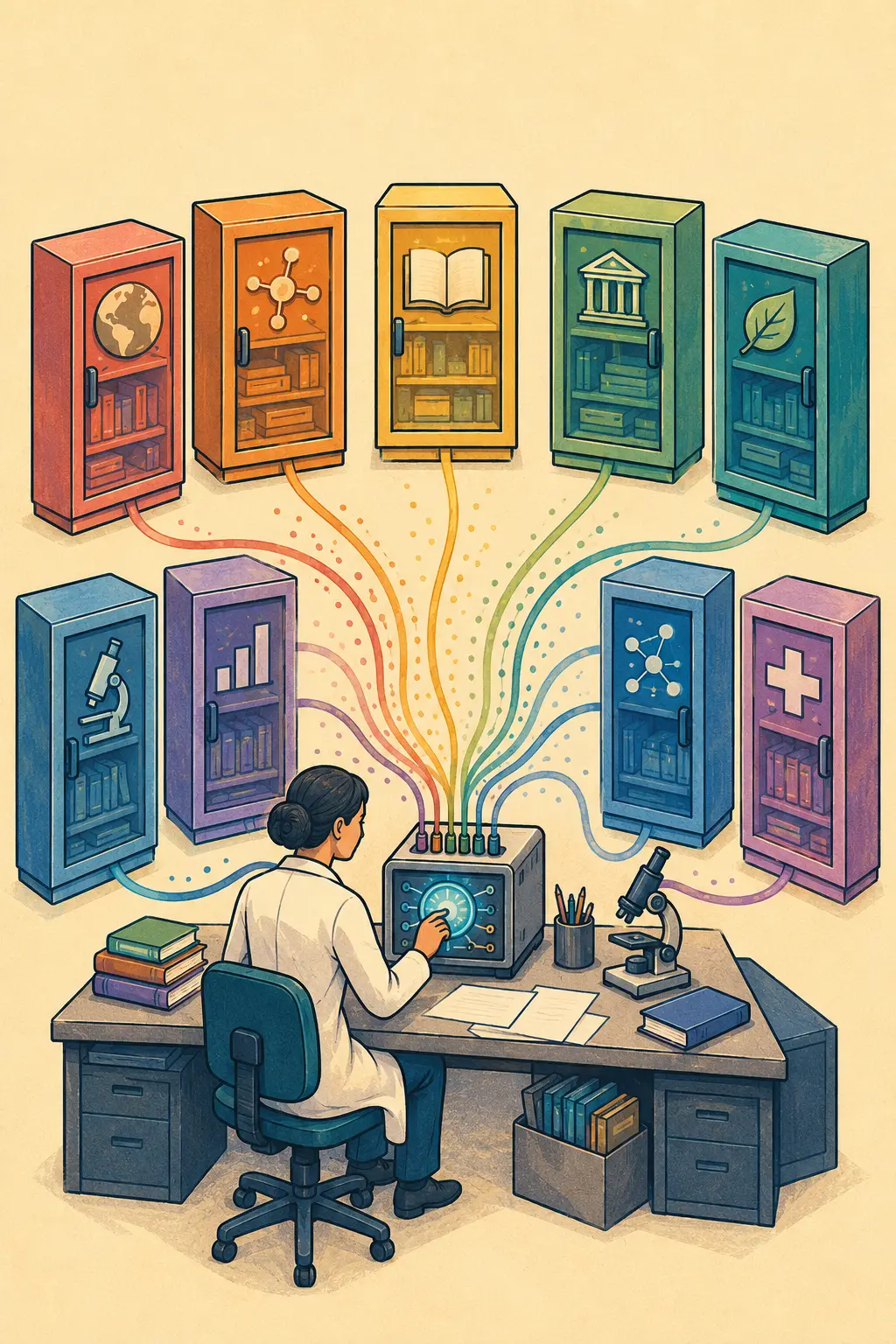
Healthcare workers can ask one assistant to search several public medical databases while keeping patient charts outside the connection.
01
WHAT ACTUALLY CHANGED
OpenAI released Healthcare Public Data for eligible U.S. clinical and healthcare workspaces. The read-only plugin connects nine public sources, including PubMed, ClinicalTrials.gov, DailyMed, RxNorm, openFDA, CMS coverage and open-data resources, Medicare Care Compare, and the National Provider Identifier Registry.
The connections give ChatGPT and Codex explicit routes into systems clinicians and healthcare analysts already consult. A user can compare research literature with active trials, look up a medication label, inspect an FDA safety notice, find a provider identifier, or explore Medicare coverage data without opening nine separate search tabs.
The boundary is important. These are public reference sources, not patient charts. OpenAI says the plugin does not access electronic health records and warns users not to include protected health information in searches of the public systems. Read-only access also means the assistant cannot update a trial, change a medication record, or write into a government database.
Availability is limited to supported ChatGPT for Healthcare, eligible HIPAA-oriented Enterprise workspaces, and qualifying U.S. ChatGPT for Clinicians environments. The public sources do not require separate accounts, but workspace eligibility and administrator choices still determine who can use the collection.
02
WHY THIS MATTERS
Healthcare AI is often described as a contest between model memory and medical expertise. This release points toward a more dependable design: the model helps formulate and connect questions while authoritative systems supply the current labels, registrations, trials, and publications.
Grounding does not make an answer clinically correct. Public databases can be incomplete, delayed, or difficult to interpret, and a relevant paper is not the same thing as a treatment decision. What grounding does provide is a trail a qualified person can inspect instead of trusting a fluent recollection.
The source boundary is also a product feature. By saying what the plugin cannot see and warning against PHI, OpenAI makes it easier to understand which conversations belong in a public-data workflow and which require a properly configured clinical system.
03
WHERE IT COULD HELP
- Compare published research with active clinical-trial listings
- Check medication labels, identifiers, and FDA safety information
- Research Medicare coverage, utilization, and facility quality data
- Locate provider identifiers and public organizational records
KEEP A HAND ON THE WHEEL
The connected sources are public reference data and still require professional interpretation. Users should not include PHI, assume the assistant has a patient’s chart, or treat a sourced summary as diagnosis or clinical advice.
04
TERMS WORTH KEEPING
OPEN GLOSSARY CARD
Tool calling
A model requests a defined action instead of trying to answer from memory.
OPEN GLOSSARY CARD
Grounding
Connecting an AI answer to specific outside information that can support it.
OPEN GLOSSARY CARD
PHI
Protected health information that can identify a person and relates to their health or care.
SOURCES AND VERIFICATION STATUS
This article was written from the materials below. Product claims and dates were checked against those sources on September 1, 2026.
PUBLICATION RECEIPT: Revision 1. Approved by Zak and published September 1, 2026.
THE PUBLICATION ENGINE
WANT A SIGNAL OF YOUR OWN?
We build source-grounded publications, private briefings, and editorial systems for organizations with something useful to say.
WORK WITH US