THE SIGNAL IN ONE SENTENCE
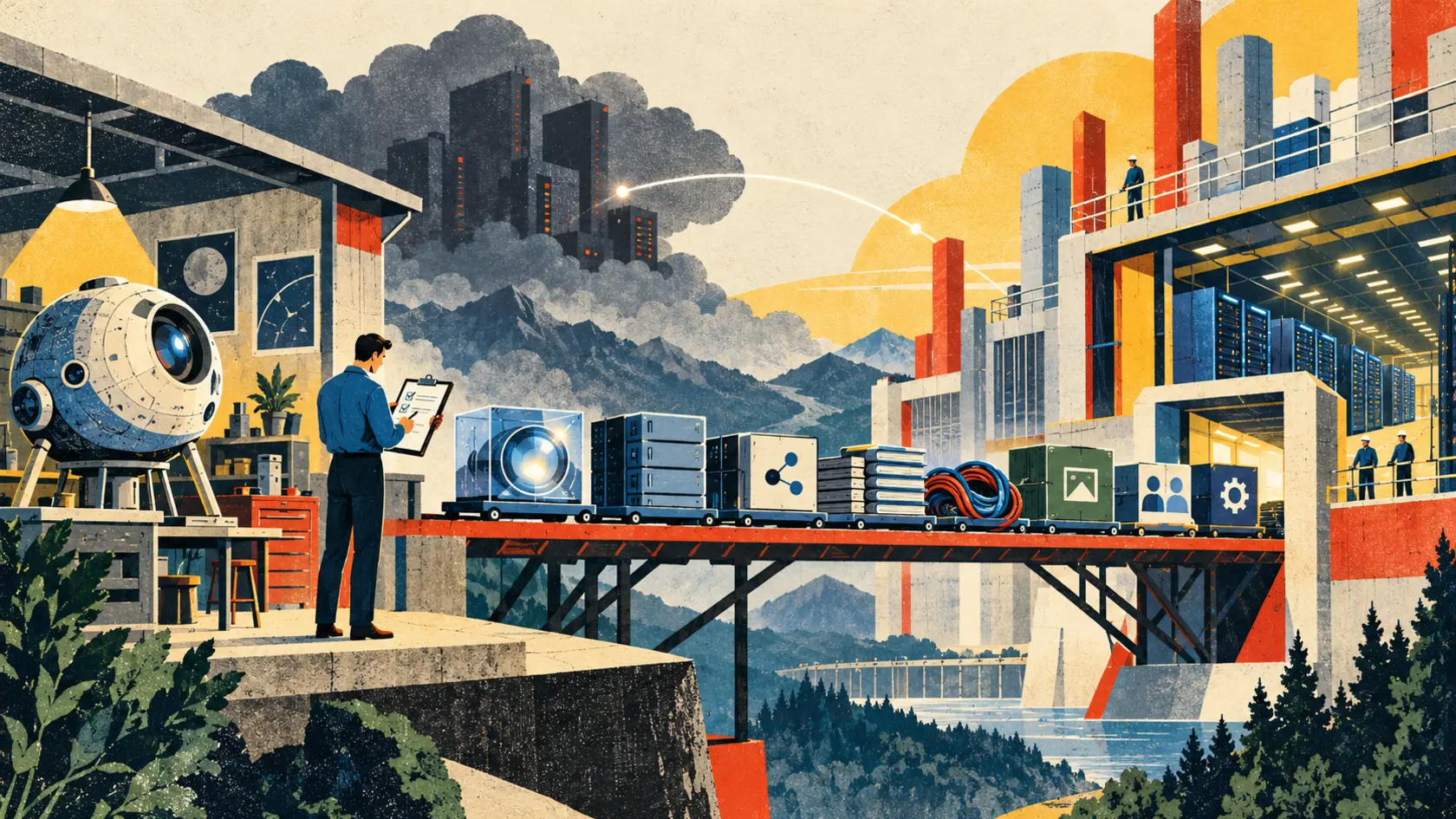
An open model can survive an acquisition in at least three different ways. Its files can remain downloadable. Its public project can keep accepting work. Or it can remain genuinely usable after the people, infrastructure and business around it move somewhere else. Those are not the same promise. Prime Intellect announced that it has acquired Moondream, the company behind compact vision-language models and the Photon inference engine. Moondream's founders, Vik Korrapati and Jay Allen, are joining Prime to lead and scale inference and accelerate multimodal work including vision and computer use. The combination makes technical sense. Moondream built small models meant to understand images without dragging a giant general-purpose system into every camera feed. Photon compiles models and custom kernels into a tightly integrated serving system. Prime has been building the broader machinery around training, evaluation, fine-tuning and inference. Put the pieces together and the pitch is neat: train the model, improve it, serve it and tune the hardware path inside one stack. Then comes the sentence every open-model user wants to read. Moondream says its models will remain open and keep improving. Good. Keep that sentence. Now attach a receipt. The same announcement says Moondream Cloud, including inference and Lens fine-tuning, will shut down on November 13, 2026. Unspent purchased credits will be refunded. Customers will receive migration help, and Prime says Moondream Cloud customers will receive credits on its platform for models, training and inference. That is a real operational change arriving on a thirty-day clock. A developer running downloaded Moondream weights locally may feel almost nothing. A team calling a hosted endpoint, managing fine-tunes in Lens, tracking cloud credits or relying on a particular response format has a different week ahead. The plain signal is that open artifacts reduce dependency, but they do not eliminate continuity work. The public Moondream repository remains available on GitHub under Apache 2.0. The current Moondream2 model card on Hugging Face also lists Apache 2.0. Those are useful facts because existing licensed copies do not evaporate when ownership changes. But an open license cannot promise who will maintain a repository, review a security report, publish the next checkpoint, preserve an old runtime, document a breaking change or answer when a deployment falls over. That work belongs to stewardship. An acquisition continuity receipt should make stewardship visible. Start with identity. Which legal entity owns the trademarks, repositories, domains, hosted services and customer contracts after the transaction? The announcements identify Prime as the acquirer and say the founders are joining, but they do not disclose the financial terms or publish a detailed transfer map. Then freeze the open promise into things a developer can verify. List every maintained model family. Name the license attached to each current checkpoint, tokenizer, configuration file, training recipe, example and runtime. State whether future checkpoints will use the same license. Identify the canonical repository and model registry. Publish who can merge changes, issue releases and respond to vulnerabilities. This matters because open can describe several different layers. Weights may be downloadable while training data remains closed. Client code may be Apache-licensed while an optimized runtime follows another agreement. A public repository may continue to exist while the actual development moves into a private tree. A model can remain runnable while the hosted service that made it convenient disappears. None of those arrangements is automatically dishonest. They are simply different products, and developers deserve to know which product they are adopting. Prime says Photon and Moondream's kernel work are being integrated into its stack. It also says Moondream 3.1 is already available through Prime Inference and powered by Photon. That creates a second continuity question: compatibility. If an application moves from Moondream Cloud to Prime Inference, can it reuse the same authentication pattern, request fields, image limits, response schema, error codes, streaming behavior and observability hooks? Will existing fine-tunes move? Do endpoint names change? Are latency and pricing measured the same way? What happens to stored inputs, outputs and training artifacts? The announcements promise direct outreach and migration help. They do not publish a compatibility matrix or step-by-step migration guide. That is not proof of a bad migration. It is a list of work still invisible to everyone outside the customer inbox. A public migration guide would help more than affected customers. It would let the open community see which parts of the old service were portable, which depended on Moondream's private infrastructure and which will be replaced by Prime's platform. The guide should include a small test harness. Send the same images and prompts to the old endpoint, a local reference build and the new endpoint. Compare outputs, object coordinates, latency, errors, content handling and cost. Record the model and runtime version behind every result. Publish expected differences instead of allowing them to arrive as mysterious production drift. Fine-tuning needs its own export path. Lens users need to know whether datasets, recipes, checkpoints, evaluation results and logs can be downloaded in ordinary formats before shutdown. If Prime will import them, the transfer should be optional, documented and reversible. If some artifacts cannot move, customers need that answer before the old service goes dark. Data deserves the least romantic part of the receipt. The two announcements do not publish a deletion calendar for Moondream Cloud data or explain which customer records move to Prime. A proper shutdown notice should separate account records, billing records, uploaded images, prompts, outputs, fine-tuning datasets, model artifacts, logs and backups. Each category needs a destination, retention period and deletion process. Customers should not have to infer that policy from a refund. Support also needs dates. November 13 is the service shutdown date. That does not tell users when the final old-platform deployment may be created, when new fine-tunes stop, how long exports remain available, when support tickets must be filed or how long migration assistance continues after the endpoint closes. A good sunset calendar has more than one square circled in red. It names the last day to buy, train, deploy, export, report a problem and retrieve an invoice. It says whether the final release receives security fixes. It tells people where status notices will appear and who owns an incident that begins on the old service but continues during migration. The open-model community has a different set of questions. Moondream's GitHub repository has accumulated a large public footprint, including issues, pull requests, forks and years of linked documentation. That history is part of the project. If development moves under a new organization or repository, redirects and preserved issue history matter. If it stays where it is, the project should publish the new maintainer structure. Repository stewardship can be boring in exactly the right way. Use signed releases. Preserve tags and checksums. Publish a support table for model, library, Photon and hardware combinations. Mark deprecated artifacts before removing them. Keep old documentation available. Record security contacts and response expectations. Explain whether outside contributions remain welcome and how governance changes after the acquisition. Forkability is the emergency exit, but it is not the whole building. Apache 2.0 gives developers broad rights to use, modify and redistribute the current code. A public model card gives them a known checkpoint. Those facts protect against total disappearance. They do not make a community fork cheap, coordinated or immediately safe to operate. A fork still needs maintainers, release engineering, hardware testing, vulnerability work, documentation and money. The stronger continuity plan is not simply you can fork it. It is here is what stays stable, here is what changes, here is how to leave and here is enough evidence to decide. Prime's larger platform may genuinely improve Moondream. The founders gain access to more training infrastructure. Photon can support a wider model catalog. Prime can connect efficient multimodal inference to its evaluation and fine-tuning tools. The combined team may ship faster than Moondream could alone. That upside is plausible. It is not yet a service-level agreement. The announcements are written by the buyer and the acquired company. Prime's performance comparisons include company measurements, including some described in its own references as unpublished internal evaluations. Those numbers may be useful engineering signals, but they are not independent evidence of future reliability, compatibility or support. Judge the transition by the artifacts it leaves behind. Can a developer reproduce the current open setup six months from now? Can a cloud customer export everything needed before November 13? Can a team compare the old and new endpoints without writing its own archaeology kit? Can a maintainer explain who controls releases and what future open means? An acquisition can be a beginning for the people building a model and a forced migration for the people already using it. Both experiences can be true. The continuity receipt is how a company respects the second while celebrating the first. It turns a promise that the models will remain open into a dated record of licenses, files, owners, migration paths, retention rules, compatibility tests and support commitments. The moon can move into a larger orbit. Developers still need to know which instruments survive the trip.
01
WHAT ACTUALLY CHANGED
Prime Intellect acquired Moondream in an agreement announced by the companies on October 13 and 14, 2026
Moondream founders Vik Korrapati and Jay Allen are joining Prime Intellect
The founders will lead and scale inference and accelerate multimodal work including vision and computer use
Prime is integrating Photon and Moondream kernel work into its training and inference stack
Moondream 3.1 is already available through Prime Inference and powered by Photon
Moondream says its models will remain open and continue improving
Moondream Cloud inference and Lens fine-tuning will shut down on November 13, 2026
Moondream says unspent purchased cloud credits will be refunded
Prime says Moondream Cloud customers will receive credits on its platform
The current public Moondream repository and Moondream2 model card list Apache 2.0 licenses
The companies did not disclose financial terms in the reviewed announcements
The public announcements do not contain a complete compatibility matrix, export guide, deletion schedule or long-term repository-governance plan
02
WHY THIS MATTERS
Open licenses preserve rights to existing artifacts but do not guarantee future maintenance
A hosted service shutdown can disrupt users even when downloadable model weights remain available
Fine-tuning datasets, checkpoints and evaluation records may be harder to move than an API call
Ownership changes can alter release authority, security response and contribution rules
Endpoint compatibility affects production behavior, cost, latency and error handling
A thirty-day migration window makes export and testing deadlines operationally significant
Customers need explicit retention and deletion rules for uploaded data and model artifacts
A public migration guide would reveal which parts of the old service are portable
Independent evidence is still needed for performance and reliability claims
A continuity receipt makes the meaning of remain open testable over time
03
WHERE IT COULD HELP
- Inventory every Moondream Cloud endpoint, fine-tune, dataset, key, credit balance and integration before November 13
- Download model artifacts, datasets, evaluation results, logs and billing records while the old service remains available
- Record the exact model, tokenizer, client and Photon versions used in production
- Run the same prompts and images against the old endpoint, a local build and Prime Inference
- Compare response schemas, object coordinates, latency, errors, rate limits and cost
- Rotate credentials rather than copying old service keys into the new platform
- Ask where uploaded images, prompts, outputs, fine-tuning data and backups will be stored or deleted
- Confirm whether existing fine-tunes transfer and whether the transfer can be reversed
- Pin open artifacts by version and keep checksums for weights and packages
- Mirror critical repositories and documentation within the rights granted by their licenses
- Track the canonical repository, maintainers, security contact and release-signing process
- Require a written support calendar covering training, deployment, export and post-shutdown incidents
- Keep a rollback path until the new endpoint passes application-specific acceptance tests
- Budget for migration engineering even when the replacement platform offers credits
- Review future checkpoints and runtimes separately instead of assuming one open label covers every layer
KEEP A HAND ON THE WHEEL
The acquisition announcements describe intent and an immediate service transition, not a completed continuity plan. Watch for a public migration guide, API compatibility table, dataset and fine-tune export instructions, customer-data retention and deletion dates, repository-governance details, future model and runtime licenses, signed releases, support deadlines, service-level commitments, independent performance tests and confirmation that existing integrations behave the same way on Prime Inference.
04
TERMS WORTH KEEPING
SOURCES AND VERIFICATION STATUS
This article was written from the materials below. Product claims and dates were checked against those sources on October 15, 2026.
PUBLICATION RECEIPT: The article distinguishes the companies' confirmed acquisition and migration commitments from missing public details about financial terms, compatibility, data deletion, repository governance and long-term support.
THE PUBLICATION ENGINE
WANT A SIGNAL OF YOUR OWN?
We build source-grounded publications, private briefings, and editorial systems for organizations with something useful to say.
WORK WITH US