THE SIGNAL IN ONE SENTENCE
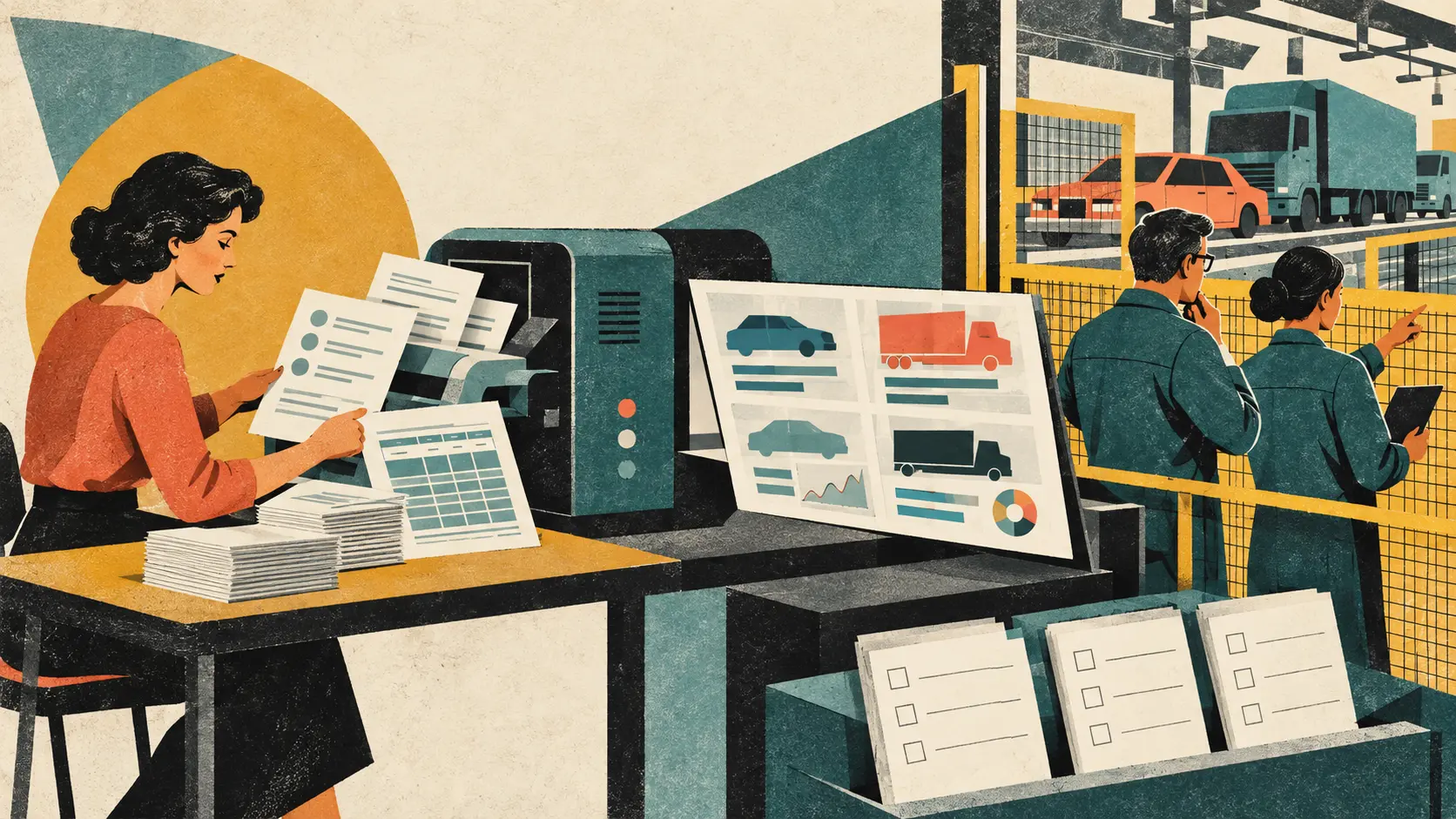
Proaction, a fleet-management software company, has found a practical use for a coding agent that is less glamorous than autonomous software engineering and probably more useful: building the sales demo before asking the product team to build the product. In an OpenAI customer story published September 25, Proaction cofounder Colin Knudsen describes taking a prospect call, gathering the recording and email thread, adding spreadsheets or other working material, and asking Codex to turn that evidence into a custom interactive demo. Knudsen is described as nontechnical. The company says he can now produce four to six demos a month, each in thirty to forty-five minutes. It estimates forty to sixty engineering hours saved per month, thirty-three founder hours saved and a fifty to sixty percent increase in the share of deals moving from initial contact into solution development. Those are attractive numbers. They are also all estimates supplied by Proaction inside a case study published by the tool provider. There is no raw deal ledger, comparison group, failure count, independent audit or public definition of exactly when a deal has progressed. That does not make the workflow imaginary. It makes the workflow more credible than the scoreboard. A clickable demo can force a vague sales conversation into specific screens, data fields and decisions. A prospect can point to what is wrong before engineers write production code. Product teams can see repeated demand instead of translating another paragraph of sales notes. The danger arrives when a fast demo quietly becomes a promise, or when confidential customer material becomes casual prompt material. The right operating boundary is simple. Use authorized, minimized and redacted source material. Mark the result as a prototype. Keep production credentials and real customer systems outside the sandbox. Let engineering approve architecture, security and release. Measure time saved and deal movement from actual records, including the demos that failed or confused the customer. The plain signal is not that a coding agent replaced the sales engineer. It is that a founder can now make the first draft of a product conversation executable. That is valuable as long as the prototype remains evidence, the production gate remains human and the performance claims eventually acquire receipts.
01
WHAT ACTUALLY CHANGED
OpenAI published a customer story about Proaction on September 25, 2026.
Proaction builds fleet-management software for commercial operators.
The case study centers on cofounder Colin Knudsen, whom OpenAI describes as nontechnical.
Knudsen uses Codex to turn prospect context into custom interactive product demonstrations.
The inputs can include call recordings, prospect email threads and spreadsheets.
The story says Granola supplies meeting recordings and notes used in the workflow.
Codex can connect through plugins to Gmail, Slack, Linear, GitHub and HubSpot in Proaction's setup.
The resulting demo is meant to reflect a prospect's own operations rather than a generic sales deck.
Proaction says Knudsen now makes four to six custom demos per month.
The company says each demo takes thirty to forty-five minutes to create.
Proaction estimates that the workflow saves forty to sixty engineering hours per month.
It separately estimates thirty-three founder hours saved per month.
The company estimates that deal progression from initial contact to solution development increased fifty to sixty percent.
The customer-story headline summarizes the sales increase as sixty percent.
OpenAI says the combined time savings exceed seventy-five hours per month.
The article does not publish the raw time records behind those estimates.
It does not publish deal counts, a comparison period or a control group.
It does not report how many generated demos were abandoned, wrong or rebuilt.
Proaction also says it uses GPT-Live-1 and GPT-6 Astra in fleet-facing agents.
The company says a person can step into those agent interactions when needed.
02
WHY THIS MATTERS
A working prototype can expose misunderstanding faster than a slide deck or requirements memo.
Prospects can react to a screen, workflow and data shape instead of guessing what a promise means.
Sales teams can test whether an unusual request is real before consuming a product sprint.
Product teams can compare repeated prototype requests and spot demand patterns.
A nontechnical operator can participate directly in software discovery without pretending to own production engineering.
The workflow shortens the distance between a customer conversation and something testable.
That speed can also turn an attractive mockup into an accidental contractual promise.
A prototype may ignore permissions, edge cases, performance, accessibility and support obligations that production software must satisfy.
Call recordings and email threads can contain personal, confidential or commercially sensitive information.
Connecting an agent to several business systems expands the set of data it can retrieve and combine.
Authorization for a meeting does not automatically authorize every later use of its contents.
Redaction and data minimization should happen before customer material reaches a demo workspace.
The demo environment should not hold production credentials or write access to customer systems.
Engineering review remains necessary because generated interface behavior is not production architecture.
The most persuasive performance figures in the story come from the customer and provider, not an independent evaluator.
Self-reported time savings can be directionally useful while still missing setup, review and rework time.
Deal progression can improve for reasons unrelated to the demo, including seasonality, pricing or lead quality.
A credible measurement should include every eligible deal and every demo failure rather than selected wins.
The durable idea is prototype-before-build, not a universal promise of sixty percent more sales.
Teams can borrow the method without borrowing the unverified scoreboard.
03
WHERE IT COULD HELP
- Get explicit authorization before using a prospect recording, email or spreadsheet in a generated demo.
- Remove personal information, credentials, account numbers and unrelated commercial details before ingestion.
- Create a separate workspace for each prospect so context does not leak across demonstrations.
- Use synthetic or minimized sample data when real records are not essential to the concept.
- Mark every generated screen clearly as a prototype and not a committed product feature.
- Keep production databases, fleet devices and customer credentials outside the demo environment.
- Grant the coding agent read-only access wherever write permission is unnecessary.
- Log every source file, connector, tool call and generated artifact used for the demo.
- Set a deletion date for prospect material and confirm deletion when the evaluation ends.
- Have the prospect verify the workflow and correct factual assumptions before internal prioritization.
- Record which screens were useful, confusing, inaccurate or technically unrealistic.
- Require engineering to review security, architecture, performance and maintainability before any production commitment.
- Require product leadership to distinguish one-off customization from reusable roadmap demand.
- Run accessibility checks on the prototype before treating its interface as evidence of usability.
- Track total labor including source preparation, review, corrections and cleanup, not only generation time.
- Define deal progression consistently and measure it from CRM records across comparable periods.
- Report the total number of demos, wins, losses, abandoned experiments and material errors.
- Compare generated demos with a matched set of conventional discovery workflows when feasible.
- Give customers a plain explanation of what the demo can and cannot do today.
- Keep a named human accountable for every feature promise and every move from prototype to production.
KEEP A HAND ON THE WHEEL
The September 25 OpenAI customer story directly supports the described workflow, connectors, named inputs, four-to-six monthly demos, thirty-to-forty-five-minute creation time and Proaction's estimates for engineering time, founder time and deal progression. It does not provide raw records, an independent audit, a comparison group, the total number of eligible deals, statistical uncertainty, failure rates, rework time or a precise definition of solution development. The public story also does not provide a complete data-flow diagram, connector permission map, retention schedule, deletion evidence, redaction procedure or security assessment for prospect material. The numbers should therefore be read as Proaction's estimates in a provider-published customer case, not general productivity or sales benchmarks. Watch for a complete measurement period, denominator, matched comparison, unsuccessful examples, privacy controls, connector scope, independent security testing and evidence that prototypes remain visibly separate from production commitments.
04
TERMS WORTH KEEPING
SOURCES AND VERIFICATION STATUS
This article was written from the materials below. Product claims and dates were checked against those sources on September 27, 2026.
PUBLICATION RECEIPT: Revision 1. Published September 27, 2026.
THE PUBLICATION ENGINE
WANT A SIGNAL OF YOUR OWN?
We build source-grounded publications, private briefings, and editorial systems for organizations with something useful to say.
WORK WITH US