THE SIGNAL IN ONE SENTENCE
Giving someone internet access is only the first step. Real AI inclusion also means learning how the systems work and having power to build, govern, finance, and own them.
01
WHAT ACTUALLY CHANGED
South Africa has put a sharper definition around an old promise. Speaking at the first Youth, AI and the Future of Work in South Africa Summit on September 7, Deputy Minister in the Presidency for Women, Youth and Persons with Disabilities Mmapaseka Steve Letsike argued that internet access alone no longer describes the digital divide.
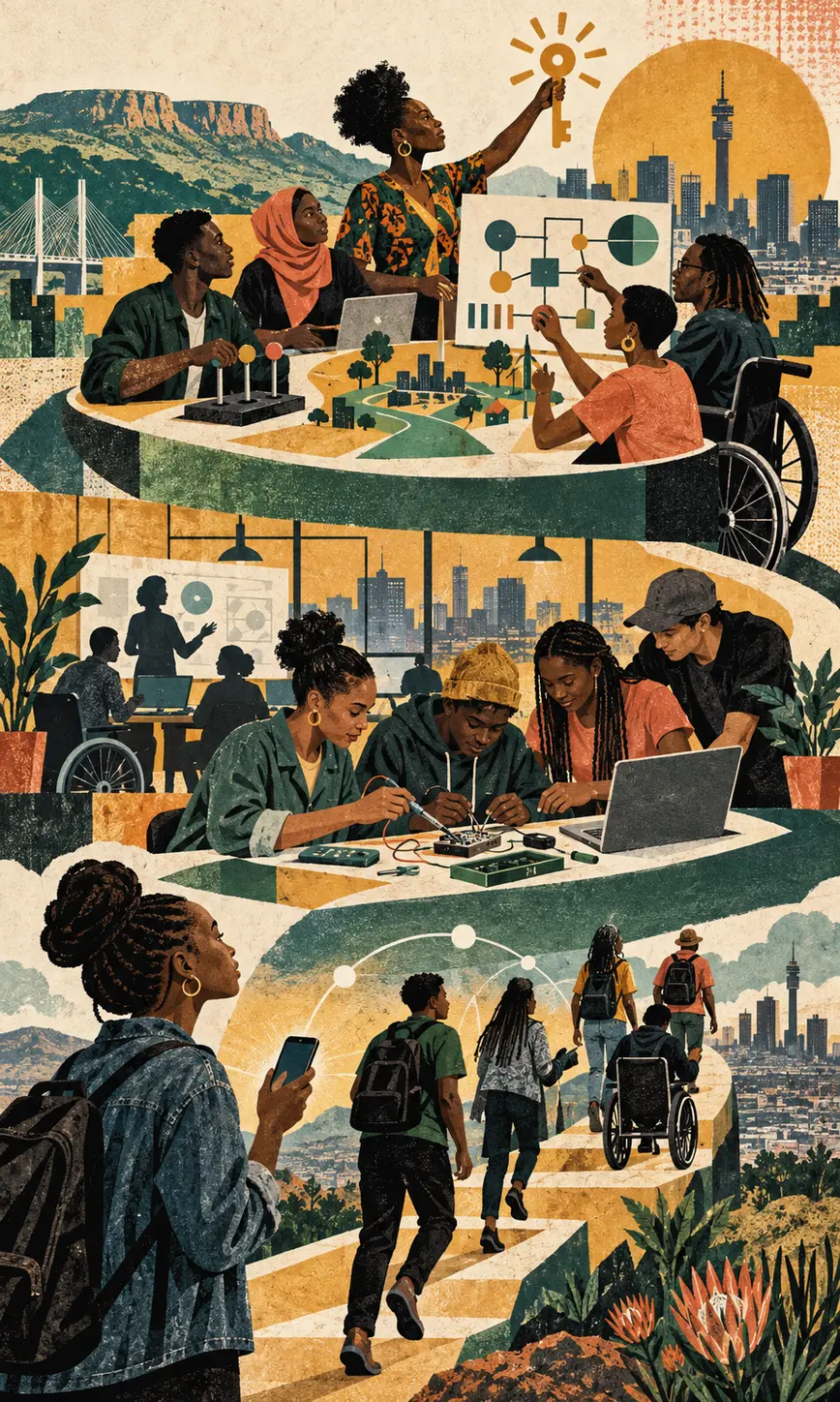
Letsike divided AI inclusion into three frontiers: connection, capability, and command. Connection gets a person online. Capability determines whether that person can understand and use the technology. Command goes further, asking who can build the enterprise, understand the algorithm, govern the data, own the intellectual property, set the rules, and share in the resulting wealth.
The summit was hosted by the South African Digital Governance Forum at Wits University in Johannesburg. Its theme focused on preventing youth, women, and people with disabilities from being left behind. Letsike linked the question to AI already spreading through finance, retail, agriculture, education, health care, government, and media.
The speech acknowledged progress through connectivity initiatives such as SA Connect, then made the useful point that a household can have Wi-Fi and remain economically excluded. A young person can own a smartphone without understanding why a platform selected the next video, how their data is used, or how to build something of their own.
Letsike called for wider investment in AI literacy and for better access to finance, procurement, and markets for historically excluded innovators. She also said accessibility should be designed into technology from the beginning, not added afterward. This was a policy argument, however, not a new law, budget, procurement program, or set of measurable targets.
02
WHY THIS MATTERS
Connection is wonderfully countable. A government can report towers, fiber, subscriptions, and households reached. Capability and command are messier because they require asking what people can actually do and who holds the power when the system arrives. Messy questions are often where the real exclusion is hiding.
The three-layer framework gives public agencies a better test for digital programs. A training center with broadband passes the connection test. It passes capability only if people leave able to question, use, and build with AI. It reaches command when those people can influence procurement, governance, ownership, and the rules that shape local markets.
The distinction is especially important for young South Africans facing high unemployment. AI literacy can improve access to jobs and entrepreneurship, but skills without customers, capital, computing resources, or procurement routes can become a certificate-shaped cul-de-sac. The economic ladder needs more than its first rung.
Design choices can repeat existing exclusions. Letsike warned that biased data can reproduce inequality for women and that technology built without people with disabilities can create fresh barriers. Speech recognition, image description, predictive text, and intelligent interfaces can expand access, but only when the people affected participate in defining what useful and safe actually mean.
The argument travels beyond South Africa. Countries across Africa risk becoming large consumer markets for systems trained, owned, and governed elsewhere. Local capability is not a call to reject outside technology. It is a call to negotiate from a stronger position, build local firms and datasets, and keep more of the value created by local workers and communities.
03
WHERE IT COULD HELP
- Measure digital programs beyond device and broadband access
- Teach people how recommendation and data systems shape their choices
- Design accessibility into products before launch
- Open procurement and finance routes to excluded local builders
- Include affected communities in AI governance and ownership
KEEP A HAND ON THE WHEEL
This development is a speech from a deputy minister, not an adopted implementation plan. It announced no dedicated budget, statutory duty, delivery timetable, enforcement mechanism, or measurable target for connection, capability, or command. The framework becomes meaningful only if departments, schools, funders, procurers, and technology companies translate it into programs with public outcomes. Claims that AI will improve productivity or entrepreneurship are possibilities, not guaranteed results, and greater access can also expose people to surveillance, manipulation, insecure work, and biased decisions.
04
TERMS WORTH KEEPING
OPEN GLOSSARY CARD
Digital inclusion
Ensuring people can access, understand, use, shape, and benefit from digital systems rather than merely being connected to them.
OPEN GLOSSARY CARD
AI literacy
The ability to understand what AI systems do, question their outputs, use them responsibly, and recognize their limits and effects.
OPEN GLOSSARY CARD
Technology sovereignty
The practical ability of a community or country to shape, operate, govern, and retain value from important technologies.
SOURCES AND VERIFICATION STATUS
This article was written from the materials below. Product claims and dates were checked against those sources on September 9, 2026.
PUBLICATION RECEIPT: Revision 1. Published September 9, 2026.
THE PUBLICATION ENGINE
WANT A SIGNAL OF YOUR OWN?
We build source-grounded publications, private briefings, and editorial systems for organizations with something useful to say.
WORK WITH US