THE SIGNAL IN ONE SENTENCE
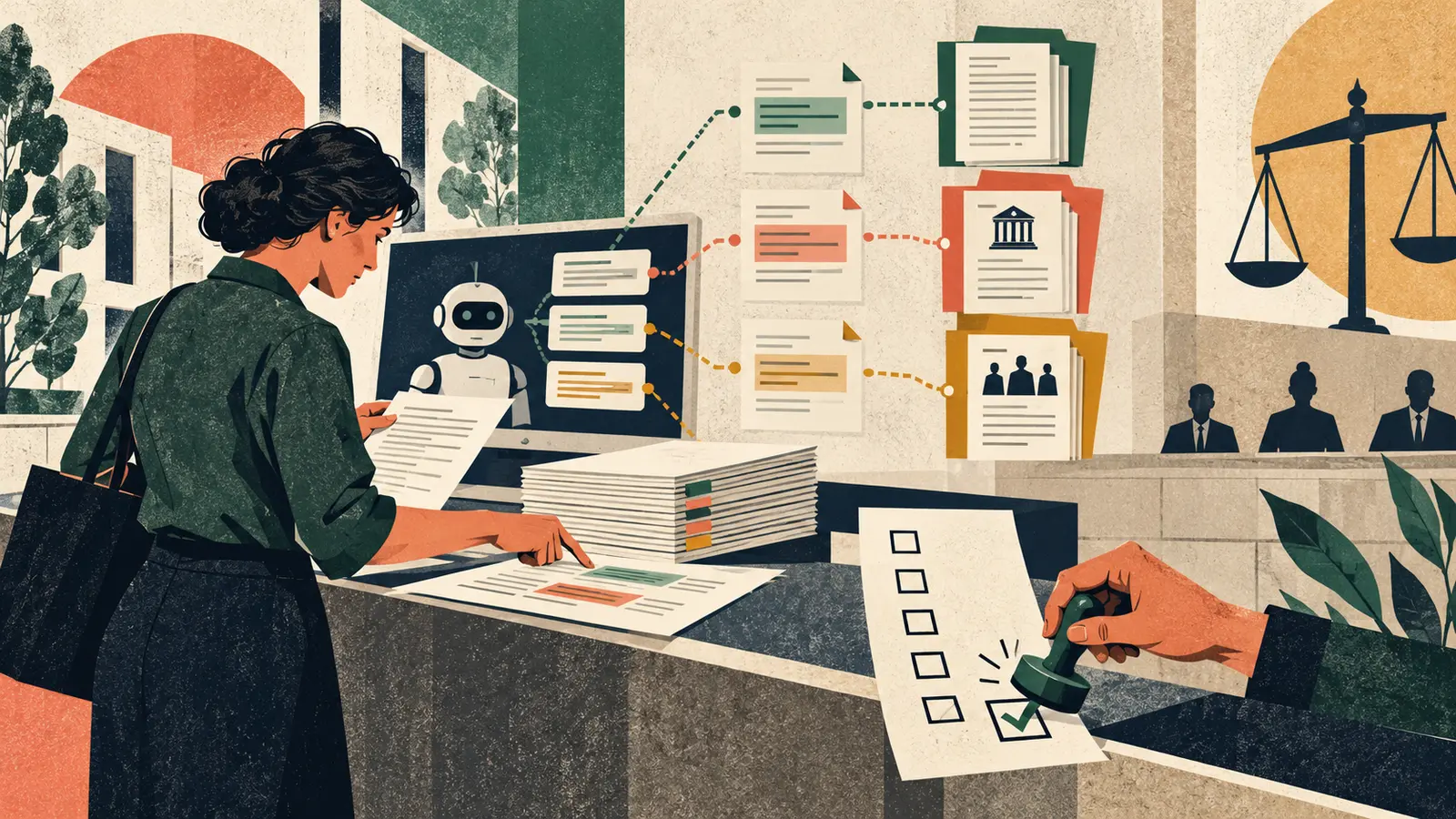
A worker is preparing a claim about unpaid wages. The dates are scattered across rosters, messages and payslips. A generative AI tool helps organize the chronology and suggests how to structure the document. That can save time. It can also invent a case, smooth away a contradiction or turn a guess into a sentence that looks suspiciously certain. From October 20, the Fair Work Commission has new rules for that exact situation. People may use generative AI to research and prepare documents, but if AI contributed to a document lodged with the Commission, the use generally must be disclosed. The person filing it must also verify the facts, legislation, cases and quotations against authoritative sources. The plain signal is this: if AI helps build a workplace claim, the filing needs an evidence receipt that a person can defend. This is not a ban on AI in workplace disputes. It is not a rule covering every workplace use of a chatbot. It applies to material lodged in proceedings before Australia's national workplace-relations tribunal. Legal Aid NSW's official guidance explains the requirements in practical terms. A disclosure must identify the tool and explain how it was used. A person who used AI only for spelling, grammar or formatting does not need to make that disclosure. The boundary matters because a typo correction is different from asking a model to find law, summarize evidence or draft an argument. The verification duty is the more important half. The guidance says the person lodging the document must personally check every factual statement, legal proposition, cited case and quotation against official or authoritative sources. It specifically warns against using the same AI tool to verify its own output. Cases should be linked to official sources, and the filer should confirm that those sources were checked. That rule is refreshingly blunt. A confident paragraph is not evidence that its ingredients exist. Generative systems predict plausible language. They can merge two cases, invent a citation, misstate a holding or attribute words to a judgment that never said them. Even a real case can be used for the wrong proposition. A hyperlink proves only that a page exists. Human verification asks whether the cited source supports the exact sentence beside it. Witness statements require another boundary. According to the guidance, a witness statement must remain the witness's own knowledge and words. AI may help with limited presentation tasks, but it cannot become a substitute witness that fills gaps, harmonizes memories or supplies facts nobody actually observed. That is crucial in workplace disputes, where a small detail can carry a lot of weight. Who changed the roster? When was a warning given? What did the manager say? Was a safety concern raised before or after a shift was cut? A polished reconstruction can feel clearer than an imperfect memory while being less true. The rules also have teeth. Noncompliance may lead to a document being rejected or given less weight. The Commission may make cost orders or, in serious circumstances, dismiss a matter. Those are significant consequences for any party, especially a self-represented worker who used a free tool because professional help was hard to reach. This is where disclosure alone can become a trap. A box that asks whether AI was used may create accountability, but it does not show whether the filing is reliable. Two people can tick the same box after very different processes. One may have used a model to correct punctuation. Another may have asked it to reconstruct months of events, locate cases and draft every submission, then skimmed the result on the bus. The Commission needs the useful middle layer: a compact evidence receipt. For each AI-assisted section, the receipt should identify the tool, model if known, access date and task. It should say whether the system summarized documents, proposed a chronology, translated text, suggested search terms, drafted language or found possible authorities. It should not require a person to publish confidential prompts or personal records. The point is to describe the work, not spill the evidence into another database. Next, the receipt should connect every consequential claim to its source. A factual statement should point to a payslip, message, roster, letter, recording or witness account. A legal statement should point to the statute, regulation, official judgment or Commission material actually checked. A quotation should include its location in the source. A translation should identify who or what produced it and whether a qualified person reviewed it. Then record the human check. Who verified the item? On what date? Which authoritative copy did they use? Did they compare the quotation word for word? Did they confirm that a case remains good law? Did they ask the witness whether the drafted sentence matches the witness's own recollection? That sounds bureaucratic until the first invented citation arrives. Then it looks like a seat belt. The same receipt can help representatives, unions and employers. A lawyer can see which passages need source review. A union organizer can separate a member's memory from an AI-generated chronology. An employer can stop a convenient summary from quietly becoming the official record. A tribunal member can understand the role of the tool without treating every AI-assisted document as equally suspect. It can also improve access to justice if designed carefully. People use AI because legal processes are difficult, expensive and full of unfamiliar language. A good disclosure form should therefore be short, plain and paired with examples. It should distinguish harmless editing from substantive assistance. It should let a filer say that a model suggested search terms but that all cases were found and read independently. It should explain what to do when a product hides its model version or retains submitted data. The process should not demand technical archaeology from someone trying to recover two weeks of pay. There are privacy risks too. Workplace documents can contain medical details, immigration status, disciplinary records, addresses, payroll data and allegations about other people. A disclosure rule should not be mistaken for permission to paste that material into any public chatbot. Before using a tool, a filer or representative should check its data handling, retention and training terms and remove information that is not necessary for the task. The Commission can learn from the receipts it receives. Publish aggregate statistics on how often AI is disclosed, which tasks it assists, how frequently citations fail verification and which errors lead to procedural action. Publish anonymized examples of adequate and inadequate disclosures. Track whether self-represented applicants are disproportionately penalized and whether guidance reduces repeat errors. That would turn a new rule into an evidence-generating policy instead of a fresh compliance ritual. The limits need to stay visible. The new requirements do not prove that AI-assisted filings are less reliable than unaided ones. Humans misremember, misquote and cite bad law too. Nor does a disclosure prove that every statement was checked well. The accessible guidance comes from Legal Aid NSW, while the Commission's own generative AI page remains the controlling place to check current requirements and forms. Rules can also change as the Commission sees how people actually use these systems. Anyone filing a matter should read the current Commission guidance, not rely on an article, a saved screenshot or a chatbot summary. This article is reporting and analysis, not legal advice. Still, the direction is sensible. AI can help a person get from a pile of workplace records to a document they can use. The institution does not need to pretend that never happens. It needs to know where the machine entered the process and where a human took responsibility for what came out. Name the tool. Name the task. Link the evidence. Record the check. That is a disclosure someone can actually use.
01
WHAT ACTUALLY CHANGED
New Fair Work Commission generative AI requirements took effect on October 20, 2026
People may still use generative AI for research and document preparation
Substantive AI use in a lodged document generally must be disclosed
The disclosure must identify the tool and explain how it was used
Spelling, grammar and formatting assistance alone does not require disclosure
Filers must personally verify facts, law, cases and quotations
The same AI tool cannot be treated as the independent verification source
Case references should link to official sources and be checked by the filer
Witness statements must remain grounded in the witness's own knowledge and words
Noncompliance may affect acceptance, weight, costs or continuation of a matter
02
WHY THIS MATTERS
Workplace claims often turn on dates, records and precise quotations
A plausible AI draft can contain invented or misapplied legal authority
Disclosure separates hidden assistance from accountable assistance
Verification makes the person filing a document responsible for its claims
Witness evidence can be distorted when polished language fills gaps in memory
Self-represented workers need guidance that does not turn access into a technical test
Sensitive workplace records create privacy risks when submitted to external tools
A simple checkbox cannot show how deeply AI shaped a document
Source-linked receipts can speed review by parties, representatives and the tribunal
Aggregate error data can show whether the rule improves reliability or adds friction
03
WHERE IT COULD HELP
- Record the AI tool, model if known, access date and exact task
- Mark which sections received substantive AI assistance
- Separate grammar-only editing from research, summarization and drafting
- Link each factual claim to the document or witness that supports it
- Link every legal proposition and case to an official source
- Check quotations word for word and record their location
- Ask each witness to confirm that drafted language reflects personal knowledge
- Remove unnecessary personal information before using an external AI service
- Preserve a private prompt and output history when lawful and proportionate
- Have a representative or legal service review consequential filings when possible
KEEP A HAND ON THE WHEEL
Watch for the Commission's final forms and examples; whether disclosure is required for each document or once per matter; guidance for translation, transcription and document search; privacy safeguards; treatment of tools that hide model versions; anonymized examples of deficient filings; data on rejected or discounted documents; effects on self-represented parties; training for unions and community legal services; and any appeal or decision that clarifies how the rules operate in practice.
04
TERMS WORTH KEEPING
OPEN GLOSSARY CARD
AI disclosure
A statement identifying that an AI tool contributed to work and describing what the tool was used to do.
OPEN GLOSSARY CARD
Authoritative source
The official or controlling record used to verify a claim, law, decision or quotation.
OPEN GLOSSARY CARD
Evidence receipt
A compact record connecting a consequential claim to its source, human verifier and any AI assistance used along the way.
SOURCES AND VERIFICATION STATUS
This article was written from the materials below. Product claims and dates were checked against those sources on October 20, 2026.
PUBLICATION RECEIPT: This article reports official guidance effective October 20, 2026 and adds a Plain Signal evidence-receipt proposal. It is general reporting and analysis, not legal advice. Filers should check the Commission's current forms and seek qualified help for their circumstances.
THE PUBLICATION ENGINE
WANT A SIGNAL OF YOUR OWN?
We build source-grounded publications, private briefings, and editorial systems for organizations with something useful to say.
WORK WITH US