THE SIGNAL IN ONE SENTENCE
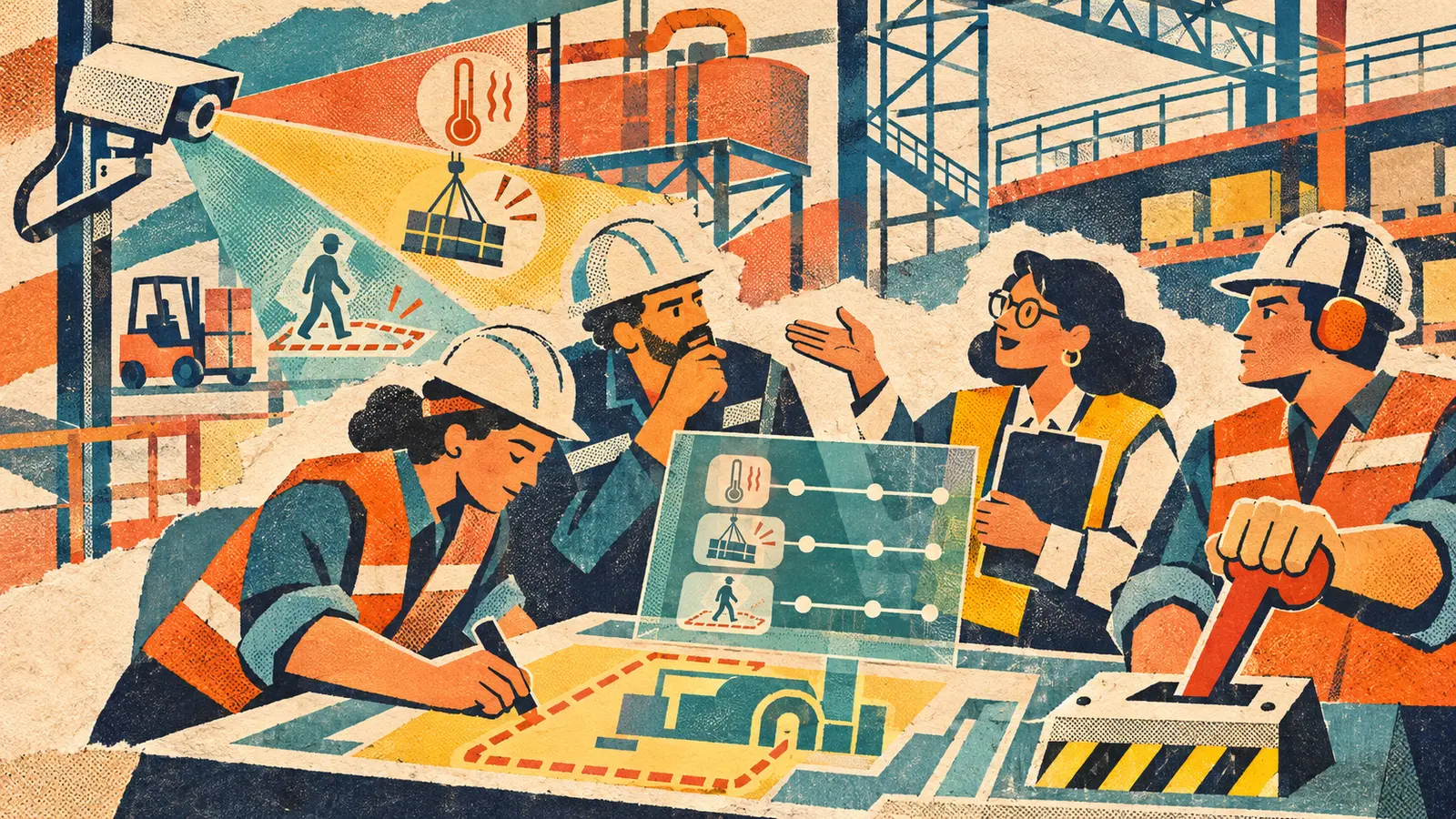
A camera can notice that a forklift crossed a painted line. A wearable can warn that heat exposure is climbing. A model can search incident reports for patterns a hurried manager missed. None of those systems gets to decide what a worker is worth. That is the useful tension inside a small international meeting held November 4 in Chinese Taipei. Government officials, specialists and worker organizations from Asia-Pacific economies met under the APEC umbrella to discuss artificial intelligence for occupational safety and health. Chile sent Macarena Pinto, head of advisers at the Subsecretariat of Social Welfare, to a panel with participants from Japan, South Korea, Thailand and Malaysia, among others. Chile's official account, dated November 5 and posted with a November 6 publication line, says the workshop examined how AI could identify hazardous situations earlier, monitor workplace conditions and analyze information that helps prevent accidents and occupational illness. That is a promising list. It is also a list of verbs that can slide from protection into control. Identify can become classify the worker. Monitor can become watch all day. Analyze can become score, schedule, discipline or dismiss. A system installed to catch a dangerous temperature can quietly become a system that measures bathroom time. A camera trained to spot missing protective equipment can become evidence in a performance review. A model that predicts injury risk can tempt an employer to exclude a worker instead of fixing the job. The workshop report does not say that any of this happened. It does not name a model, company, workplace, sensor package, accuracy result, false-alarm rate, privacy design or collective agreement. It describes a policy conversation, not a deployed system. That distinction matters because the next step should not be a procurement race. It should be a worker-governance test. Before a safety system turns on, the people being observed should be able to answer plain questions. What hazard is this tool meant to reduce? What data does it collect? Does it identify individuals? Who can see the raw feed, alert and historical record? How long is each retained? Can the information be used for discipline, productivity scoring, insurance or hiring? How does a worker challenge a false alert? What happens when the system misses danger? Who can pause it? Who can stop the work? Call the answer a sensor veto. The phrase is editorial, not a term from the APEC workshop or Chilean law. It describes a bundle of practical powers: workers can help choose the safety purpose, reject unnecessary collection, block unrelated secondary uses, inspect the evidence behind an alert, contest a mistake, pause unsafe automation and preserve their independent right to stop dangerous work. Chile already has a legal and institutional foundation for much of that idea. Decree 44, the country's preventive-risk regulation, places responsibility for workplace risk management on the employer. It calls for hazard identification, risk assessment, prevention programs, worker participation, consultation and dialogue. It requires participation by workers or their representatives in planning, implementing, evaluating and controlling workplace risks. It also says sensitive or confidential information in safety records must be protected. Article 184 bis of Chile's Labor Code adds a human stop control. The Labor Directorate says a worker may interrupt work and, if necessary, leave the workplace when the worker reasonably believes continued work creates a grave and imminent risk to life or health. A worker who lawfully exercises that right cannot be harmed for doing so. An AI alert should support that protection. It should never shrink it. If a sensor sees a danger the worker cannot see, the system should make the hazard legible and help people act sooner. If a worker sees a danger the model missed, the dashboard should not outrank the person standing beside the machine. No green score should cancel a reasonable stop-work decision. This is more than a Chilean question. The International Labour Organization says automation and smart monitoring can reduce hazardous exposure, prevent injuries and improve working conditions. It also warns that AI at work can bring intrusive surveillance, work intensification, reduced autonomy, privacy concerns and decisions that are hard to understand or contest. The same instrument can therefore produce two different workplaces. In one, the system looks for dangerous heat, toxic exposure, unstable equipment or risky traffic patterns. Workers and safety committees define the purpose. Alerts point to the hazard. The employer fixes the source. Data is minimized, retained briefly and kept away from discipline. False alarms are reviewed. Misses are recorded. Workers can challenge the machine and stop work. In the other, the system watches bodies continuously, scores behavior, hides its thresholds and treats every deviation as an individual failure. The employer learns more about the worker than about the broken process. Safety becomes the friendly label on a surveillance product. The difference is not whether the software contains AI. It is who has power over the sensor, data and consequence. This is where worker organizations belong in the design room, not in the apology meeting after launch. They know which shortcuts are forced by production targets, which alarms already fail, which protective equipment does not fit, which shifts run short-staffed and which official process exists mostly on paper. That operational knowledge is training data of the most valuable kind, but it should enter through participation, not extraction. A serious pilot would begin with one hazard and one measurable outcome. Reduce near misses at a loading bay. Detect dangerous heat early enough to trigger rest and cooling. Identify a machine condition before maintenance becomes an injury. Measure whether the hazard actually falls. Publish false positives and false negatives. Audit performance across shifts, job types, protective clothing, skin tones, body types, disabilities and environmental conditions. Then publish the boundary. Safety data is not productivity data. An alert is not proof of misconduct. A prediction is not a diagnosis. No individual sanction should rest solely on a system designed for prevention. Workers need notice, access to the relevant record, a human review path and the ability to bring a representative. The machine can help see the hazard. The people who do the work still need the final word on what the system sees, what it is allowed to become and when the job must stop.
01
WHAT ACTUALLY CHANGED
Chile joined an APEC workshop focused on AI for occupational safety and health. The event took place November 4 in Chinese Taipei. Chile's official report says government representatives, specialists and worker organizations from Asia-Pacific economies discussed new technologies for preventing accidents and improving workplace safety. Macarena Pinto represented Chile's Subsecretariat of Social Welfare in a panel on good practices alongside participants from Japan, South Korea, Thailand and Malaysia, among others.
The discussion centered on anticipation rather than response after injury. According to Chile's account, participants considered AI for identifying risky situations earlier, monitoring working conditions and analyzing information that could help prevent accidents and occupational illness. The report describes areas of possible use. It does not announce a deployed model, pilot, contract or evaluation result.
Chile framed the technology as support for prevention, not a substitute for responsibility. Pinto said innovation should serve people and keep workers' lives and health at the center. The workshop also emphasized collaboration among governments, employers, workers and specialists. That language aligns with Chile's existing preventive-risk framework, which assigns responsibility to employers and requires ongoing worker participation in risk planning and control.
Chile's Decree 44 provides a governance structure for any future safety system. The regulation requires employers to identify hazards, evaluate risks, implement preventive programs, consult workers and their representatives, support safety committees and protect sensitive or confidential information in safety records. It treats prevention as an organizational duty, not a product feature purchased from a vendor.
The country's stop-work right remains independent of a model's opinion. Chile's Labor Directorate explains that workers may interrupt work and leave when they reasonably believe a grave and imminent danger threatens life or health. They must notify the employer promptly, and lawful exercise of the right cannot cause harm or disadvantage. An AI system can add evidence. It cannot erase that human judgment.
02
WHY THIS MATTERS
Safety technology observes the same people it claims to protect. A camera, wearable or location sensor may detect a real hazard while also collecting identity, movement, pace, posture and behavioral data. Without a purpose boundary, the safety feed can become a management feed.
False positives and false negatives distribute harm. A false alarm can stigmatize a worker, interrupt pay or create disciplinary evidence. A missed alert can leave a dangerous process untouched. Both rates need to be measured in the actual workplace, across the people and conditions the system will encounter.
The safest intervention often changes the process, not the person. If a model repeatedly flags workers near a moving vehicle, the answer may be barriers, route changes, staffing or slower production. A dashboard that only tells workers to be more careful can convert a system failure into individual blame.
Worker participation improves both legitimacy and accuracy. People doing the job know where procedures diverge from reality, which alarms are ignored, how protective equipment changes movement and which production pressure creates risk. Their knowledge should shape the hazard definition, pilot and response.
The issue travels beyond Chile. APEC economies contain very different industries, labor laws and enforcement capacity. A shared language for purpose limits, worker access, contestability, stop authority and measured safety outcomes can prevent weak governance from traveling with the technology.
Psychosocial safety belongs in the same frame as physical safety. The ILO warns that intrusive monitoring and reduced autonomy can create stress and other psychosocial risks. A tool that prevents one class of injury while creating permanent surveillance has not completed the safety job.
03
WHERE IT COULD HELP
- Start with one named hazard. Define the injury or exposure the system is meant to reduce before choosing sensors or models.
- Use the least invasive input that can answer the safety question. Prefer environmental or equipment data over individual identification when possible.
- Put workers and their representatives on the design and procurement team before any pilot begins. Give them access to vendor claims, data maps and evaluation plans.
- Write a binding purpose limit. Prohibit use of safety data for productivity scoring, attendance, discipline, hiring, insurance or other unrelated decisions.
- Keep a human stop control. No model score should prevent a worker from interrupting work when a grave and imminent danger is reasonably perceived.
- Show the evidence behind every consequential alert. Record sensor input, model version, threshold, confidence, time, location, response and final human finding.
- Create a challenge path. Let workers see the record, correct context, bring a representative and appeal an alert before it affects employment.
- Measure misses as seriously as alarms. Publish false positives, false negatives, downtime, near misses and actual changes in injury or exposure.
- Test across shifts and conditions. Include protective clothing, lighting, noise, weather, job roles, body types, disabilities and demographic groups relevant to the workplace.
- Fix the source of recurring danger. Use patterns to redesign routes, equipment, staffing, maintenance and production targets rather than repeatedly warning individuals.
- Set retention and deletion rules. Keep raw footage and identifiable records only as long as the defined safety purpose requires, with access logs and verified deletion.
- Give workers a sensor veto. Allow a safety committee or representative process to pause collection or deployment when scope expands, controls fail or harm appears.
KEEP A HAND ON THE WHEEL
Chile's government report describes an APEC workshop, not a completed AI deployment. It provides no model name, vendor, workplace, sensor package, pilot size, contract, budget, accuracy result, false-alarm rate, privacy assessment or labor agreement. The report says the workshop discussed identifying risks early, monitoring conditions and analyzing information. Examples in this article such as cameras, wearables, heat sensors, vehicle zones and equipment monitoring illustrate possible workplace systems discussed in wider occupational-safety literature. They are not claims about tools adopted by Chile or APEC participants at this event. The phrase sensor veto is an editorial proposal, not language from the workshop, Decree 44 or Article 184 bis. It combines participation, purpose limits, contestability, pause authority and the independent legal right to stop dangerous work. Chile's stop-work protection applies to grave and imminent risk under the conditions described by the Labor Directorate. This article does not offer legal advice or claim that every disagreement with a monitoring system triggers that protection. Smart monitoring can help identify hazards, but a correlation or prediction is not proof of cause, fault or misconduct. Safety systems should not be repurposed for individual discipline without a separate lawful basis, due process and worker representation. De-identification is not magic. Location traces, shift patterns, video and rare events can reveal identity even after a name is removed. Data minimization, access control, short retention and restrictions on combination remain necessary. An accurate system can still be harmful if it intensifies work, narrows autonomy, creates stress or moves responsibility from the employer to the worker. Physical and psychosocial outcomes should be evaluated together. Finally, a pilot should not be declared successful because it generated alerts. The useful outcome is a verified reduction in hazards, exposure, near misses, injuries or occupational illness without creating new surveillance or discrimination harms.
04
TERMS WORTH KEEPING
SOURCES AND VERIFICATION STATUS
This article was written from the materials below. Product claims and dates were checked against those sources on November 8, 2026.
THE PUBLICATION ENGINE
WANT A SIGNAL OF YOUR OWN?
We build source-grounded publications, private briefings, and editorial systems for organizations with something useful to say.
WORK WITH US