THE SIGNAL IN ONE SENTENCE
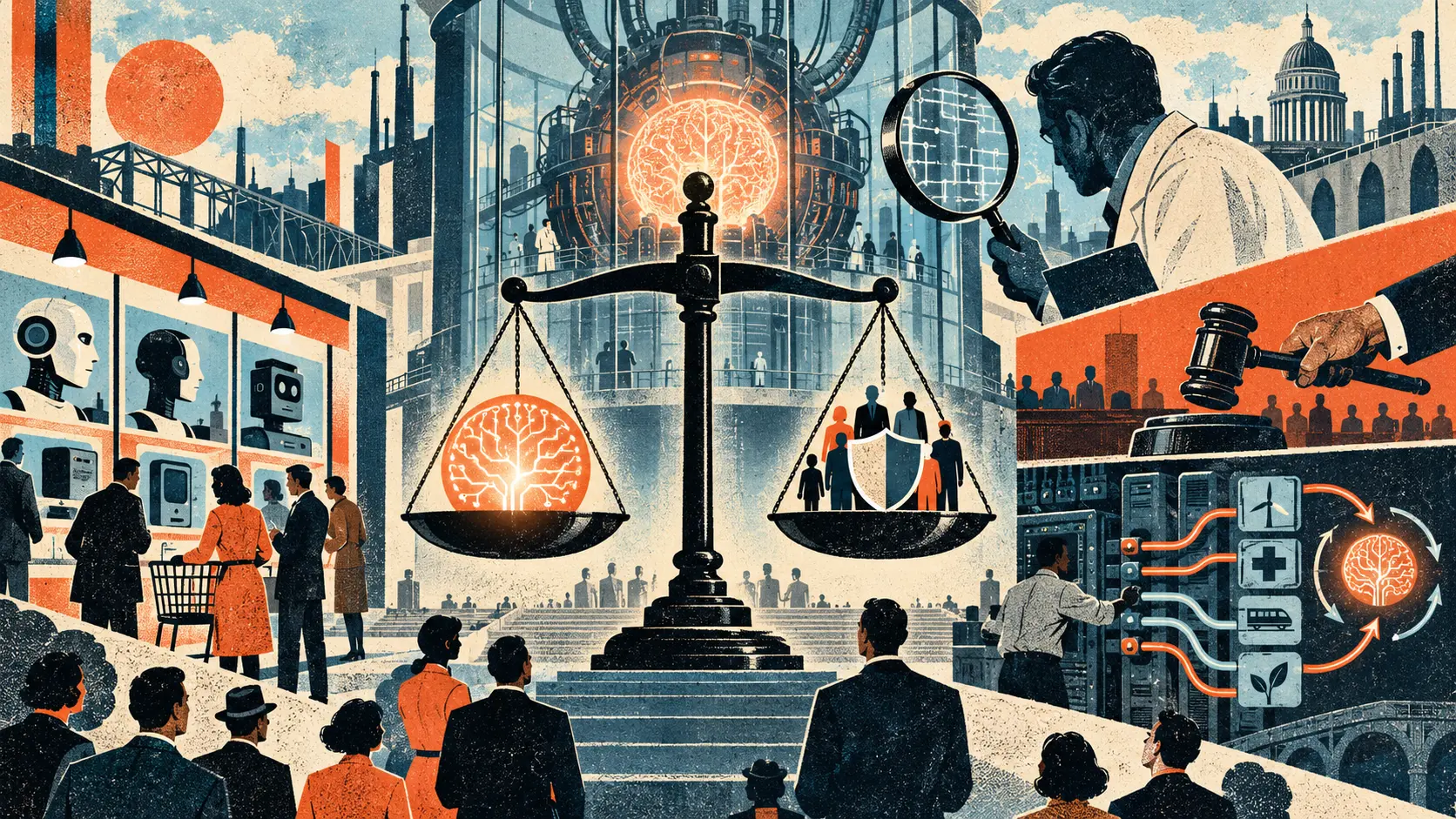
Mark Zuckerberg says frontier AI laboratories already have enough reason to develop powerful systems safely without waiting for a coordinated industry slowdown. His September 16 argument rests on four mechanisms. Customers will prefer products they trust. Companies face liability when their systems cause harm. Independent evaluators can test important risks. Laboratories can direct scarce computing power toward useful products instead of systems that recursively improve themselves. Zuckerberg points to Meta delaying its Muse agent for several months to strengthen security and says the company gives a significant majority of its compute to products that serve people. Each mechanism could matter. None is a result by itself. Customers cannot reward safety they cannot observe. Liability arrives only when a harmed person can identify a defendant, prove causation, survive the legal process, and obtain a meaningful remedy. An evaluator is independent only when access, funding, test selection, publication, and consequences support that description. A compute share means little without a numerator, denominator, time period, and audit. The plain signal is that an incentive can begin a safety system, but evidence has to finish it.
01
WHAT ACTUALLY CHANGED
Zuckerberg publicly rejected the idea that leading AI laboratories must coordinate their pace before any one of them can act safely. Reuters and the Associated Press report that he placed responsibility on each company and argued that competition and liability give laboratories both the reason and the ability to train and release systems safely at their own pace. This is a position in a live policy dispute, not a completed demonstration that individual action covers every shared risk.
His customer argument is that trust and alignment will become product features. A laboratory that neglects them should lose users to one that does better. That mechanism is strongest when buyers can compare a visible failure before choosing and can switch at low cost. The post does not provide a common safety score, incident history, model comparison, disclosure rule, switching measure, or evidence that people can detect important frontier risks before exposure.
His liability argument is that companies face significant consequences if their systems cause harm. Liability can change design when duties, defendants, evidence, causation, damages, jurisdiction, and enforcement are clear. The statement does not identify which existing claims would cover a catastrophic model failure, what evidence an injured party could obtain, how distributed downstream use affects causation, or how payment after harm would address an irreversible loss.
Zuckerberg says Meta delayed Muse for several months while improving security and can take such a step without requiring every rival to do the same. That is a concrete company claim about one release decision. The cited statement does not provide the original date, risk trigger, evaluation method, failed threshold, remediation record, revised release plan, independent finding, or evidence that the delay produced a safer system.
He also says Meta Superintelligence Labs uses independent evaluators in several areas and directs a significant majority of compute toward products serving people rather than recursive self-improvement. The statement does not name the evaluators, describe their access or publication rights, publish findings, define recursive self-improvement, quantify either compute pool, state the time window, or supply an independent audit. Those omissions do not make the claims false. They keep them from being verified as operating controls.
02
WHY THIS MATTERS
Markets can discipline a restaurant with bad reviews because customers can inspect the meal, compare nearby choices, and leave. Frontier AI safety can involve hidden capabilities, rare failures, effects on noncustomers, delayed harm, and systems embedded inside other products. When information arrives after deployment, the price signal is late. Useful competition needs standardized evidence that appears before the choice and follows the model into every place it is used.
Liability is often described as if the invoice appears automatically. It does not. A person may need standing, a recognized legal duty, access to technical records, proof that one system caused the loss, a solvent defendant, a suitable court, years of time, and a remedy that still matters. Strong liability rules can encourage care, insure losses, and expose evidence. They cannot substitute for prevention when the harm cannot be reversed or belongs to people who never bought the product.
Independent evaluation is a relationship, not a label. A laboratory may hire an excellent outside team and still limit which model it sees, which tools it can use, which risks it may test, whether findings become public, and what happens after a failure. Independence becomes credible when the evaluator has technical access, conflict disclosure, stable funding, freedom to report important results, and a release consequence that the developer cannot quietly waive.
Compute allocation is attractive because it sounds measurable. The measurement is harder than the sentence. Training, post-training, inference, evaluation, safety research, synthetic data, agent operation, product experimentation, and research on better training methods can share machines and serve more than one purpose. A company should define each category, publish total capacity and utilization over time, explain mixed workloads, and let a qualified outsider reproduce the calculation.
Individual action and coordination are not opposites. Laboratories can make their own release decisions while regulators, researchers, insurers, standards bodies, and competitors agree on incident formats, test methods, capability thresholds, evidence retention, and emergency communication. Competition law deserves care because safety language can disguise exclusion or collusion. The answer is supervised, narrow coordination with public rules and records, not a choice between one private conscience and one private club.
03
WHERE IT COULD HELP
- Publish a dated safety ledger for every major release that names the risk, metric, threshold, test result, decision owner, remediation, unresolved limit, and reason the release was approved, restricted, delayed, or cancelled
- Give qualified outside evaluators reproducible access to the relevant model, tools, scaffolding, training and deployment context, incident data, and test budget, while disclosing funding, conflicts, denied requests, publication rights, and developer responses
- Define a liability path before deployment that identifies the responsible legal entities, preserved evidence, user and nonuser claims, insurance, jurisdiction, reporting duty, compensation route, appeal, and remedy for harm that cannot be undone
- Report compute allocation with a complete denominator, hardware boundary, workload taxonomy, utilization, time window, mixed-use rule, subsidiaries, exclusions, historical changes, and independent assurance instead of one unquantified majority claim
- Let buyers compare portable safety records through common model identifiers, incident reports, capability evaluations, security findings, corrective actions, support periods, data practices, and switching tools that remain visible when the model is bundled inside another service
KEEP A HAND ON THE WHEEL
Zuckerberg's statements about user demand, liability, the Muse delay, independent evaluation, and compute allocation are Meta claims and an argument about incentives. The cited materials do not disclose the original Muse schedule, security issue, testing method, evaluator identities, contracts, access, findings, incidents, compute figures, workload definitions, audit, or evidence that any mechanism prevented harm. Competition can reward visible quality while missing hidden, systemic, delayed, or third-party risk. Liability depends on law, evidence, attribution, enforcement, resources, and remedy. An evaluator selected and paid by a laboratory may still do valuable work, but independence must be demonstrated through structure and conduct. A large compute share for user products does not establish the safety of those products or rule out dangerous work elsewhere. Watch for a Meta safety framework tied to release gates, named outside evaluations, published results and dissent, an auditable compute ledger, Muse documentation, incident reporting, legal tests of frontier-model responsibility, and evidence that users can compare safety before choosing.
04
TERMS WORTH KEEPING
OPEN GLOSSARY CARD
Market incentive
A reward or penalty created by prices, customer choices, competition, investment, reputation, or other market activity that can influence an organization's behavior.
OPEN GLOSSARY CARD
Liability
Legal responsibility for harm that may require a person or organization to compensate losses, correct conduct, or face another enforceable consequence.
OPEN GLOSSARY CARD
Recursive self-improvement
A process in which an AI system contributes to making later versions of itself or its development process more capable, potentially creating a repeated improvement loop.
SOURCES AND VERIFICATION STATUS
This article was written from the materials below. Product claims and dates were checked against those sources on September 16, 2026.
PUBLICATION RECEIPT: Revision 1. Published September 16, 2026.
THE PUBLICATION ENGINE
WANT A SIGNAL OF YOUR OWN?
We build source-grounded publications, private briefings, and editorial systems for organizations with something useful to say.
WORK WITH US