THE SIGNAL IN ONE SENTENCE
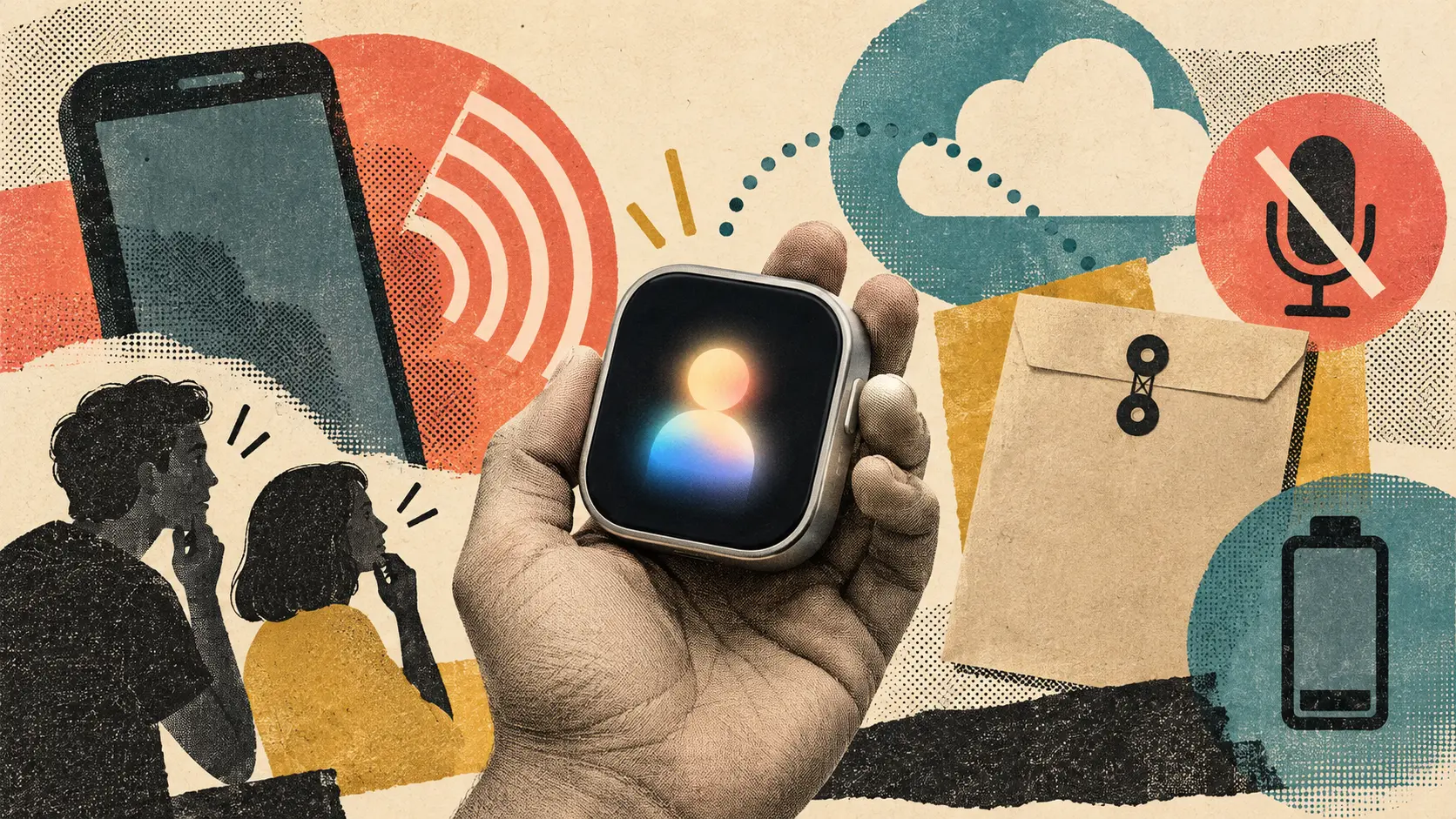
Meta used its Connect event on September 23 to reveal Muse Charm, a pocket-watch-sized device built around its new Muse personal agent. The official event summary calls it a pocket-sized way to speak with Muse and promises more information later in 2026. Reuters, whose reporter saw the reveal, adds the first useful hardware details: a roughly two-inch screen operated with a thumb, a customizable Muse character, a built-in 5G modem and no ability to make calls. Users tap the device to reach Muse without opening an AI app on a phone. That is enough to identify the idea. It is not enough to evaluate the product. Meta has not published a price, release date, battery estimate, processor, memory, storage, cellular plan, supported countries, repair policy or complete sensor list. It has not said what runs on the device, what runs in Meta's cloud, what happens without a connection, how conversations are retained or how a person nearby can tell whether the gadget is listening. It has not even given the public a complete product page. That missing sheet matters because Muse is not merely a talking character. Meta says the agent can send email, book travel, fill forms, negotiate and remember information about its owner. A dedicated button for that system is a dedicated doorway into accounts, communications and purchases. Reuters also reported this week that human contractors secretly handled some calls during Muse testing, a gap between the product people thought they were using and the service actually completing the task. A new piece of hardware cannot repair that trust problem with charm alone. The plain signal is simple: the reveal showed the object before it showed the operating boundary. A pocket agent needs a public map of sensors, data paths, human handoffs, permission gates and failure states before anyone can decide whether it belongs beside the phone it claims to bypass.
01
WHAT ACTUALLY CHANGED
Meta revealed Muse Charm during its annual Connect event on September 23.
Meta's official Connect summary describes Charm as a pocket-sized device made for speaking with Muse and says more details will arrive later in 2026.
Reuters reported from the event that the device is approximately the size of a pocket watch and has a roughly two-inch, or five-centimeter, display.
Reuters says the display can be navigated with a thumb and centers a customizable Muse character.
The device has a built-in 5G modem, allowing access to Muse away from Wi-Fi, according to Reuters.
Charm cannot make telephone calls, despite having cellular connectivity.
Users can tap the device to reach Muse directly rather than opening an AI application on a smartphone.
Mark Zuckerberg said Meta had packed the Muse voice and avatar experience into a small device and was shifting its device work toward what he calls personal superintelligence.
Zuckerberg also said Muse would come to Meta's smart-glasses lineup, placing Charm inside a broader strategy rather than presenting it as a lone experiment.
Analysts quoted by Reuters said the object may appeal to younger users through personalization, fashion and nostalgia, while warning that dedicated AI handhelds have struggled to justify themselves beside phones, watches, earbuds and glasses.
The public reveal did not include a complete specification sheet, price, order page, release date or supported-market list.
Meta has not publicly identified Charm's processor, memory, storage, battery capacity, expected battery life, charging method, durability rating, repair options or security-support period.
Meta has not said whether Charm runs a language model locally. Reuters quoted an analyst discussing that as a possibility, not as a confirmed capability.
Meta has not published a complete list of Charm's microphones, cameras, motion sensors, biometric sensors or physical privacy controls.
The company has not explained which Charm interactions remain on the device, which move through the cellular network to Meta systems and which can involve outside services or people.
02
WHY THIS MATTERS
A dedicated device should solve a problem that the phone does not. Faster access can be useful, but one less tap is a thin reason to buy, charge and secure another computer.
The no-calls detail is clarifying. Charm uses a cellular network to reach an agent, not to replace the basic communication function of a phone.
Built-in 5G turns the device into an always-available network endpoint. The missing questions include carrier support, service fees, roaming, data use, lost-device controls and behavior when coverage disappears.
Voice access requires at least a microphone, but the reveal has not established the complete sensor package or whether a physical mute switch exists. A small object carried in public needs an unambiguous recording state.
A camera should not be assumed simply because the product has a screen or an avatar. If Meta later includes one, the company should state its field of view, activation rules, indicator design and retention behavior before sale.
Bystanders did not buy the device or accept its terms. They still need a visible, understandable signal when their words or images can enter an agent workflow.
Local processing changes the privacy, latency and offline story. Cloud processing changes the network, retention and account-risk story. Meta has not yet drawn that line for Charm.
A claim that a small language model might run locally came from an analyst quoted by Reuters. It should not be promoted into a product fact until Meta publishes the architecture.
Muse can act across email, travel, shopping and forms. A tap that begins a conversation may eventually lead to consequential actions, so the device must separate listening, drafting, approving and executing.
A tiny screen limits how much evidence and context can be shown before approval. That creates a human-factors question: can a person really inspect the destination, price, dates, account and cancellation terms before authorizing an action with one thumb?
The device is also an account-recovery problem. If it is lost or stolen, the owner needs a fast remote lock, revocation and activity review without depending on the missing gadget.
Meta says Muse runs on a secure virtual machine and gives users control over access. The Charm reveal does not yet explain how that software architecture maps onto the hardware, cellular connection and local credentials.
Reuters previously reported that human contractors completed some calls during Muse testing without that arrangement being disclosed to testers at first. Hardware disclosure should therefore include human handoffs, not only chip and battery details.
A friendly avatar can make a system feel social and trustworthy. It cannot communicate whether the agent is recording, waiting, sending data, asking a human for help or about to spend money unless the interface deliberately shows those states.
Earlier dedicated AI gadgets struggled when their capabilities, battery and reliability failed to beat the phone already in a customer's pocket. Charm will be judged against that practical baseline, not against the applause of a launch demo.
The social value could still be real. A small voice-first device may help people who dislike glasses, have difficulty navigating phone interfaces or want quick access while their hands are occupied. Those benefits need accessibility testing, not demographic guesswork.
A product that becomes personal by remembering a person also needs a memory panel, retention schedule and deletion path. Personalization without inspectable memory is just an invisible dossier with a cheerful face.
The most important specification may be the support lifetime. An agent gadget tied to cloud systems can lose core functions if models, subscriptions, networks or company priorities change.
03
WHERE IT COULD HELP
- Publish one product sheet that distinguishes confirmed launch features from planned capabilities and leaves no room for analyst speculation to become a specification.
- List every sensor, its purpose, when it activates, what indicator appears and whether a physical switch can disconnect it.
- Draw the data path for a simple voice question, a web task, an email, a purchase and a call that requires human help.
- Label each processing step as on-device, Meta cloud, outside service or human contractor, with the retention period for each copy.
- Provide a real hardware mute control whose state does not depend on software and remains obvious when the screen is asleep.
- Use distinct visual and audible states for idle, listening, recording, uploading, waiting for approval, acting and involving another person.
- Let bystanders recognize those states from several feet away without having to know the product or read a tiny icon.
- Require a second, explicit confirmation for payments, bookings, messages, account changes and actions that cannot be easily reversed.
- Move high-context approvals to a larger trusted screen when the two-inch display cannot show the destination, amount, dates and consequences clearly.
- Show the exact account and service Charm will use before an action, especially when one person has multiple email, shopping or travel profiles.
- Give users a plain-language memory dashboard where they can inspect, correct, export and delete what Muse has retained.
- Offer an offline mode that clearly states which features still work and prevents a network failure from masquerading as a completed task.
- Publish realistic battery tests for idle carry, frequent voice use, weak cellular coverage, hot weather and continuous avatar animation.
- Explain the cellular plan, supported carriers, international roaming, emergency limitations and what happens when a subscription ends.
- Provide a lost-device page with remote lock, credential revocation, recent activity and a way to recover access without the Charm.
- Commit to a minimum period for security updates, replacement batteries or repair, and continued core service.
- Test the device with blind and low-vision users, people with limited dexterity, Deaf and hard-of-hearing users and people with speech differences before treating voice-first access as universal.
- Run independent comparisons against the same Muse tasks on a phone, watch, earbuds and glasses, measuring setup time, completion rate, correction burden, privacy comprehension and battery cost.
- Report how often the agent needs a human contractor, how that handoff is disclosed and which data the contractor can see.
- Make the product earn its pocket by publishing three jobs it performs materially better than a phone, with the test method and failure rate attached.
KEEP A HAND ON THE WHEEL
Meta's September 23 Connect summary confirms only that Muse Charm is a pocket-sized device for speaking with Muse and says more information will come later in 2026. Reuters observed the reveal and reported the roughly two-inch screen, thumb navigation, customizable Muse character, built-in 5G modem, direct access to Muse and lack of calling capability. Reuters also reported analyst opinions about possible appeal and limited mass-market demand. Those opinions are not product measurements. One analyst said the device might be able to run a small language model locally. Meta has not confirmed that it does. The company has not published a price, release date, order page, battery estimate, processor, memory, storage, cellular plan, supported countries, durability rating, repair policy, complete sensor list, physical privacy controls, local-versus-cloud architecture, retention terms or security-support period. It has not said whether Charm has a camera. Do not infer one from the product category. Meta's separate Muse launch material describes the agent's secure virtual machine, browser actions and user permissions, but it does not answer how the Charm stores credentials or routes each interaction. Reuters' earlier reporting on undisclosed human contractors during Muse test calls makes the handoff question material. Watch for the full specification sheet, a product privacy notice, sensor indicators, independent battery and network tests, offline behavior, action-approval design, lost-device recovery, human-handoff disclosure, accessibility testing, repairability and a clear explanation of what Charm does better than the phone it still cannot replace.
04
TERMS WORTH KEEPING
OPEN GLOSSARY CARD
On-device processing
Computing performed on the user's own phone, tablet, computer, watch, or headset instead of sending every input to a remote server.
OPEN GLOSSARY CARD
Edge AI
AI computation performed on or near the device collecting the input instead of sending every step to a distant cloud service.
OPEN GLOSSARY CARD
Bystander consent
Meaningful notice and choice for people who may be recorded or analyzed by a device they do not own.
SOURCES AND VERIFICATION STATUS
This article was written from the materials below. Product claims and dates were checked against those sources on September 24, 2026.
PUBLICATION RECEIPT: Revision 1. Published September 24, 2026.
THE PUBLICATION ENGINE
WANT A SIGNAL OF YOUR OWN?
We build source-grounded publications, private briefings, and editorial systems for organizations with something useful to say.
WORK WITH US