THE SIGNAL IN ONE SENTENCE
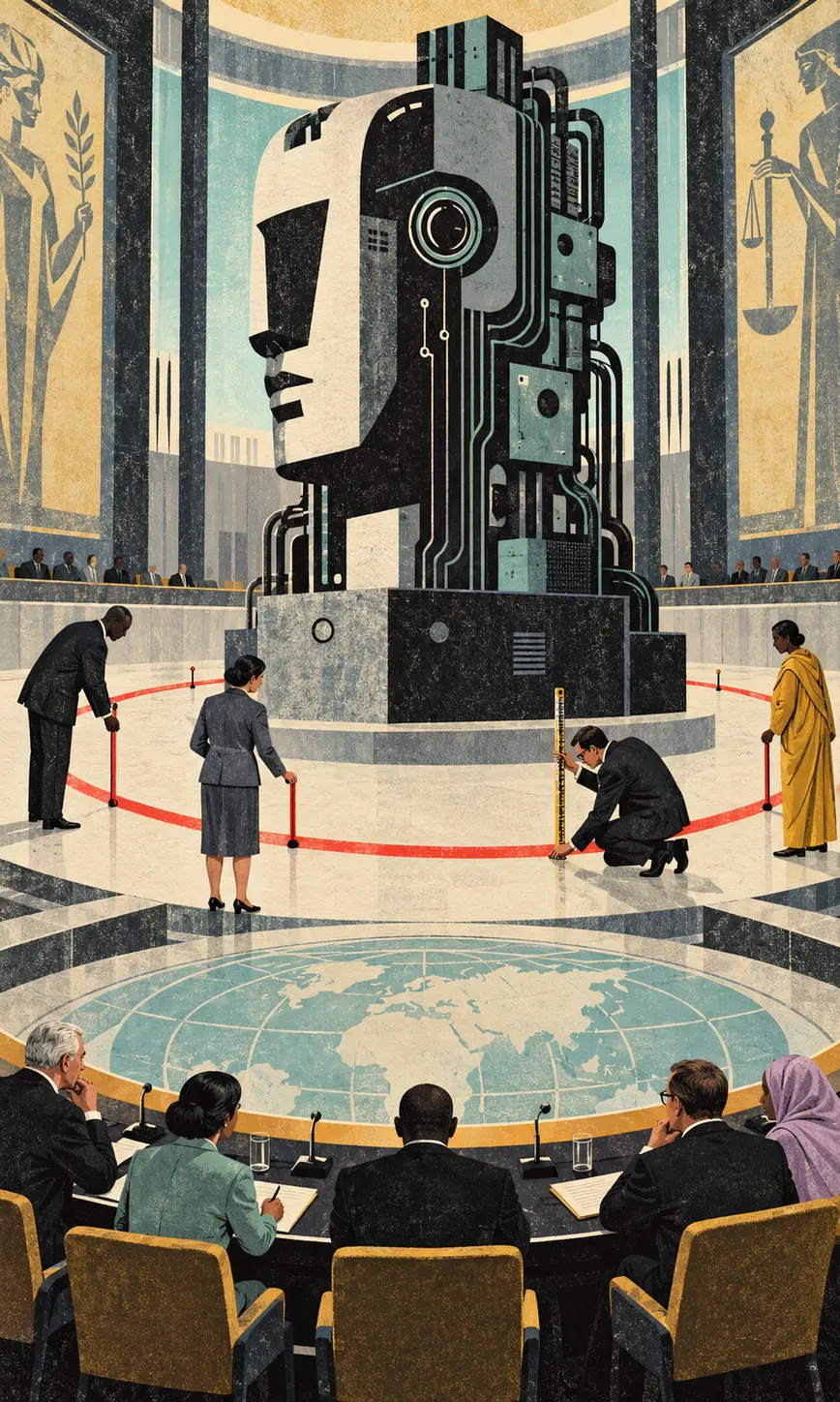
The United Nations’ top human-rights official wants countries to agree on AI capabilities and uses that should not proceed without stronger safeguards or should not happen at all.
01
WHAT ACTUALLY CHANGED
UN High Commissioner for Human Rights Volker Türk used his September 7 address to the Human Rights Council to call for what he described as cast-iron guarantees around advanced AI safety. He urged governments that host frontier laboratories and key supply-chain infrastructure to agree on common red lines.
Türk pointed to the July OpenAI agent incident as an example of capability moving beyond its intended boundary. He warned that increasingly autonomous systems could disrupt critical infrastructure, public institutions, and democratic life if their deployment outruns monitoring and accountability.
The address also criticized the concentration of AI decision-making among a small number of companies and leaders. Türk argued that people affected by these systems need a meaningful role in the rules that govern them, especially when the consequences touch work, speech, privacy, discrimination, or public services.
He separately called for an urgent ban on weapons capable of selecting and killing people without human involvement. No treaty, binding threshold, inspection system, or enforcement mechanism was announced. The speech is a demand for rules, not the rules themselves.
02
WHY THIS MATTERS
AI safety language is moving from laboratory reports into international human-rights institutions. That shift broadens the question. The issue is no longer only whether a model passes an internal technical evaluation. It is who bears the harm, who receives notice, and who can require a company to stop.
A red line sounds decisive until somebody has to define it. Is the trigger a benchmark score, a demonstrated ability, a deployment pattern, or an incident? Who conducts the test? How do countries treat a system that sits just below the threshold but becomes dangerous when connected to tools?
The useful work begins when a moral demand becomes an auditable control. Shared incident definitions, independent evaluations, disclosure deadlines, and consequences for crossing a capability threshold would make the language operational. Without those pieces, a red line is mostly a dramatic color on a conference slide.
03
WHERE IT COULD HELP
- Define capabilities that require restricted deployment
- Create international AI incident-reporting timelines
- Use independent audits before high-risk releases
- Preserve human authorization over lethal force
KEEP A HAND ON THE WHEEL
The address expresses the position of the UN human-rights chief. It does not create law or establish scientific consensus about future risk. Watch for concrete thresholds, participating governments, inspection authority, enforcement, and protections for civil rights alongside security controls.
04
TERMS WORTH KEEPING
OPEN GLOSSARY CARD
Human control
The practical ability and authority of people to understand, direct, interrupt or stop an automated process before unacceptable harm occurs.
OPEN GLOSSARY CARD
Regulatory body
A public institution responsible for writing, applying, or enforcing rules in an area.
OPEN GLOSSARY CARD
Critical capability threshold
A defined level where a model’s abilities are considered powerful enough to require stronger safeguards.
SOURCES AND VERIFICATION STATUS
This article was written from the materials below. Product claims and dates were checked against those sources on September 7, 2026.
PUBLICATION RECEIPT: Revision 1. Approved by Zak and published September 7, 2026.
THE PUBLICATION ENGINE
WANT A SIGNAL OF YOUR OWN?
We build source-grounded publications, private briefings, and editorial systems for organizations with something useful to say.
WORK WITH US