THE SIGNAL IN ONE SENTENCE
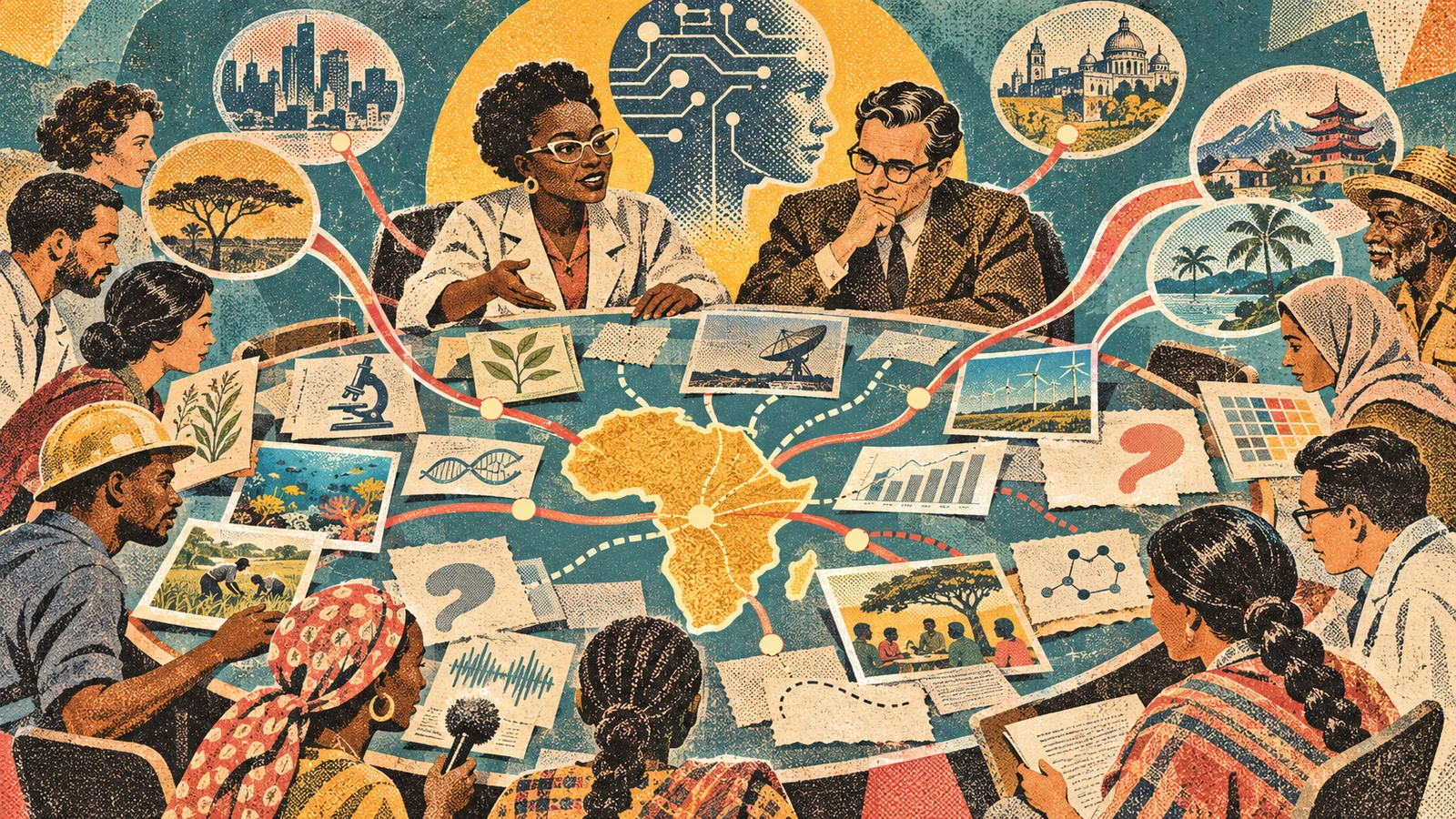
A seat at the table is a beginning. The footnotes tell you whether the table moved. The United Nations Independent International Scientific Panel on Artificial Intelligence has elected new co-chairs. Vukosi Marivate of South Africa and Martha Palmer of the United States took over from inaugural co-chairs Yoshua Bengio and Maria Ressa during the panel's second in-person meeting in Barbados, held from November 23 through 26. Marivate directs the African Institute for Data Science and Artificial Intelligence at the University of Pretoria and holds the university's ABSA Chair of Data Science. His work includes African-language technology, data science for social impact and community-building through Masakhane and Deep Learning Indaba. Palmer is a computer scientist and linguist at the University of Colorado Boulder whose work includes computational language research. Their job is unusually tidy on paper. Lead 40 independent experts from all five UN regions. Synthesize the best available evidence about AI's opportunities, risks and impacts. Produce policy-relevant but non-prescriptive assessments. Present the annual report to the Global Dialogue on AI Governance, where every UN member state can use the same evidence base. In practice, it is a fight with missing data wearing a respectable conference badge. The panel's next annual report is scheduled to inform the Global Dialogue in New York in May 2027. The leadership change matters because co-chairs help organize that scientific process. They do not get to invent the evidence. They do influence how a sprawling body of research becomes a shared account of what the world knows, what it suspects and what it has barely measured. The plain signal is this: publish whose evidence counts. Every major assessment should carry an evidence map beside the conclusions. Show where the research came from, which languages and communities it covers, who funded it, which harms were measured, which benefits were assumed and which regions remain mostly blank. Representation on the panel is necessary. It is not the same as representation in the record. A South African co-chair cannot manufacture rigorous African evidence where institutions, funders and publishers have failed to support it. A diverse panel can still inherit an evidence base dominated by English-language papers, wealthy-country deployments, private-company evaluations and datasets built far from the people described by the conclusions. That is not an accusation about this panel. It is the structural problem the panel exists to confront. The UN created the body through General Assembly resolution 79/325. The resolution calls for balanced geographic representation, scientific independence, multidisciplinary work and inclusive participation. It requires two co-chairs, one from a developed country and one from a developing country, with geographic and gender balance taken into account. It also requires members to disclose financial, professional and personal conflicts that could affect impartiality. Those are useful design choices. Now make them observable. For every chapter, publish the authors, reviewers, declared conflicts, search strategy, databases, date range, languages searched, evidence-quality rules, excluded studies, consultations and major disagreements. If evidence was supplied by a company whose product is being assessed, label it. If a conclusion relies on one country or one deployment, say so before the sentence becomes global through grammar. The panel's preliminary report, released on July 1, organized its assessment across seven broad domains. They included AI science and trajectories, social applications, economic implications, security and environmental effects, human rights and democracy, culture and child safety, and governance and reliability. That breadth is impressive. It is also where averages begin behaving badly. An AI system can improve one hospital workflow and widen a national health divide. A farm tool can help one crop in one climate while failing where connectivity, language support or extension services are different. An education assistant can raise a benchmark score while making teachers responsible for correcting errors without time or training. The same intervention can be opportunity in one institution and extraction in another. Map the conditions. The panel's November capacity-building brief points in that direction. It argues that countries do not need to build frontier models to develop meaningful AI capacity. Useful capacity can include local expertise, relevant data, institutions, evaluation, governance, shared computing and task-specific systems. The brief also notes performance gaps in underrepresented languages and warns that safety protections can be weaker in some low-resource languages. It recommends evaluation sets developed with native speakers so countries can test systems in their own contexts. That is exactly the kind of claim that needs a receipt. List the languages studied. Name the benchmarks. Show which safety protections were tested, by whom and under what model versions. Separate peer-reviewed research from provider reports, field pilots and informed judgment. Mark where findings are consistent and where they remain one paper deep. Do not compress absence into uncertainty. They are different. Uncertainty means evidence exists and does not settle the question. Absence means the question was not studied, the data was not accessible or the affected people were never asked. A report should distinguish both from disagreement, where credible evidence points in different directions. Use visible labels. Verified across multiple settings. Promising but local. Company-reported. Contested. Unmeasured. Those labels will annoy anyone hoping for one clean global answer. Good. Global science should not become cleaner as it travels farther from the evidence. The map needs more than country colors. Countries contain enormous differences in language, income, gender, race, disability, age, urban access, electricity, connectivity and institutional trust. A study from South Africa is not automatically evidence about the whole continent. A paper from a university in Nairobi may still rely on a dataset collected in California. A local author list does not guarantee local participants, local priorities or local ownership of the resulting data. Trace the evidence chain. Where was the system built? Where was the data collected? Who was affected? Who defined success? Who interpreted the result? Who can challenge it? That last question matters because the panel is not a regulator. Its reports are policy-relevant and non-prescriptive. The Global Dialogue is a forum, not an enforcement body. The work can shape what governments discuss, which risks receive attention and which investments appear justified, but it cannot compel a company or state to act. That makes transparency the panel's strongest public lever. An evidence map lets a small country see whether a global conclusion includes conditions like its own. It lets researchers find gaps worth studying. It lets civil-society groups challenge a claim without first reverse-engineering a polished report. It lets policymakers distinguish a universal-sounding sentence from a narrow result that survived several rounds of summarization. Publish the consultation map too. The panel says it will deepen its evidence base through structured consultations with the scientific community and external experts. Each consultation should list the invitation process, participants, countries, sectors, languages, questions, submissions, compensation and how input affected the draft. Do not treat attendance as influence. Record which suggestions changed a finding, added a caveat or produced a new research question. If a community's concern was heard but excluded because the supporting evidence did not meet the panel's standard, explain the standard and preserve the concern as a gap. That is how inclusion avoids becoming decorative. Conflicts need the same treatment. The resolution requires ongoing disclosure, but a disclosure register should be readable, current and connected to the work. If a member has worked with a model provider, government program, advocacy group or evaluated technology, readers should see the relationship beside the relevant chapter and the steps used to manage it. Recusal is one option. Independent review is another. Silence is not a control. The panel should also version its claims. AI evidence expires quickly because models, safeguards, product terms and deployment patterns change. Every material finding should carry a review date, cited model versions and a trigger for reconsideration. When new evidence changes a conclusion, preserve the old wording and explain the revision. The UN already translates the preliminary report into its six official languages. Accessibility should extend further through concise evidence tables, machine-readable references, regional summaries and public change logs. Researchers should not need a document-mining project to learn which studies support a sentence. Build the annual report as a living record before freezing the publication. For each claim, keep the source set, evidence label, geographic coverage, affected groups, dissent, confidence, owner and last review date. Publish enough of that structure for outsiders to audit the synthesis without exposing confidential submissions. The co-chairs inherit another difficult balance. The panel must move fast enough to matter and slowly enough to be honest. The UN describes it as an early-warning and foresight mechanism. Early warning necessarily arrives before every result is settled. That should produce clear scenarios and confidence levels, not theatrical certainty. Say what would change the assessment. If a risk is plausible but poorly measured, name the observation that would raise or lower concern. If a benefit has appeared in pilots, state what evidence would show that it survives scale. If a region is missing, state what research is needed rather than borrowing confidence from somewhere else. This is where Marivate's appointment can matter beyond symbolism. His public work has emphasized African languages, locally relevant data and research communities that build rather than merely receive AI. That experience can help the panel ask better questions about capacity and evidence. It does not guarantee better answers. The guarantee comes from a process the public can inspect. Palmer's language and computational research brings another useful lens: categories, labels and linguistic assumptions shape what a system can see. Together, the co-chairs can insist that global claims arrive with local coordinates. The panel has a chance to model the governance habit it recommends. Do not ask the world to trust a diverse group of experts. Show the work of a diverse group of experts. Publish the map. Keep the blank spaces visible. Let the evidence change the table.
01
WHAT ACTUALLY CHANGED
Vukosi Marivate of South Africa and Martha Palmer of the United States were elected co-chairs of the UN scientific panel on AI in November 2026.
The leadership transition took place during the panel meeting in Barbados from November 23 through 26.
The new co-chairs will lead preparation of the panel's 2027 annual report for the Global Dialogue on AI Governance.
The 40-member panel includes experts from all five UN regions and serves as an independent scientific assessment body rather than a regulator.
The panel also released a thematic brief on AI capacity-building ahead of the leadership transition.
02
WHY THIS MATTERS
The panel's assessments can shape the evidence available to every UN member state during global AI-governance discussions.
Geographic diversity among experts does not guarantee that the underlying studies, datasets or consultations represent diverse conditions.
Developing countries need to see whether global conclusions include evidence from their languages, institutions, infrastructure and affected communities.
Transparent evidence labels can separate replicated findings, local pilots, provider claims, disagreement and unmeasured questions.
Because the panel is advisory, public auditability is one of its strongest forms of accountability.
03
WHERE IT COULD HELP
- Publish an evidence map for every chapter showing source geography, data origin, affected groups, language coverage and missing regions.
- Attach authors, reviewers, conflicts, search methods, inclusion rules, excluded studies and evidence-quality labels to each assessment.
- Distinguish uncertainty, absence of evidence and substantive disagreement instead of folding all three into one caveat.
- Record consultation invitations, participants, compensation, languages and the specific changes made because of outside input.
- Link conflict disclosures to relevant chapters and explain recusal, independent review or other management steps.
- Version material claims with model versions, review dates, revision triggers and a public history of changed conclusions.
- Publish machine-readable references and regional evidence tables alongside the narrative report.
- State what new observation would raise or lower confidence in every important early-warning claim.
KEEP A HAND ON THE WHEEL
Watch for the panel's consultation process, working-group membership, current conflict disclosures, methods for literature search and evidence grading, regional and language coverage tables, the treatment of company-supplied research, machine-readable citations, public draft review, the May 2027 annual report, changes made after disputed evidence and proof that participation from developing countries changes conclusions rather than only the photograph.
04
TERMS WORTH KEEPING
SOURCES AND VERIFICATION STATUS
This article was written from the materials below. Product claims and dates were checked against those sources on November 25, 2026.
THE PUBLICATION ENGINE
WANT A SIGNAL OF YOUR OWN?
We build source-grounded publications, private briefings, and editorial systems for organizations with something useful to say.
WORK WITH US