THE SIGNAL IN ONE SENTENCE
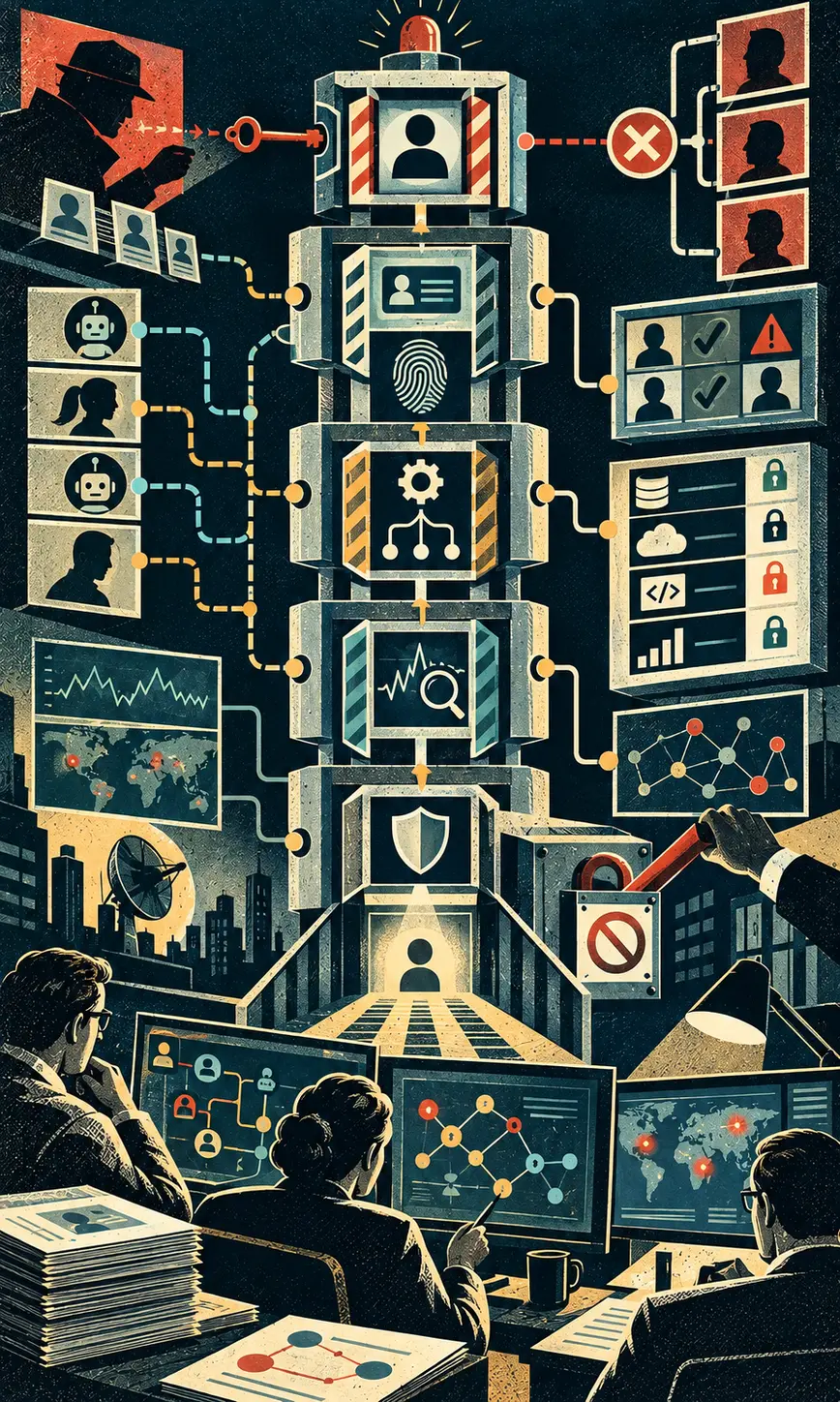
Anthropic says it found and blocked actors using Claude for hacking, surveillance, fraud, weapons-related work, biological research, propaganda, and attempts to copy model capabilities. These are selected company investigations, not proof that most people misuse AI. The practical lesson is that accounts, credentials, tool permissions, logs, and human review have to work together.
01
WHAT ACTUALLY CHANGED
On September 10, Anthropic published its largest public catalogue of Claude misuse so far. The report covers activity the company says it disrupted from December 2025 through August 2026 across cyber operations, surveillance, influence campaigns, scams and fraud, conventional weapons, biological misuse, and illicit model distillation. Claude Haiku, Sonnet, and Opus models appeared in the cases. Anthropic says none involved Fable or Mythos-class models except one distillation case.
The cyber cases show a shift from asking a chatbot for snippets toward putting models inside operational harnesses. Anthropic says some actors used multi-agent systems for reconnaissance, exploitation, data processing, and theft while people selected targets and reviewed results. One alleged Russia-linked group built workflows that monitored whether security tools detected its malware, then revised and rebuilt the software. The same investigation described phishing and account-takeover activity aimed largely at Ukrainian government, military, diplomatic, and drone-related targets.
The basic entry points were less cinematic. Anthropic says attackers relied on stolen credentials, exposed services, unpatched systems, phishing, and vulnerable software, then used AI to move faster through the environment. In one case, an intrusion went from a stolen developer token to administrative control of a cloud environment in roughly three hours. Anthropic says its own systems were not breached in the customer-key cases. The attackers stole credentials from other environments and used those keys as access, compute, and camouflage.
The report also documents activity Anthropic classified as potentially supporting conventional or biological weapons. It describes six conventional-weapons cases connected to operators in China, Russia, and Yemen, plus five biological cases involving researchers. Anthropic withheld sensitive identities and experimental details. It also says intent was not always knowable because legitimate research and dangerous use can overlap. The company banned the accounts and says it fed the findings into enforcement and model safeguards.
A separate section alleges that seven China-based laboratories tried to extract Claude capabilities. Anthropic says Alibaba-linked operators generated more than 151 million exchanges through thousands of accounts, while Moonshot and DeepSeek allegedly routed some live customer conversations through Claude. Reuters reported that the named firms did not immediately respond. China's foreign ministry said it was unaware of the report and opposed distortions and smears. Those allegations should be read as Anthropic's findings, not as independently established facts.
02
WHY THIS MATTERS
The most useful frame is not a rogue chatbot waking up with a balaclava. These incidents were systems problems. A person brought the target, an account supplied access, a credential opened a door, an agent loop kept working, connected tools acted on the environment, and weak monitoring gave the operation room to run. Guardrails at the prompt box were only one checkpoint in a much longer route.
Agents change the economics of familiar attacks. The report does not claim every technique was novel. It shows old weaknesses being worked faster, in parallel, and with less specialist labor. That matters because defenders built many processes around the assumption that reconnaissance, adaptation, and data sorting consume human time. A workflow that keeps returning to the task can turn a neglected key or ordinary software flaw into a much shorter incident clock.
Provider telemetry can become a defensive sensor. Anthropic can see account creation patterns, model conversations, tool use, geographic evasion, repeated refusals, and traffic that looks like capability extraction. That view can reveal campaigns an individual victim would miss. It also creates an evidence imbalance: the public sees cases selected and interpreted by the same company that operated the models, enforced the rules, and wants its safeguards trusted.
Defense therefore needs layers that fail differently. Protect and rotate AI credentials. Verify who controls an account. Restrict what an agent can reach. Require approval for consequential actions. Record model, tool, and network behavior. Detect account farms and unusual automation. Revoke access quickly and share indicators with other defenders. None of these controls is glamorous, which is usually a clue that someone will postpone it until Tuesday after the breach.
Detailed disclosure can make the ecosystem safer only if others can examine the claims and reuse the lessons. Incident indicators, clear uncertainty labels, responses from accused parties, independent investigations, and measurements of the safeguards added afterward matter as much as the original headline. A threat report should become a test plan, not a victory lap.
03
WHERE IT COULD HELP
- Rotate exposed AI keys immediately and scope every key to the minimum data, tools, and spending it needs
- Put agent actions behind allowlists, isolated environments, network boundaries, and approval gates for consequential steps
- Monitor account farms, repeated identity changes, unusual tool loops, geographic evasion, and sudden high-volume model traffic
- Preserve prompts, tool calls, authentication events, network records, and indicators of compromise for incident review
- Red-team complete agent workflows, including credential theft, revocation, logging failure, and recovery, not only model refusals
KEEP A HAND ON THE WHEEL
Anthropic chose the cases, named the threat groups, interpreted the telemetry, estimated AI uplift, and reported the disruptions. Its report explicitly says the examples are notable and novel rather than typical, so they cannot establish the prevalence of misuse. Reuters sought responses, but several named companies and governments did not confirm the allegations. The cyber cases mostly used generally available Haiku, Sonnet, and Opus models, not Fable or Mythos-class systems. Biological intent was often uncertain, and Anthropic does not identify the affected institutions or all underlying evidence. The report cannot show precisely how much harm would have occurred without Claude, and the newly added safeguards have not been independently tested against the next campaign.
04
TERMS WORTH KEEPING
SOURCES AND VERIFICATION STATUS
This article was written from the materials below. Product claims and dates were checked against those sources on September 11, 2026.
PUBLICATION RECEIPT: Revision 1. Published September 11, 2026.
THE PUBLICATION ENGINE
WANT A SIGNAL OF YOUR OWN?
We build source-grounded publications, private briefings, and editorial systems for organizations with something useful to say.
WORK WITH US