THE SIGNAL IN ONE SENTENCE
OpenAI made a version of ChatGPT for financial institutions that includes licensed company and market data instead of making every firm connect those sources itself. It can help build research, financial models, and client documents, while showing citations and using enterprise access controls. People still need to verify the numbers, assumptions, permissions, and final advice.
01
WHAT ACTUALLY CHANGED
On September 10, OpenAI launched ChatGPT for Financial Services, a tailored ChatGPT Work product aimed first at investment banking and equity research. It combines GPT-6 Astra with built-in premium data, connected firm sources, financial workflows, document templates, and enterprise controls. OpenAI says Morgan Stanley and Evercore served as design partners, helping shape the product around research, analysis, and client-material workflows.
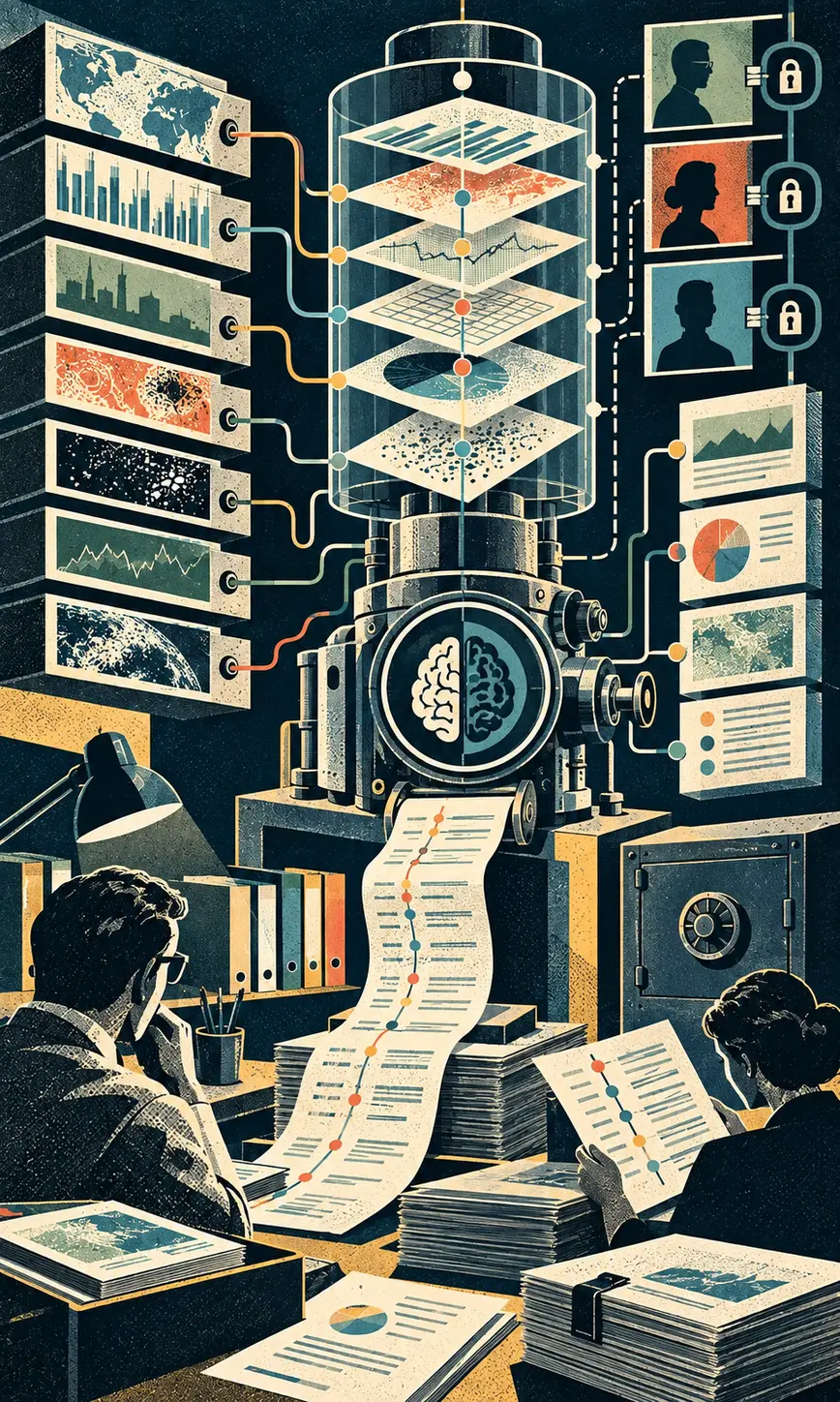
The most consequential feature may be the least glamorous: some expensive data arrives inside the product. OpenAI lists Daloopa, PitchBook, LSEG News, and Crunchbase among the built-in sources, covering material such as earnings transcripts, financial statements, company fundamentals, private-company records, funding, and acquisitions. OpenAI says institutions can use those datasets without negotiating separate contracts or wiring up individual connectors.
OpenAI indexes and hosts that built-in data on its own infrastructure. The company says this should improve retrieval and latency while enabling granular citations that point back to specific tables and passages. That is a meaningful design choice. In finance, a polished answer is decoration until an analyst can trace the number, read the footnote, and decide whether an adjustment belongs in the model.
For data a firm already licenses, OpenAI says it is working on shared sign-in and entitlement integrations with S&P Capital IQ, LSEG, MSCI, Dow Jones Factiva, and Moody's. The company also names more than 50 connectors in its broader ecosystem, including Datasite, Box, Preqin, FactSet, and Intapp. These are different access paths. Built-in data is packaged with the product, entitlement integrations recognize subscriptions a firm already owns, and connectors reach other approved systems.
The output side is packaged too. Administrators can publish Excel, Word, and PowerPoint templates so teams can turn analysis into valuation models, research notes, and pitchbooks in a firm's preferred format. Security features include SAML single sign-on, SCIM provisioning, role-based access, encryption at rest and in transit, configurable retention, supported audit-log exports, controls over skills and app actions, and separate workspaces for information barriers.
02
WHY THIS MATTERS
Financial AI has often failed at the plumbing. A general model may write a graceful paragraph while using stale figures, missing a footnote, or reaching a source the employee is not licensed to see. Bundling governed data with retrieval and citation can reduce that mess, which is far more valuable than teaching the model to say "adjusted EBITDA" with confidence.
Entitlements are part of the answer, not an administrative afterthought. Two analysts at the same bank may have different rights to research, private-market records, deal-room documents, or client files. The system needs to know who is asking, which workspace they are in, what each provider permits, and whether the generated artifact can be shared with its intended audience.
Templates can quietly change the economics of the work. If a team can move from sourced analysis to a familiar spreadsheet or presentation without rebuilding the layout every time, the product becomes part of production rather than a separate chatbot tab. It also raises the stakes. A beautifully formatted model can move faster through review, including when its assumptions are beautifully wrong.
Granular citations help only if the chain remains intact. An analyst should be able to follow each figure to the provider, document, period, table, and note, then preserve that evidence in the finished workbook or deck. A citation that disappears during export is not provenance. It is a temporary comfort blanket.
OpenAI is selling an institutional operating layer, not merely a smarter autocomplete. That makes model quality one risk among several. Firms must test data freshness, access boundaries, calculation accuracy, prompt injection, retention, audit completeness, licensing, version changes, and the point where an AI-assisted draft becomes regulated advice carrying a human name.
03
WHERE IT COULD HELP
- Compare company performance while keeping each figure linked to its source passage
- Normalize financial statements and expose every adjustment for analyst review
- Build valuation models with firm-approved spreadsheet templates and assumptions
- Screen buyers, targets, or private companies across licensed internal and external data
- Draft research notes and pitchbooks with role controls, audit logs, and a human approval gate
KEEP A HAND ON THE WHEEL
ChatGPT for Financial Services is available only to eligible institutions through sales, and OpenAI has not published public pricing, a complete data catalogue, rollout regions, service levels, or independent error measurements. The named design partnerships do not prove that every workflow is deployed broadly or approved for every regulated use. OpenAI reports the model benchmarks, retrieval gains, security posture, and default data-handling rules. Each institution still needs contractual review, security testing, model validation, record-retention controls, licensing checks, and human accountability. Built-in citations can make evidence easier to inspect, but they do not establish that a number is current, comparable, legally usable, or appropriate for a client decision.
04
TERMS WORTH KEEPING
SOURCES AND VERIFICATION STATUS
This article was written from the materials below. Product claims and dates were checked against those sources on September 11, 2026.
PUBLICATION RECEIPT: Revision 1. Published September 11, 2026.
THE PUBLICATION ENGINE
WANT A SIGNAL OF YOUR OWN?
We build source-grounded publications, private briefings, and editorial systems for organizations with something useful to say.
WORK WITH US