THE SIGNAL IN ONE SENTENCE
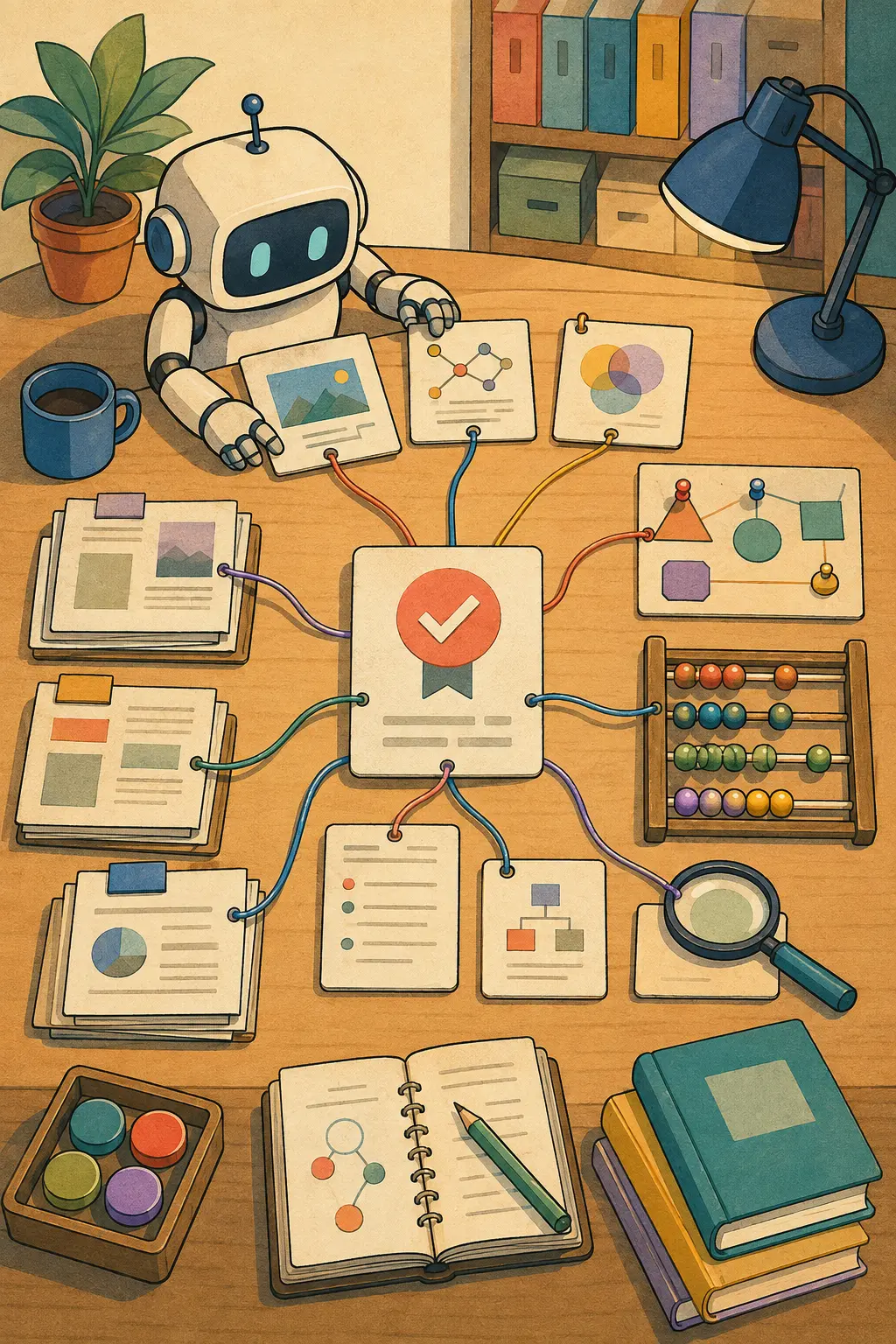
Apodex 1.1 combines a model with a workbench that keeps the evidence and intermediate work behind a long task instead of returning only a polished conclusion.
01
WHAT ACTUALLY CHANGED
Apodex announced version 1.1 as a system for research and execution inside a persistent workspace. The product is designed to keep sources, calculations, generated files, and intermediate steps attached to the task so a person can inspect how the result was produced.
Independent model tracker Artificial Analysis lists Apodex 1.1 with a score of 44 on its Intelligence Index and reports a comparatively high output price. Those measurements do not describe the entire workbench, but they offer an outside reference point for the underlying model’s measured performance and cost.
The company frames the product as a move beyond deep research toward verifiable execution. That phrase deserves care. Verification is not a magic property of a workspace. A receipt can show which source or calculation was used, while a human still has to decide whether the source was credible and the method appropriate.
02
WHY THIS MATTERS
Long AI tasks often fail at the handoff. A system may produce a neat report, spreadsheet, or recommendation while hiding the assumptions and discarded paths that shaped it. Persistent artifacts make the work reviewable by colleagues, auditors, and future versions of yourself.
This is particularly relevant in finance, operations, legal research, and strategy, where the conclusion is less valuable than the ability to reproduce it. The durable advantage may be the workspace and its evidence trail, not a single leaderboard position.
03
WHERE IT COULD HELP
- Build a research memo with every claim connected to a source
- Keep calculations and generated files beside the decision they support
- Hand a complex task to a colleague without losing its intermediate reasoning
- Review model work against a repeatable checklist before acting on it
KEEP A HAND ON THE WHEEL
Apodex’s product claims come from its launch materials. Artificial Analysis lists the model as proprietary, despite broader launch language about open frameworks. Buyers should verify licensing, data handling, prices, and the exact evidence retained by the workspace.
04
TERMS WORTH KEEPING
OPEN GLOSSARY CARD
Context window
The amount of input and generated material a model can consider during one call.
OPEN GLOSSARY CARD
Context window
The amount of information a model can actively consider at one time.
OPEN GLOSSARY CARD
Benchmark
A fixed test used to compare how systems perform on the same tasks.
SOURCES AND VERIFICATION STATUS
This article was written from the materials below. Product claims and dates were checked against those sources on September 1, 2026.
PUBLICATION RECEIPT: Revision 1. Approved by Zak and published September 1, 2026.
THE PUBLICATION ENGINE
WANT A SIGNAL OF YOUR OWN?
We build source-grounded publications, private briefings, and editorial systems for organizations with something useful to say.
WORK WITH US