THE SIGNAL IN ONE SENTENCE
Money can make a map larger. It can also make one bright topic cover the map completely. Brazil's National Council for Scientific and Technological Development, CNPq, announced on October 9 that its PROSUL Pepe Mujica call will receive roughly R$160 million in additional funding from the National Fund for Scientific and Technological Development. The call began with R$50 million. If the announced supplement is added in full, simple arithmetic points to roughly R$210 million in total. CNPq has not yet published a revised allocation table confirming that total or showing how the extra money will be divided. That distinction matters because the announcement says the supplement will help fund more qualified proposals, with special attention to projects related to artificial intelligence. Special attention is not the same thing as a reserved budget. CNPq has not said how much of the new money will go to AI, what share of selected projects will use it, whether the original per-project ceilings will change or which proposals have won. The preliminary result is scheduled for October 20. The plain signal is a good one with a condition attached. Brazil is expanding a serious attempt to fund research networks across Latin America and the Caribbean. AI should be one instrument in that regional project, not a magic word that pushes climate, food, health, energy, history and inequality into the footnotes. The original call is much broader than its latest headline. It names six strategic areas. Environment and sustainability includes climate change, biodiversity, water, renewable energy and circular economies. Food and agriculture includes food security, sustainable farming and resilient food systems. Energy and mining includes the energy transition and cleaner technologies. Health includes neglected tropical diseases, vaccines, medicines and resilient health systems. Information technology includes AI, smart cities, digital inclusion, cybersecurity and digital transformation. Humanities and social sciences includes the social, historical, educational, cultural and political forces shaping the region. That last category is especially easy to lose when funding conversations become a race to attach AI to every proposal. A model can help analyze satellite imagery, forecast crop disease or search a multilingual archive. It cannot decide which communities should bear the cost of a mine, whether a public-health system earned trust or why a migration route changed. Those are technical questions and social questions at the same time. Treating the second half as decorative produces brittle science. The call's architecture is built around cooperation, not solo prestige. Its stated goals include thematic research networks among Brazilian, Latin American and Caribbean institutions, mobility for researchers at different stages, jointly developed strategic projects, shared scientific infrastructure, specialist training, regionally useful innovation, international visibility and public science communication. For the two network categories, a proposal must involve Brazil and institutions in at least two other Latin American or Caribbean countries. Bilateral projects must involve Brazil and at least one other country. Partner letters are required. The original R$50 million design split funding evenly between scholarships and operating costs. It created three ranges: up to R$1.5 million for consolidated thematic networks, up to R$600,000 for emerging networks and up to R$400,000 for bilateral projects. The call also said at least 30 percent of resources should support projects involving institutions in Brazil's North, Northeast and Center-West, provided there are enough qualified proposals. At least 10 percent was intended for projects involving institutions linked to the Association of Universities of the Montevideo Group, again subject to qualified demand. Those details turn a slogan about regional science into a possible operating system. Scholarships can move early-career researchers between institutions. Operating funds can pay for materials, services and travel. Shared infrastructure can prevent every lab from buying an isolated version of the same capability. A network can connect expertise that already exists but is separated by borders, language, procurement and uneven access to equipment. The supplement could dramatically increase that reach. It could also reproduce the oldest shape in research funding: the most connected institutions absorb the new capacity while smaller partners appear as names on a proposal and little else changes. The public needs a project ledger when the preliminary and final results arrive. For every selected project, publish the lead institution, every partner, participating country, strategic area, approved budget, scholarship and operating split, project duration, infrastructure to be shared, researchers to be exchanged, communities or public services involved and expected public outputs. Add milestones, later amendments and final results in a format people can download. That ledger should make the AI share visible without pretending AI is a single field. An environmental project may use computer vision to monitor forest loss. A food network may build a crop-disease alert. A health project may use models to prioritize laboratory work. A humanities team may create tools for multilingual archives while studying whose records survive. These are examples of plausible uses, not descriptions of selected projects. The useful question is not whether a proposal contains AI. It is what regional problem the system addresses, what evidence justifies using it and who can operate, challenge and maintain it after the grant ends. An AI label should never rescue a weak partnership. A proposal can list three countries while sending most money, compute and authority to one lab. It can promise inclusion while collecting data from communities that never see the result. It can train a model on local languages while leaving the dataset, evaluation and deployment rules closed. It can call a dashboard regional infrastructure even when only one institution controls access. Reviewers need to inspect the distribution of power, not just the distribution of logos. For AI proposals, that means publishing which institution controls data, compute, model weights, evaluation and deployment decisions. It means testing performance by country, language and population rather than reporting one regional average. It means documenting consent, privacy, security, environmental cost and the route for correcting an error. It means budgeting for maintenance after the demonstration. For every other field, the same basic discipline applies. Who owns the instrument? Who can use the repository? Is a researcher from a smaller institution a co-designer or a data collector? Are publications open? Can a ministry, clinic, farmer group, school or community organization use the result without buying a proprietary dependency? The call itself points toward open access and science communication. That is a promising baseline. Open papers alone do not make a network open. Data may require privacy or sovereignty protections. Equipment schedules can still favor the host. Travel money can disappear before junior researchers receive it. A public repository can be technically available and practically useless if the documentation is in one language or the compute needed to run the code is inaccessible. Regional science needs access rules, not just access rhetoric. The strongest projects will probably look slightly boring from a technology-marketing desk. They will spend time on data standards, sample collection, maintenance, translation, training, governance, validation and relationships with public institutions. They will report negative results. They will leave a shared method or piece of infrastructure behind. Consider a cross-border drought and food-security network. The shiny part might be a forecasting model. The hard parts are aligning weather and crop records, measuring gaps in sensors, agreeing how alerts reach farmers, documenting false alarms, supporting low-connectivity areas and keeping the system alive after the grant. Or consider neglected tropical disease research. A model might help rank compounds or identify patterns in clinical data. But the value depends on laboratory validation, representative data, ethical review, health-system capacity and access to any resulting medicine. A benchmark improvement is not a public-health outcome. The humanities belong in this portfolio for the same reason. Regional cooperation is not only a data-transfer problem. It is shaped by language, colonial history, inequality, migration, education, law and institutional trust. Those fields can identify what a technical project assumes about the people it claims to serve. There is another fairness question inside Brazil. The original rule directing at least 30 percent of resources toward projects involving institutions in the North, Northeast and Center-West recognizes that national research capacity is unevenly distributed. The result ledger should show whether those institutions lead projects, control meaningful budgets and host infrastructure, or merely participate. The same test should extend across borders. Count leadership roles, scholarships, exchanges, equipment access and publications by country and institution. A network becomes regional when capability grows in several places, not when samples travel toward the center. CNPq says the extra money responds to a large volume of qualified proposals. That is encouraging, but the public cannot inspect the claim until the evaluation record is visible. After October 20, useful disclosure would include how many proposals were submitted and judged qualified in each area and range, how many were selected, the geographic spread, reviewer conflict controls, scoring criteria, requested versus approved amounts and the reasons strong proposals remained unfunded. Later, the same project IDs should connect to contracts, payments, outputs and final evaluations. That is how a funding supplement becomes evidence rather than applause. Approximate money is not awarded money. A preliminary result is not a contract. A project title is not a functioning network. An AI mention is not regional capacity. Brazil has created room for a much larger experiment in shared science. The region should be able to see whether that room is distributed across its map, whether six fields still fit inside it and whether the collaborations last longer than the grant announcement. AI can help. It just does not get to swallow the map.
01
WHAT ACTUALLY CHANGED
CNPq announced roughly R$160 million in additional FNDCT funding for the PROSUL Pepe Mujica regional science call
The call began with R$50 million, so a fully additive supplement would imply roughly R$210 million in total, although CNPq has not published a revised allocation table
CNPq said the supplement responds to a large volume of qualified proposals and will allow more projects to be supported
The announcement gives special attention to AI-related proposals but does not define an AI-only allocation or selection share
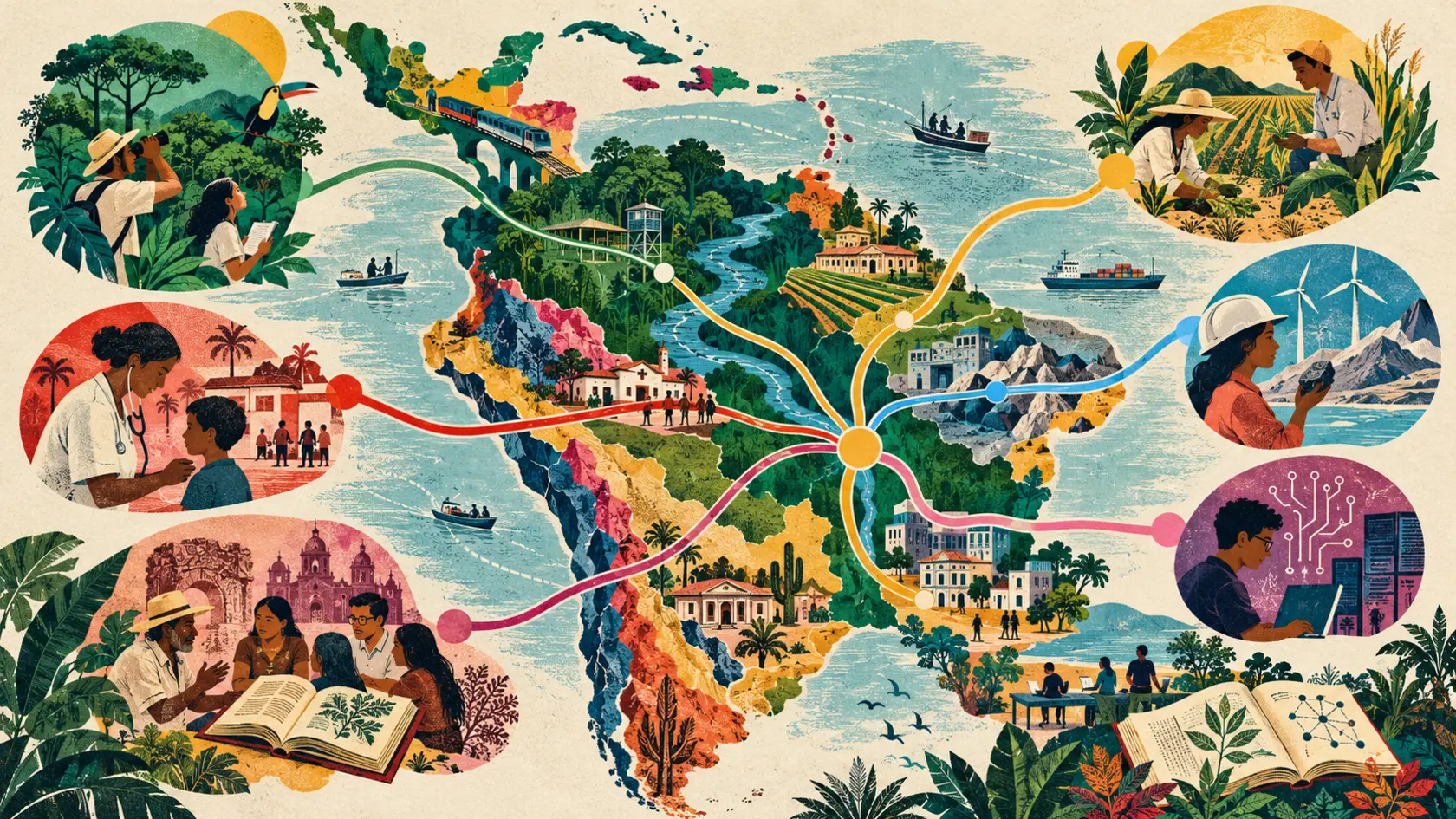
The call covers six strategic areas: environment, food and agriculture, energy and mining, health, information technology, and humanities and social sciences
Its structure supports cross-border research networks, researcher mobility, shared infrastructure, specialist training and public science communication
The preliminary result is scheduled for October 20, 2026
02
WHY THIS MATTERS
A large supplement can fund more durable regional capacity if money, infrastructure, leadership and mobility are distributed beyond the best-connected institutions
AI is one part of the information-technology area and can also serve other fields, but the announcement does not justify treating it as the whole program
Climate, food, energy, health and social problems cross borders and require institutions to share methods, data, equipment and expertise
Research partnerships can look international on paper while concentrating authority, resources and credit in one institution
Open papers are valuable, but usable regional infrastructure also needs fair access, documentation, maintenance and appropriate data protections
The October 20 result offers a concrete chance to publish a project-level ledger connecting awards to later outputs and public benefit
03
WHERE IT COULD HELP
- Publish each selected project with its countries, institutions, theme, budget, leadership roles, scholarships, infrastructure and milestones
- Show how the supplement changes the original funding ranges and the split between scholarships and operating costs
- Report AI funding and project counts without collapsing the other five strategic areas into an AI headline
- For AI projects, disclose control of data, compute, models, evaluation and deployment decisions across partner institutions
- Measure performance by country, language and affected population where one regional average could hide failures
- Track whether institutions in Brazil's North, Northeast and Center-West lead projects and receive meaningful budgets and infrastructure
- Count researcher exchanges, equipment access, open outputs and follow-on collaborations by country and career stage
- Budget for translation, documentation, maintenance, security and community participation alongside models and instruments
- Link preliminary results, final awards, payments, amendments, outputs and evaluations through permanent project identifiers
KEEP A HAND ON THE WHEEL
CNPq announced an approximate supplement, not a final award ledger. It has not published the revised total, the division of new resources among the three original funding ranges, an AI-only amount, a selection share for AI, winning projects or contracts. The original per-project ceilings and scholarship-to-operating-cost split may be adjusted when additional resources are identified, but a revised table was not available at verification. Watch the October 20 preliminary result for project names, countries, institutions, themes, budgets, geographic distribution, reviewer information and the treatment of the six strategic areas. Then watch for final contracts, payments, shared infrastructure, open outputs, researcher mobility and evidence of durable capability across partners.
04
TERMS WORTH KEEPING
OPEN GLOSSARY CARD
Thematic research network
A group of institutions and researchers organized around a shared field or problem, with work distributed across participating partners.
OPEN GLOSSARY CARD
Research mobility
Supported movement of researchers among institutions so they can train, conduct fieldwork, use facilities and build shared projects.
OPEN GLOSSARY CARD
Funding supplement
Additional money added to an existing call, program or award after its original budget was established.
SOURCES AND VERIFICATION STATUS
This article was written from the materials below. Product claims and dates were checked against those sources on October 11, 2026.
THE PUBLICATION ENGINE
WANT A SIGNAL OF YOUR OWN?
We build source-grounded publications, private briefings, and editorial systems for organizations with something useful to say.
WORK WITH US