THE SIGNAL IN ONE SENTENCE
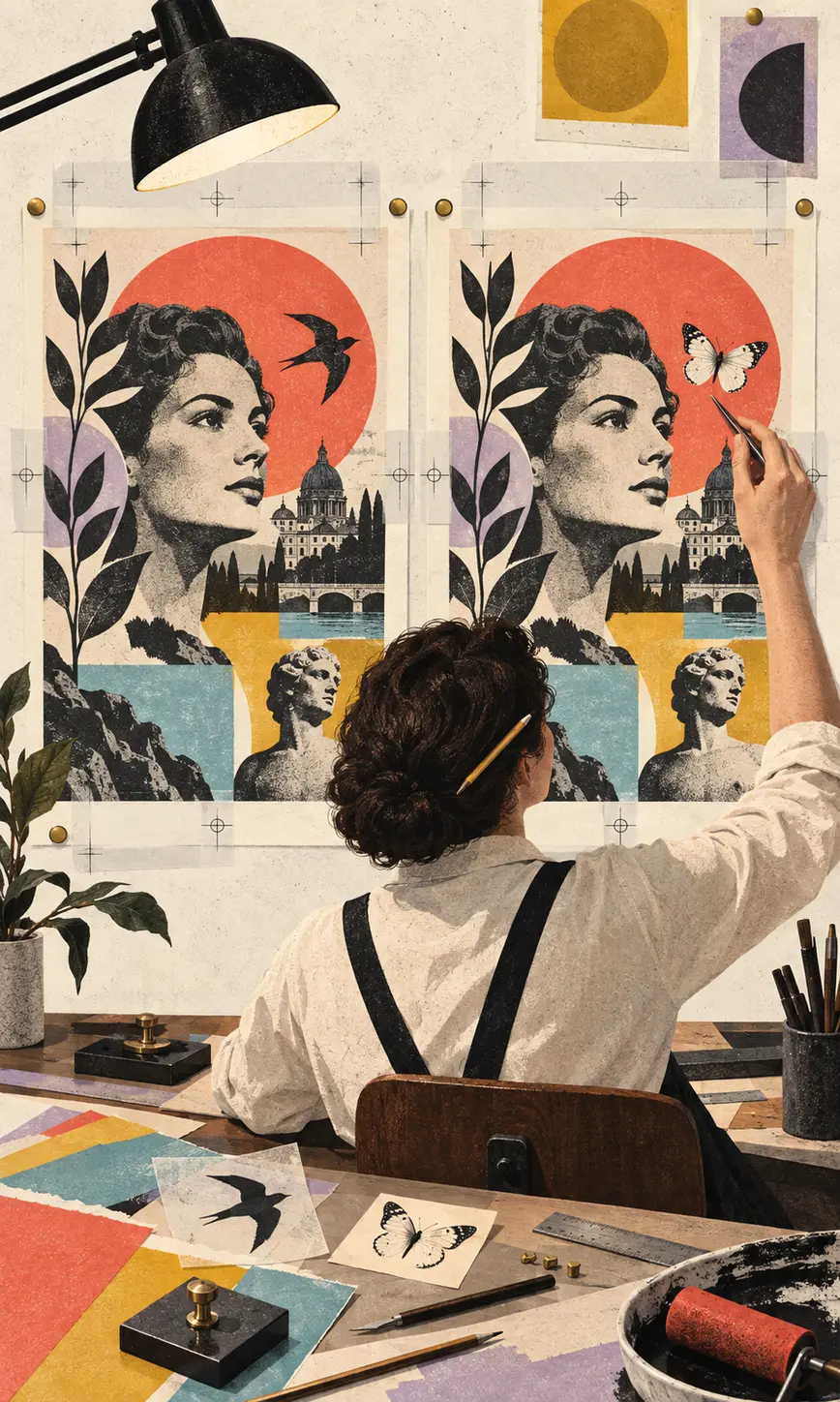
ChatGPT Images 2.5 is designed to change the specific part of an image you point to while keeping the surrounding subject, composition, and style more consistent across revisions.
01
WHAT ACTUALLY CHANGED
OpenAI released ChatGPT Images 2.5 on September 8 across ChatGPT, ChatGPT Work, and Codex. The rollout covers desktop, mobile, and web users across all tiers. The company says people now create more than 3 billion images each week across ChatGPT Images and its image models in the API.
The headline improvements are sharper detail, more natural lighting and texture, better preservation of subjects from reference photographs, and more reliable editing over several conversational turns. OpenAI says generation latency can be as much as 50 percent lower than Images 2.0, although it did not publish an independent benchmark or a workload-by-workload speed table.
Precision is the more useful claim. The model is intended to change one requested element, such as a product, background, or piece of copy, while preserving the subject, composition, and surrounding brand treatment. Earlier edits are also supposed to survive later revisions without the image slowly losing quality or wandering into a new design.
The ChatGPT interface gained several ways to specify an image without describing everything in prose. Sketch lets a person draw a rough composition and use it as a visual guide. Mobile users can place comments directly on generated images to target an edit. Templates offer starting structures for common formats, and shared prompts let another person reuse an idea with different photos and details.
Developers received two API models. GPT-Image-2.5 Flare is the faster default for most applications, while GPT-Image-2.5 Sunburst trades longer generation time for tighter control in polished creative work. OpenAI also continues to attach C2PA provenance metadata and now uses an invisible SynthID watermark across ChatGPT, Codex, and the API.
02
WHY THIS MATTERS
The first impressive image is rarely the expensive part of professional creative work. The expensive part begins when someone says, “Keep everything exactly the same, but move the product, fix the sleeve, and change Tuesday to Thursday.” Earlier generators often treated that request as permission to rebuild the whole scene and introduce six fresh surprises.
A model that understands what not to change starts behaving less like a slot machine and more like an editing tool. Reference fidelity gives a team a stable asset to revise. Multi-turn consistency gives the work a history. Together, those features make it more plausible to use generated images inside campaigns, product catalogs, interface concepts, presentations, and recurring character systems.
The new controls also acknowledge that language is not always the best interface for visual work. A circle drawn around the wrong chair can be clearer than a paragraph explaining which chair is wrong. A rough sketch can communicate spatial relationships that become painfully ambiguous when translated into left, right, behind, and slightly higher.
There is a quiet workflow shift here. If one generated asset can survive ten targeted revisions, teams need fewer full regenerations, less manual compositing, and less time comparing almost-identical drafts to discover what the model accidentally changed. Speed helps, but predictable preservation is what turns faster generation into faster completion.
Better realism raises the stakes as well. OpenAI says the model can create more convincing depictions of real people, places, and events, which also increases deepfake risk. Its safety card reports layered prompt, input, and output checks plus provenance tools. Those are important controls, but the company also says its automated adversarial evaluations are limited and do not represent ordinary production traffic.
03
WHERE IT COULD HELP
- Edit one product detail without rebuilding an entire advertisement
- Preserve a person or character across several visual variations
- Turn a rough mobile sketch into a more complete composition
- Iterate on presentation graphics and interface concepts across several turns
- Build higher-volume image workflows with the faster Flare API model
KEEP A HAND ON THE WHEEL
The quality, fidelity, and latency improvements are reported by OpenAI, and no independent launch benchmark establishes how consistently they hold across faces, typography, crowded scenes, or long edit sequences. Feature availability varies by platform. Templates are not yet available in Work mode, and existing ChatGPT image-generation limits remain unchanged. OpenAI also identifies heightened realism as a safety challenge. Its fixed adversarial evaluation found that unsafe images were still presented in 1.09 percent of Sunburst cases and 1.41 percent of Flare cases, with no statistically significant improvement in that measure over Images 2.0.
04
TERMS WORTH KEEPING
OPEN GLOSSARY CARD
Reference fidelity
How reliably a generated image preserves the recognizable subjects and important details from a supplied source image.
OPEN GLOSSARY CARD
Targeted editing
Changing one specified part of an image while keeping the surrounding composition and details stable.
OPEN GLOSSARY CARD
Content provenance
Information attached to or embedded in media that helps identify where it came from and how it was created.
SOURCES AND VERIFICATION STATUS
This article was written from the materials below. Product claims and dates were checked against those sources on September 9, 2026.
PUBLICATION RECEIPT: Revision 1. Published September 9, 2026.
THE PUBLICATION ENGINE
WANT A SIGNAL OF YOUR OWN?
We build source-grounded publications, private briefings, and editorial systems for organizations with something useful to say.
WORK WITH US