THE SIGNAL IN ONE SENTENCE
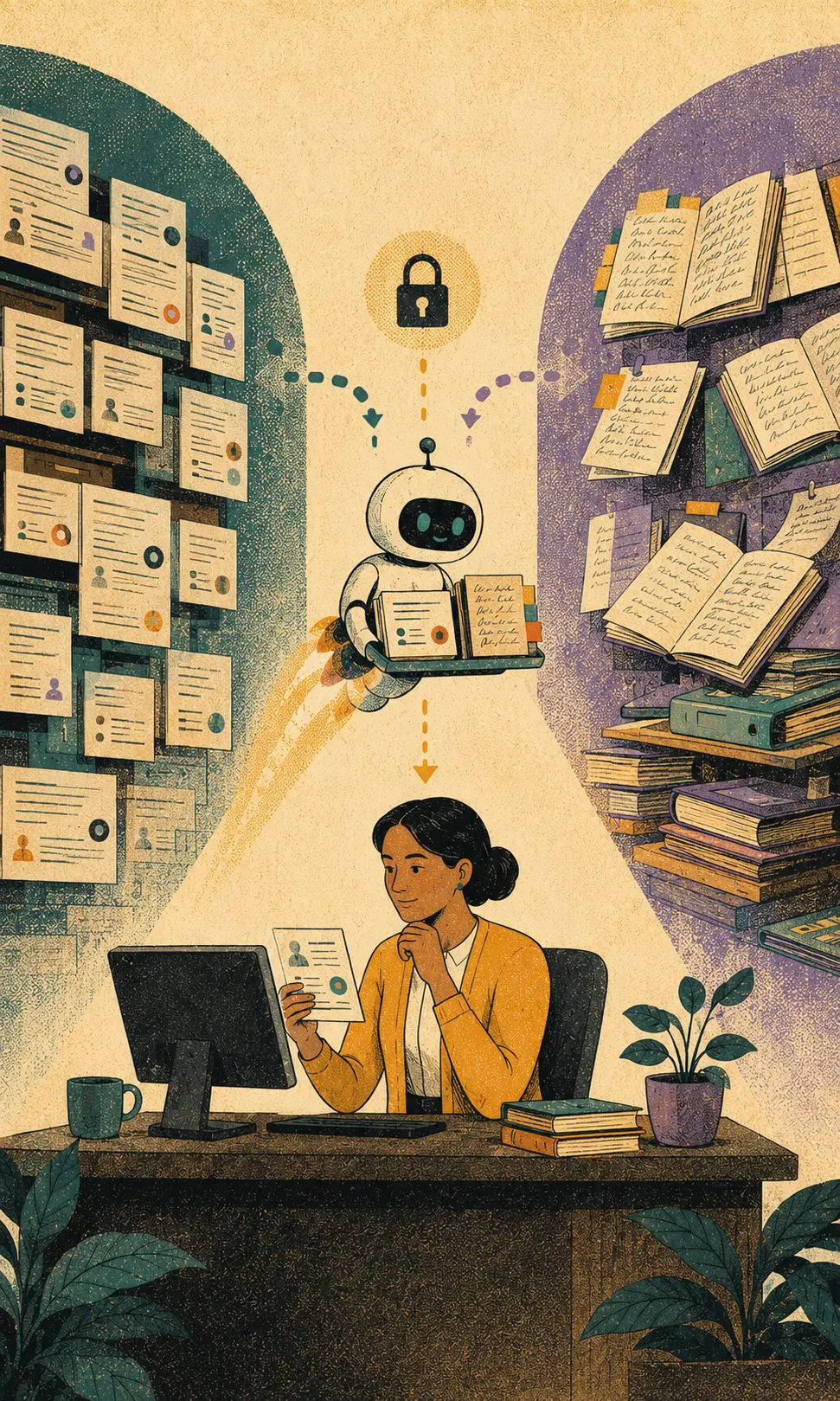
ChatGPT and Codex can now retrieve permitted context from Zendesk and OneNote instead of requiring people to manually paste customer history and meeting notes into every conversation.
01
WHAT ACTUALLY CHANGED
OpenAI added Zendesk and Microsoft OneNote plugins for eligible ChatGPT and Codex beta users. The integrations connect the assistant to two familiar but frequently messy systems of record.
The Zendesk plugin can review support tickets and customer history, search available support knowledge, and help prepare replies. Its reach follows the connected member’s Zendesk permissions rather than granting the model a magical master key.
The OneNote plugin can find and summarize notes, collect decisions and action items, and create or update notes through supported actions. That makes it useful both for retrieving institutional memory and returning structured work to the place a team already expects to find it.
The release is small compared with a model launch, which is precisely the point. Enterprise usefulness is often determined by whether the system can reach the correct context safely, not whether the underlying model improved by another percentage point on a public benchmark.
02
WHY THIS MATTERS
Companies do not suffer from a shortage of blank chat boxes. They suffer from context distributed across tickets, meeting notebooks, documentation, dashboards, and the memories of whoever handled the last incident.
Permission-aware retrieval reduces the ritual of exporting, copying, and re-explaining that context. A support specialist can ask for the customer’s recent history, identify a repeated failure pattern, and draft a response without pretending the model remembers facts it was never shown.
The risk follows the same route. Incorrect permissions, stale notes, sensitive ticket content, or an overeager write action can turn convenience into exposure. Useful integration requires narrow access, visible sources, confirmation before consequential actions, and records of what changed.
03
WHERE IT COULD HELP
- Summarize a customer’s support history before replying
- Find repeated product failures across related tickets
- Turn OneNote meeting notes into decisions and tasks
- Prepare evidence-grounded escalation briefs for engineering
KEEP A HAND ON THE WHEEL
Both integrations are in beta. Teams should test citation quality, permission inheritance, write confirmations, auditability, stale knowledge, and the handling of sensitive customer information before making the tools part of a production support process.
04
TERMS WORTH KEEPING
OPEN GLOSSARY CARD
Tool calling
A model requests a defined action instead of trying to answer from memory.
OPEN GLOSSARY CARD
Grounding
Connecting an AI answer to specific outside information that can support it.
OPEN GLOSSARY CARD
System of record
The authoritative place an organization relies on for a particular type of information.
SOURCES AND VERIFICATION STATUS
This article was written from the materials below. Product claims and dates were checked against those sources on September 4, 2026.
PUBLICATION RECEIPT: Revision 1. Approved by Zak and published September 4, 2026.
THE PUBLICATION ENGINE
WANT A SIGNAL OF YOUR OWN?
We build source-grounded publications, private briefings, and editorial systems for organizations with something useful to say.
WORK WITH US