THE SIGNAL IN ONE SENTENCE
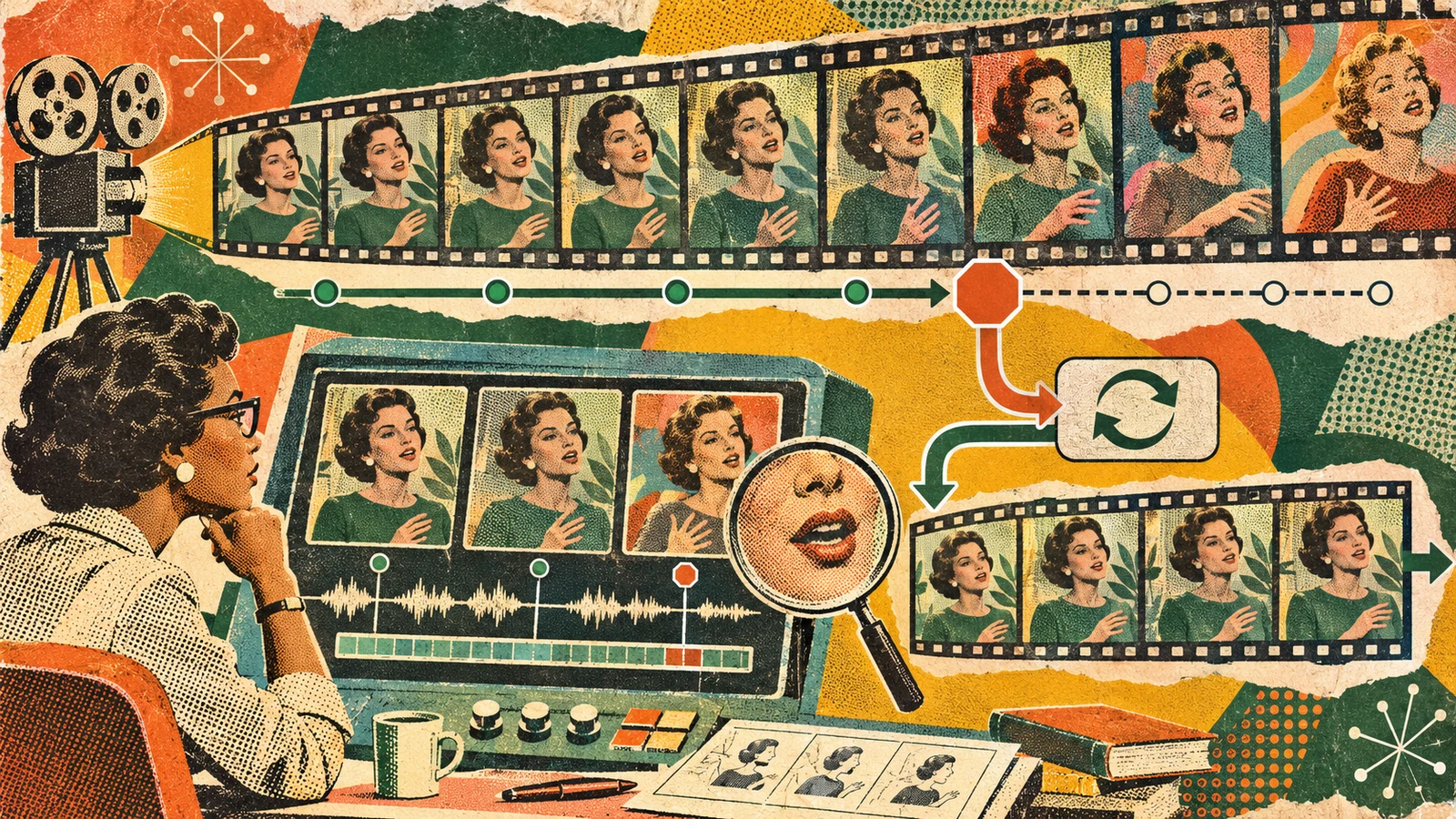
Ten minutes is not one video-generation task. It is thousands of tiny chances for a face to become somebody else. On November 15, the Meituan LongCat team released LongCat-Video-Avatar 1.6, an open checkpoint and code update for generating human video from audio plus text or an image. The project supports single and multiple characters, video continuation and sequences that the team says can exceed ten minutes. That is long enough for a product demo, a lesson, a sales presentation, a music performance, a virtual host or an extremely patient synthetic coworker. It is also long enough for every weakness to accumulate. A mouth begins half a beat late. An earring changes shape. A hand forgets how many fingers it owns. The face slowly borrows features from the reference image's background. Lighting warms for no reason. A performer who started as the same recognizable person ends as a cousin the family does not discuss. LongCat-Video-Avatar 1.6 is aimed directly at that drift. Meituan says the update improves natural speech-related mouth motion, lip and audio synchronization, coordinated facial, head and body movement, and visual consistency during long generation. The project describes a refined post-training pipeline that combines reinforcement learning, improved classifier-free guidance for few-step distillation, long-video rollouts and on-policy distillation. The result, according to the team, reduces accumulated error during autoregressive continuation and can preserve visual quality, identity and temporal coherence beyond ten minutes. Those are project claims, not a field guarantee. The checkpoint's model card includes a vendor-run preference study comparing version 1.6 with version 1.5 and four commercial systems: OmniHuman-2.0, HeyGen, OmniHuman-1.5 and Kling Avatar 2.0. It reports 33,051 valid individual votes across all 15 model pairings. LongCat-Video-Avatar 1.6 ranked second among the six systems with a Bradley-Terry Elo score of 1068.1, behind OmniHuman-2.0. That is meaningful evidence about the supplied comparisons and voters' preferences. It is not a ten-minute drift certificate. A preference vote usually asks which result looks better. A production team needs a different question: at what exact second does this result stop being usable for our purpose? That requires a drift test. Begin with a reference lock. For every character, preserve the authorized source image, authorized audio, prompt, seed, model checkpoint, code commit, configuration, LoRA paths, mixing settings, quantization mode, hardware, segment count and generation date. Store a short human-approved reference clip beside them. The reference is not just the face. It includes mouth shape, teeth, eye color, hairstyle, skin tone, clothing, jewelry, posture, hand proportions, speaking rhythm, accent, emotional range and the relationship between the person and the background. If the character holds an object, record how that object should look and where contact occurs. Then divide the output into windows. Review the first 30 seconds, every later 30-second window, each continuation boundary and the final minute. Compare every window with the original reference and with the previous window. Those are two different tests. The reference comparison finds slow identity drift. The neighboring-window comparison finds sudden cuts, jumps or resets. A sequence can look smooth from one segment to the next while gradually walking away from the person it was meant to depict. Track the face in parts. Measure lip timing, mouth shape, teeth, jaw movement, eye direction, blinking, head scale, hairline and local color. Watch for the common trick where a face remains broadly plausible while its distinctive features soften toward an average. Then track everything below the chin. Long avatar systems are not floating-head machines. Gesture timing, shoulder motion, posture, clothing folds and hand-object contact all contribute to whether a speaker feels continuous. A hand passing through a microphone is not rescued by excellent lip sync. Audio needs its own timeline. Mark phonemes, words, pauses, breaths, emphasis, laughter, singing and silence. Check whether the mouth starts and stops with the sound, whether emotional motion matches the delivery and whether the character keeps moving naturally during pauses. A good average lip-sync score can hide a bad chorus, a proper noun or the one sentence a client cares about. For multi-character scenes, add speaker assignment. The correct mouth has to move for the correct voice. One character should not inherit another person's expression during overlap. Eye lines and reactions should remain coherent when the active speaker changes. If the system supports multiple audio streams, preserve the map between each stream and each visible character. Now inspect the seams. LongCat creates long output through video continuation. Each generated segment becomes context for the next. That is how small errors can compound. A slightly altered face becomes the new reference, then alters again. At every continuation boundary, compare the last clean frame before the seam with the first frames after it. Check identity, camera position, background geometry, color, body pose, object location and motion direction. Give each dimension a tolerance. Some projects can accept a background plant changing leaves. A medical explainer using a recognizable clinician may not accept any identity shift. A stylized music video can tolerate exaggerated motion. A training video demonstrating equipment cannot tolerate a hand moving to the wrong control. The threshold belongs to the use case, not the model. Set the stop rule before generation. If lip timing exceeds the allowed offset, identity similarity drops below the approved range, a hand-object interaction breaks, the wrong character speaks, or a consent boundary is crossed, stop the sequence. Return to the last clean checkpoint and regenerate from there. Do not wait until minute ten to discover that minute three already failed. This is where a long-form quality dashboard becomes useful. Show a timeline with separate tracks for face, lips, body, hands, background, audio and rights. Mark every continuation seam. Let reviewers click the worst frame in each window and see the source configuration that produced it. Keep the failures. A failed render is a future test case. Save the prompt, configuration, input, failing timestamp and reason. Build a private acceptance set from the ugly moments: difficult consonants, fast speech, crossed hands, microphones near the mouth, profile views, glasses, hair movement, strong emotion, singing, overlapping voices and objects moving in front of the face. Run that set before changing checkpoints or optimization settings. LongCat's open release makes this practical because teams can pin the code and weights. The repository and model weights are released under the MIT License. The published instructions support local downloads and include single-person and multi-person inference scripts. Open weights do not make the people open. A software license does not grant permission to use somebody's face, voice, performance, wardrobe, trademarks or private recordings. The project page separately notes that some images and audio in its demonstrations came from real videos, says the generated demonstration content is for academic use and says commercial use of that material is not permitted. Treat the demo as a capability example, not a stock-media library. Before generation, record who owns or controls every source asset, what the depicted person agreed to, where the output may appear, how long permission lasts and whether the person can revoke future use. Keep synthetic or licensed test identities for development. Do not put a real person's face into a drift experiment just because the model is downloadable. The release also deserves a provenance receipt. For every published clip, preserve the model name and version, code commit, source asset identifiers, consent record, prompt, audio edit history, generation settings, human edits and publication destination. Add a visible disclosure when the context could reasonably lead viewers to believe the recording is real. The receipt should survive export. A filename called final-final-actually-final.mp4 is not provenance. Compute belongs in the quality test too. The project documents an eight-step workflow using two task-specific LoRA adapters and includes optional INT8 and FP8 paths. It warns not to enable FP8 and INT8 together. It also notes that compiled runs can be slower at first because graphs are traced and compiled, while later runs with the same input shapes can reuse the compiled graphs. That means one cherry-picked speed run is not enough. Measure cold start, warm generation, segment time, total wall-clock time, peak memory, GPU count, energy if available, failed runs and the cost of every regeneration. Record the resolution, frame rate, duration and input shape beside those numbers. Changing precision or LoRA mixing can change quality as well as speed. Run the same acceptance clips before and after every optimization. A cheaper ten-minute render is not cheaper if an editor must rebuild four minutes of it. The model card itself says the system has not been specifically designed or comprehensively evaluated for every downstream application. It calls out possible performance variation across languages and asks developers to assess accuracy, safety and fairness before sensitive or high-risk use. Take that seriously. Build multilingual tests with the actual speakers, phonemes, rhythms and writing systems the product will use. Review skin tones, face shapes, ages, hairstyles, mobility aids, speech patterns and camera conditions across the intended audience. Measure whether failures cluster around particular people or settings. Do not use one attractive English demo as a passport to every market. Long-form avatar tools can be genuinely useful. They can localize training, animate fictional characters, create accessible presentation drafts, prototype performances and help small teams produce material that would otherwise require a studio. Open checkpoints let researchers inspect, adapt and test the system instead of relying only on a hosted interface. The ten-minute claim raises the ambition. It also changes the unit of evaluation. The product is no longer a good frame or a charming five-second clip. It is a continuous performance with identity, timing, motion, rights and cost that must remain coherent from the first second to the last. So do not watch only the highlight reel. Pin the model. Lock the sources. Divide the output into windows. Check every seam. Measure the face, hands, body, audio and background separately. Stop at the last clean checkpoint. Preserve consent and provenance. Price the regenerations. The face usually slips before the demo admits it. Your test should be waiting there.
01
WHAT ACTUALLY CHANGED
The Meituan LongCat team released LongCat-Video-Avatar 1.6 on November 15, 2026 as an open checkpoint and code update for audio-driven human video generation.
The project supports audio plus text or image input, video continuation, and both single-person and multi-person generation.
Meituan says version 1.6 improves speech-related mouth motion, lip and audio synchronization, coordinated facial and body movement, and long-form visual consistency.
The team says a refined post-training and distillation pipeline reduces accumulated error and enables videos longer than ten minutes.
The model card reports a vendor-run all-pairs preference study with 33,051 valid individual votes across 15 pairings and six systems.
LongCat-Video-Avatar 1.6 ranked second in that study with a Bradley-Terry Elo score of 1068.1, behind OmniHuman-2.0.
The repository and model weights are released under the MIT License, with inference scripts and optional INT8 and FP8 execution paths.
The model card says the system has not been comprehensively evaluated for every downstream application and notes possible variation across languages.
02
WHY THIS MATTERS
A sequence longer than ten minutes can support lessons, presentations, performances and virtual hosts that short avatar clips cannot cover.
Autoregressive continuation can compound a small visual error because each generated segment becomes context for the next one.
A smooth transition between neighboring segments can hide slow identity drift away from the original person or character.
Long-form quality includes lips, face, body, hands, objects, audio, background and camera continuity rather than one attractive frame.
Open code and weights let teams pin versions, inspect configuration and build repeatable tests on their own infrastructure.
The MIT License covers the released software and weights, not permission to use a person's identity, voice, performance or private recordings.
Inference optimizations can change output quality as well as speed, so compute and regeneration costs belong in the acceptance test.
Vendor preference results are useful but do not replace workflow-specific drift, demographic, multilingual, consent and misuse evaluation.
03
WHERE IT COULD HELP
- Preserve the authorized source image, audio, prompt, seed, checkpoint, code commit and configuration for every character.
- Create a short human-approved reference clip that locks identity, motion, wardrobe, voice and background expectations.
- Review the first 30 seconds, every later 30-second window, every continuation seam and the final minute.
- Compare each window with both the original reference and the immediately preceding window.
- Track lip timing, mouth shape, teeth, eye direction, blinking, head scale, hairline and local color separately.
- Score gesture timing, posture, clothing, hand shape and hand-object contact in addition to facial quality.
- Align phonemes, words, pauses, breaths, emphasis, singing and silence with visible mouth and body motion.
- For multi-character scenes, preserve the mapping between each audio stream and each visible speaker.
- Inspect identity, camera position, background geometry, color, body pose and motion direction at every continuation boundary.
- Set use-case-specific tolerances and stop rules before running a long generation.
- Return to the last clean checkpoint when a threshold fails instead of regenerating the entire sequence blindly.
- Build a quality timeline with separate tracks for face, lips, body, hands, background, audio and rights.
- Save failed timestamps and configurations as a private acceptance set for future checkpoint and optimization changes.
- Use synthetic or licensed test identities during development and retain the consent terms for every real person.
- Keep a provenance receipt linking model, source assets, consent, prompt, settings, edits and publication destination.
- Measure cold start, warm generation, segment time, peak memory, GPU count, failures and regeneration cost.
- Never enable the documented FP8 and INT8 modes together, and retest quality after changing precision or LoRA mixing.
- Run multilingual and demographic evaluations with the people, audio conditions and use cases the product will actually serve.
- Add clear disclosure when viewers could reasonably mistake generated avatar footage for a real recording.
- Require human review before publication for high-stakes, identity-sensitive or commercially distributed material.
KEEP A HAND ON THE WHEEL
The long-video quality, identity consistency, motion, lip synchronization and efficiency claims come from the Meituan LongCat team. They are primary evidence for what the project reports, not independent proof across every input, language, identity, device or workflow. The 33,051-vote preference study is reported by the project and evaluates relative preference among supplied outputs. It does not establish an error rate, consent compliance, misuse resistance, exact long-form drift threshold or safety for a specific production setting. The model card says LongCat-Video-Avatar 1.6 has not been specifically designed or comprehensively evaluated for every downstream application and notes possible performance variation across languages. The MIT License applies to the released repository and model weights. It does not grant rights to a person's face, voice, performance, recordings, clothing, trademarks or other source material. The project page also restricts commercial reuse of the demonstration material described there. Watch for independent long-duration evaluations, exact hardware and speed measurements, subgroup and multilingual results, provenance tooling, consent controls, detection research, updated checkpoints and evidence showing where identity or motion begins to drift under real production conditions.
04
TERMS WORTH KEEPING
OPEN GLOSSARY CARD
Video continuation
Generating the next part of a video from the frames and motion that came before it.
OPEN GLOSSARY CARD
Temporal coherence
The consistency of identity, objects, motion and scene details as time passes in a video.
OPEN GLOSSARY CARD
LoRA
A compact set of learned adjustments that changes how a larger model behaves without replacing all of its weights.
SOURCES AND VERIFICATION STATUS
This article was written from the materials below. Product claims and dates were checked against those sources on November 16, 2026.
THE PUBLICATION ENGINE
WANT A SIGNAL OF YOUR OWN?
We build source-grounded publications, private briefings, and editorial systems for organizations with something useful to say.
WORK WITH US