THE SIGNAL IN ONE SENTENCE
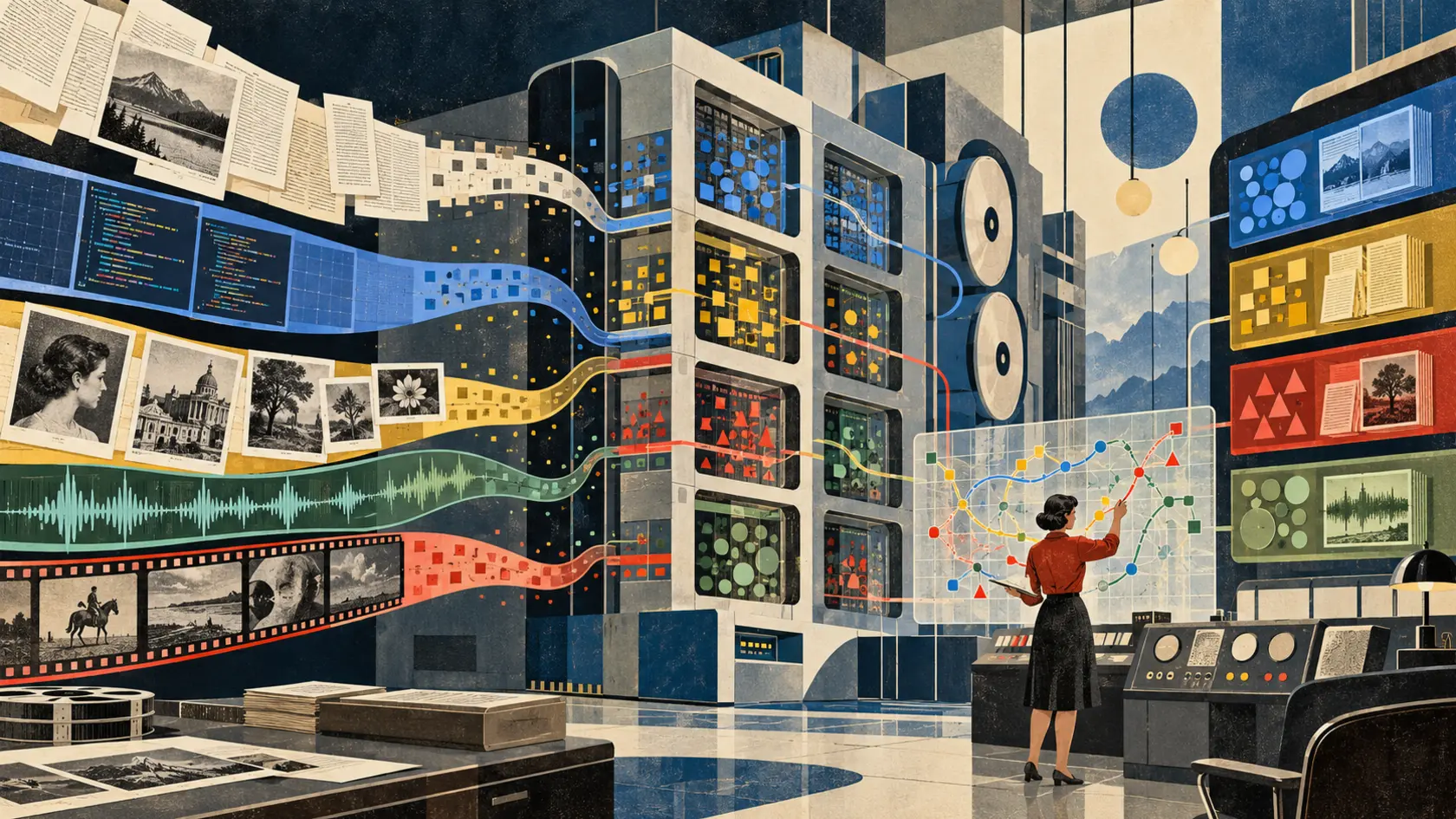
A million tokens sounds like memory. It is really a very large room with questionable lighting. On October 15, Meta released Muse Spark Open, an open-weight multimodal model built for coding, tool use and long agentic work. The model accepts text, images, audio and video and produces text. Its published architecture contains about 816 billion total parameters, with about 42 billion active for each token, and supports an inference context window of up to one million tokens. Those numbers make the model physically enormous and conceptually slippery. The mixture-of-experts design routes each token through a subset of specialized components rather than activating the entire model at once. Meta released BF16 and NVFP4 checkpoints under its Muse Model License, and the launch documentation includes support paths for Transformers, llama.cpp, SGLang, vLLM and MLX. The main checkpoint is gated on Hugging Face, which means people can inspect the repository listing but must accept access conditions before downloading the files. The model card describes Muse Spark Open as a system for coding agents, multi-step reasoning, tool use, multimodal analysis, synthetic data and evaluation of other model outputs. The launch guide shows examples that combine screenshots, audio, video, browser actions and code. That sounds like an agent with a crowded desk and a very long afternoon. The plain signal is that a long context window needs a memory map. If a model can take in an entire codebase, a stack of documents, a meeting recording, screenshots, logs and a long chain of tool results, the developer needs to know which pieces actually influenced the answer. The interface should show what entered context, how each item was transformed, what the model could still attend to, what was summarized or discarded, and where a claim came from. Context is not a filing cabinet. A document can be inside the window and still be missed. A fact near the beginning can lose influence as the conversation grows. Two sources can conflict without the model making the disagreement visible. A screenshot can contain a permission warning while the text summary describes only the successful action. An audio transcript can flatten hesitation, sarcasm or uncertainty into ordinary words. The input exists. That does not mean the model used it well. Start with an intake ledger. Every item entering a consequential run should receive an identifier, type, source, timestamp, owner, permission level and integrity check. A repository should include the commit. A web page should include its URL and retrieval time. An audio file should include duration and transcription method. A screenshot should retain the screen, application and capture time that gave it meaning. Then record the transformation chain. Large multimodal systems rarely consume raw material in one untouched form. Video may be sampled into frames. Audio may be transcribed. Images may pass through a perception encoder. Long documents may be chunked. Tool results may be reduced to summaries before the next step. Each transformation can lose information. The memory map should show the original item beside the representation used by the model. If a meeting recording became a transcript, the record should preserve both. If a two-hour screen recording became twenty selected frames, the selection rule should be visible. If a large log was compressed into five error clusters, a reviewer should be able to open the underlying lines. The point is not to drown developers in telemetry. It is to make compression inspectable. Long context also creates a ranking problem. One million tokens can hold a lot of material, but an agent still needs to decide what deserves attention. A ten-line security policy may matter more than fifty thousand lines of ordinary code. A single revoked permission can outweigh an entire successful test suite. One contradictory footnote can change the interpretation of a report. Developers should be able to mark critical evidence that may not be summarized away. The system should record when the model cites, ignores or contradicts that evidence. If the agent changes a plan, the map should identify the new information that caused the change. Without that, long context can produce a particularly annoying kind of mystery: the answer knows something, but nobody can tell where it learned it. Memory boundaries need permission boundaries too. A multimodal coding agent may see source code, private tickets, customer screenshots, voice notes, browser sessions and credentials exposed in logs. Combining those materials in one context can create new disclosure risks even when each source was individually authorized. The map should carry access rules forward. If a user can read a document but cannot share it, the agent should not quote it into a public issue. If a support recording contains customer information, a derived summary should inherit appropriate restrictions. If an image came from a temporary browser session, the model should not silently add its contents to a reusable project memory. Every derived artifact needs a lineage label. That includes code patches. Muse Spark Open is presented as a coding-oriented model trained for work such as multi-file refactors and long debugging sessions. A patch should point to the request, files, screenshots, tests, tool calls and model observations that shaped it. A reviewer should be able to see whether the model fixed the root cause or simply changed the interface until the screenshot looked calmer. This matters more when the agent operates for hours. A long run accumulates assumptions. The first assumption influences a search. The search result influences a plan. The plan determines which tools are called. A tool failure creates a workaround. The workaround becomes part of the final design. By the end, the model may produce a coherent answer built on an early mistake that nobody remembers making. The memory map should therefore include decision checkpoints. At each meaningful turn, record the current goal, accepted evidence, open uncertainties, rejected alternatives and planned action. When the agent changes direction, capture why. When a human approves a step, preserve the exact state they reviewed. Think of it as a flight recorder for reasoning without pretending the hidden model process is fully knowable. We cannot read every internal calculation. We can record the observable chain around it: inputs, prompts, retrieved material, tool calls, outputs, edits, approvals and tests. That record is enough to make many failures easier to find and many claims harder to fake. Long-context evaluation needs to become less theatrical too. Putting a needle fact inside a giant haystack and asking the model to repeat it is useful, but thin. Real work involves duplicated documents, stale versions, conflicting instructions, missing permissions, corrupted media, irrelevant chatter and facts that become important only after a tool fails. Teams should test whether the model can identify the authoritative version, preserve chronology, notice contradictions and admit when evidence is incomplete. They should vary the position and modality of critical information. Put one warning in text, another in an image and another in an audio clip. Measure whether the model connects them correctly. Then test memory decay across action. Can the agent still honor a constraint after fifty tool calls? Does it remember that one directory is read-only? Does a safety instruction survive summarization? Can it explain which earlier observation justified a later edit? Does the final report cite the actual evidence rather than the most recent summary? The scorecard should include retrieval accuracy, source attribution, contradiction detection, permission compliance, stale-context errors, summary loss, unsupported claims and the time a human needs to reconstruct the run. Hardware belongs on that card as well. Open weights do not mean easy local use. The BF16 repository is enormous, and even the lower-precision release remains a serious infrastructure object. The model's roughly 42 billion active parameters reduce per-token computation compared with activating all 816 billion parameters, but the full expert set still has to live somewhere accessible. Teams should publish the actual serving configuration, memory footprint, energy use, latency, throughput, batching assumptions and cost. A one-million-token request is not an ordinary request. It can be slow, expensive and difficult to reproduce across hardware. The model card also recommends deploying Muse Spark Open inside a broader system with guardrails suited to the use case. That is a useful warning. Safety post-training is not a permission system, a sandbox, a source verifier or a human approval step. Open weights improve inspectability and give developers more freedom to study, adapt and deploy the model. The licence still carries conditions and a usage policy. The release does not magically settle reliability, privacy, security or the economics of operating something this large. What it does provide is a fascinating new piece of infrastructure. A model that can work across code, images, sound and video with a giant context window could help developers debug interfaces from screen recordings, inspect long repositories, connect spoken requirements to implementation work and analyze complex records without splitting every modality into a separate product. The practical opportunity is not merely stuffing more into the prompt. It is building a system that can show its work across a larger field of evidence. The longer the context, the easier it is for accountability to disappear between the first input and the final sentence. A good memory map turns that distance into a navigable record. Otherwise one million tokens is just a bigger attic. Plenty of room. No labels. And somewhere behind the holiday decorations, the reason the agent changed production code at three in the morning.
01
WHAT ACTUALLY CHANGED
Meta released Muse Spark Open on October 15 as an open-weight multimodal mixture-of-experts model
The published architecture has about 816 billion total parameters and about 42 billion active parameters per token
The model accepts text, images, audio and video and produces text
The model card lists a context window of up to one million tokens at inference
Meta released BF16 and NVFP4 checkpoints under the Muse Model License
The launch materials describe support through Transformers, llama.cpp, SGLang, vLLM and MLX
The main Hugging Face repository is gated and requires acceptance of access conditions
The model card recommends additional system guardrails appropriate to each deployment
02
WHY THIS MATTERS
A single agent run can combine code, documents, screenshots, recordings and tool results across a very large evidence field
Information can be present inside a context window without being retrieved, weighted or interpreted correctly
Multimodal preprocessing can discard meaning when audio becomes text, video becomes selected frames or logs become summaries
Derived outputs can accidentally carry information beyond the permissions attached to their original sources
Long agent runs accumulate assumptions and workarounds that become difficult for a human reviewer to reconstruct
Open weights improve access and inspectability but do not make a model inexpensive, unrestricted or independently reliable
Coding patches need a visible link to the evidence, tool calls and tests that produced them
A structured memory map can turn a large context window from a capacity claim into an auditable workflow
03
WHERE IT COULD HELP
- Assign every input an identifier, source, timestamp, owner, permission level and integrity check
- Preserve original audio, video, images and logs beside any transcript, frame sample or summary
- Mark critical evidence that must not be removed during context compression
- Show which sources support each consequential claim, decision and code change
- Carry access restrictions from original inputs into summaries, patches and reports
- Record the goal, accepted evidence, uncertainty and next action at major checkpoints
- Capture why an agent changed its plan after a tool result or failure
- Test contradiction detection across text, image, audio and video inputs
- Measure whether safety and permission constraints survive long chains of tool calls
- Evaluate source attribution, stale-context errors, summary loss and reconstruction time
- Publish the serving hardware, memory, latency, energy, throughput and cost assumptions
- Require a named human approval before consequential external actions or production changes
KEEP A HAND ON THE WHEEL
The architecture, capability and performance claims come from Meta and launch collaborators. Watch for independent long-context evaluations, complete benchmark methods, failure rates across modalities, source-attribution tests, permission-preserving memory systems, actual hardware requirements, energy and serving costs, security research, licence interpretation, safety evaluations, documented context degradation and evidence that the model remains reliable after long sequences of tool use.
04
TERMS WORTH KEEPING
SOURCES AND VERIFICATION STATUS
This article was written from the materials below. Product claims and dates were checked against those sources on October 16, 2026.
PUBLICATION RECEIPT: The article separates confirmed architecture, release and licence details from analysis about memory, permissions, long-context evaluation and operational evidence.
THE PUBLICATION ENGINE
WANT A SIGNAL OF YOUR OWN?
We build source-grounded publications, private briefings, and editorial systems for organizations with something useful to say.
WORK WITH US