THE SIGNAL IN ONE SENTENCE
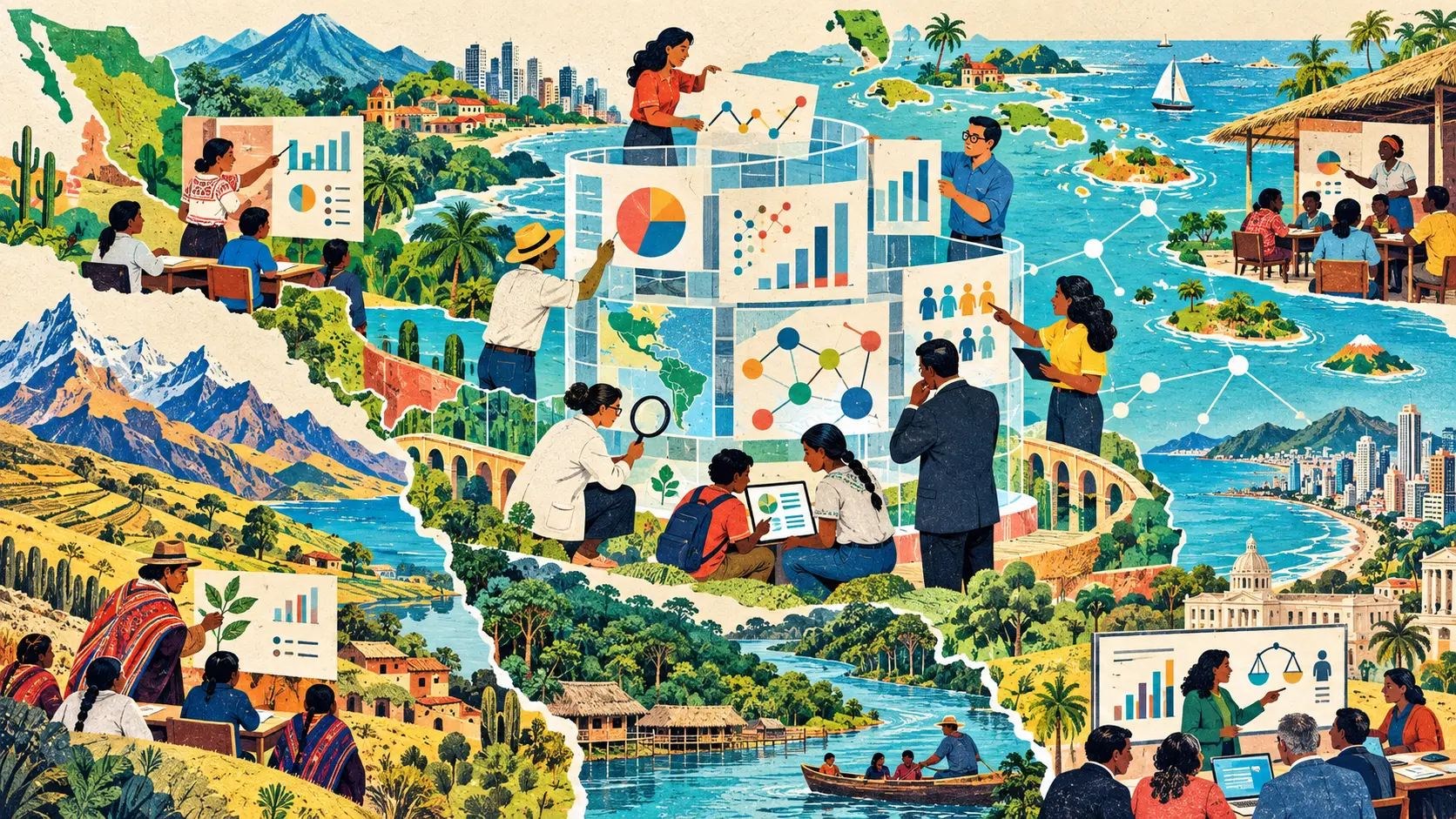
Latin America and the Caribbean are trying something refreshingly unflashy with artificial intelligence in education: measure the region before rushing to automate it. On September 28, UNESCO reported on the first meeting of member institutions in its Observatory on Artificial Intelligence in Education for Latin America and the Caribbean. The article was updated October 1. The group reviewed a regional policy survey, tools for teachers and students, training for decision-makers and priorities for a 2027 work plan. No new model was launched. No robot teacher rolled into a classroom. Nobody claimed that a dashboard had repaired a learning crisis by lunchtime. That restraint is the story. The observatory began in April at the United Nations Economic Commission for Latin America and the Caribbean headquarters in Santiago, Chile. UNESCO describes it as the first regional platform within the United Nations system dedicated to AI in education. It grew from the Regional Alliance for Educational Transformation and Innovation, or ARTIE, whose network connects digital-transformation and AI contacts from the education ministries of 33 countries. The plain signal is that the region is building a shared evidence layer before every ministry, district, vendor and school invents its own definition of success. Education technology often arrives in the opposite order. A product is announced, teachers are given accounts, a pilot produces smiling photographs and the evidence question appears after the budget has moved on. By then, each institution may be counting something different. One reports logins. Another counts lessons generated. Another asks whether teachers enjoyed the workshop. None of those measures shows whether students learned, whether workload fell or whether an error harmed a child. The observatory's first workstream is a regional survey of policies for AI in education systems. UNESCO says the survey is being designed to produce comparable information on regulation, national strategies, teacher preparation and data protection. Member institutions have reviewed a concept note and questionnaire, but the survey is not yet complete. Comparable is the important word. A country profile can say that a national AI strategy exists. A useful survey needs to ask what the strategy covers, who is responsible, which schools are included, how personal data is handled, what teachers receive, what procurement rules apply and whether anyone checks outcomes. If two countries answer different questions, the regional map becomes decorative rather than diagnostic. The survey can become a policy ledger if it preserves enough detail to show movement over time. Each entry should carry a date, source, responsible institution and status. A draft guideline should not look like an enforceable rule. A pilot in ten schools should not become national adoption through the magic of a colored map. The second workstream is capacity. The observatory is adapting UNESCO's AI competency frameworks for students and teachers to the realities of Latin America and the Caribbean. UNESCO says a planned platform will combine those frameworks with self-assessment and tailored training. Competency is more demanding than familiarity. A teacher who has tried a chatbot may still need to recognize fabricated citations, protect student information, design an assignment that preserves thinking, compare a generated answer with a direct source and decide when a system should stay out of the classroom. A student may need to explain what evidence supports an answer, not merely produce a polished paragraph quickly. Regional adaptation matters because language, connectivity, curriculum, teacher preparation and access vary enormously. A framework tested in a well-connected capital cannot simply be dropped into a rural school, an island community or an Indigenous-language classroom and called inclusive. The platform will also have to resist turning self-assessment into self-congratulation. People are poor judges of skills they have not yet had to use under pressure. A useful system should pair reflection with small practical tasks: identify a privacy risk, verify a citation, spot a biased comparison, redesign an assignment or choose a safe response when a tool fails. The third workstream is leadership. UNESCO and its International Institute for Educational Planning have developed a regional Diploma in AI Leadership in Education for decision-makers and technical teams who design, implement and evaluate policy. That may sound like the least exciting item in the folder. It could be the most consequential. School systems do not adopt AI through classroom enthusiasm alone. Procurement officers write terms. Legal teams interpret privacy rules. ministry staff define objectives. Technical teams connect systems. School leaders decide whether teachers receive time, training and support. Evaluation teams choose what gets measured. A weak decision near the top can turn a sensible classroom experiment into an expensive national default. Training policy leaders should therefore include more than an AI vocabulary tour. They need to compare vendor claims, demand access to evidence, calculate the full cost of operation, identify data flows, define appeal routes and know when a pilot has produced too little evidence to scale. The observatory's third area, knowledge exchange and innovation, is meant to connect those pieces. UNESCO says its website is collecting resources in Spanish and English, while events and communities of practice are planned across the region. The 2027 agenda is expected to include a first regional report, a larger competency platform, expanded training and stronger knowledge-sharing networks. Again, expected is doing work here. These are plans, not completed regional results. The governance promise is unusually clear. UNESCO calls the observatory a regional public good and says its data, methods and tools will be openly available. Its three areas of work are supposed to carry governance, ethics and human rights throughout. The initiative draws on UNESCO's 2021 Recommendation on the Ethics of Artificial Intelligence, which emphasizes human rights, transparency, fairness and human oversight. That public-good framing should be treated as a testable commitment, not a pleasant adjective. Open data needs documentation, stable links, usable formats and licensing. Open methods need questionnaires, definitions, sampling rules and revision histories. Open tools need accessibility, language coverage and a path for schools with limited bandwidth. A public dashboard that cannot be downloaded, challenged or understood is a window display, not shared infrastructure. The observatory's membership also makes transparency essential. UNESCO lists ministries, multilateral organizations, universities, research centers, foundations, development banks and private companies among participants. That mixture can bring expertise and resources. It also brings different incentives. A ministry may want evidence for policy. A university may want a research agenda. A foundation may want adoption. A vendor may want a market. None of those motives is automatically disqualifying. They should simply remain visible when a questionnaire, training course or recommended practice is designed. The observatory says membership is formalized through cooperation agreements with UNESCO. The public evidence system would be stronger if it also disclosed who funds each activity, who designed each method, who may use the data, how conflicts are handled and which members reviewed a recommendation. The geographic challenge is just as important. Thirty-three ministries create regional reach on paper, but a network contact in every capital does not guarantee representative evidence. The people most affected by a policy are often far from the meeting room: teachers sharing devices, students working in a language poorly represented online, families without reliable connectivity, learners with disabilities and communities already subject to intensive data collection with little control over its use. The policy survey should record more than national rules. It should show which groups were consulted, which school types supplied evidence and where data is missing. Country averages can hide gaps between public and private schools, urban and rural communities, large and small language groups, and students with and without accessible technology. The same warning applies to the inclusive-technology study now under way. UNESCO says it will examine both how AI may reduce barriers for learners with disabilities and how poor design can create new ones. That requires participation from disabled learners and educators, not only testing performed for them. Accessibility cannot be inferred from a feature list. There is a deeper reason this regional ledger matters. Education systems are being asked to make decisions while the technology changes faster than the school calendar. Waiting for perfect evidence would freeze useful experimentation. Scaling weak evidence can freeze a bad decision instead. The practical middle is a learning system for policy. A country defines a problem, publishes the rule or pilot, records the affected groups, names the measure, reports the result and corrects course. Neighboring systems can then compare evidence without pretending that a result transfers automatically. That structure also protects teachers from becoming involuntary quality-control staff. If a ministry approves a tool, the burden of detecting bias, unsafe data practices and fabricated content should not fall entirely on individual educators. The institution should publish evaluation, provide training, set escalation routes and maintain a way to stop or replace the system. Students need a route into the record too. They should be able to report harms, contest decisions and see how their data is used. If an AI system recommends learning material, flags a risk or evaluates work, the school must preserve meaningful human judgment and explain the decision in terms a student can understand. The most useful first regional report would therefore avoid a horse race. Ranking countries by the number of strategies, tools or pilots would reward paperwork and purchasing. A better report would show readiness and evidence quality: whether policies have owners, whether pilots have baselines, whether data rules are enforceable, whether teachers receive time and support, whether students can appeal and whether outcomes are measured across different communities. It should also publish the blank spaces. A missing answer is not a failure of presentation. It is a finding. UNESCO's launch announcement in April cited the region's learning crisis and rapid teacher adoption of AI as reasons for urgency. Those are serious conditions, but they do not prove that any one AI tool improves learning. The observatory's credibility will depend on maintaining that distinction. AI can help translate material, support accessibility, draft lesson options, organize administrative work and provide practice. It can also hallucinate, flatten local context, expose personal data, reinforce bias and direct money away from teachers, connectivity or basic materials. An observatory cannot settle those tradeoffs once for every country. It can make them legible. That is why the shared ledger may matter more than the next education model release. It creates a place where policy claims must meet dates, definitions, methods and results. It gives countries a chance to learn together without erasing their differences. And it gives teachers, students and the public something unusually useful in the AI boom: a record that can be checked. The next signal is not the observatory's launch. It is whether the survey, competency platform and 2027 report arrive with enough open detail for the region to challenge, reuse and improve them.
01
WHAT ACTUALLY CHANGED
UNESCO convened the first meeting of member institutions in the regional AI-in-education observatory and reported the work on September 28, with an update on October 1.
The observatory launched in April 2026 at ECLAC headquarters in Santiago and has moved into an operational multi-stakeholder phase.
Its network is connected through ARTIE to digital-transformation and AI contacts from education ministries in 33 countries.
A regional survey is being designed to compare regulation, national strategies, teacher preparation and data-protection measures.
A thematic study on inclusive technologies and AI is also under development.
UNESCO competency frameworks for students and teachers are being adapted to regional realities, with self-assessment and tailored training planned.
A regional diploma will train decision-makers and technical teams who design, implement and evaluate AI education policy.
The proposed 2027 agenda includes the first regional report, a larger competency platform, expanded training and stronger communities of practice.
UNESCO says the observatory will make its data, methods and tools openly available as a regional public good.
The survey, competency platform and first regional report are not yet completed, and no results across all 33 countries have been published.
02
WHY THIS MATTERS
Comparable definitions can prevent pilot counts, logins and strategy documents from masquerading as proof of student benefit.
A dated policy ledger can distinguish drafts, pilots, enforceable rules and national implementations.
Regional adaptation can expose where language, connectivity, disability and local curriculum change what responsible use requires.
Practical competency tests can show whether teachers and students can verify sources, protect data and respond to model failure.
Training decision-makers matters because procurement, privacy, evaluation and scale are institutional choices, not classroom settings.
Open methods allow researchers, educators and communities to challenge the survey and reuse it instead of trusting a dashboard on faith.
Visible funding, authorship and conflicts can help a mixed public, academic and private membership earn trust.
Reporting missing evidence can help governments target support rather than hide unequal readiness behind national averages.
Shared evidence can speed learning between countries without pretending that one result transfers automatically to every school system.
03
WHERE IT COULD HELP
- Create comparable country profiles for AI education policy, teacher preparation and student-data protection.
- Track each policy with its date, source, owner, status, affected groups and revision history.
- Test teacher and student competencies through practical verification, privacy and assignment-design tasks.
- Adapt training for Spanish, Portuguese, Caribbean and Indigenous-language contexts instead of translating one generic course.
- Document accessibility with disabled learners and educators as participants in design and evaluation.
- Train ministry teams to evaluate vendors, data flows, total cost, appeals and evidence before scaling.
- Publish survey instruments, definitions, sampling rules, datasets and code in reusable formats.
- Compare urban, rural, public, private, island and low-connectivity settings instead of relying on country averages.
- Give teachers and students clear routes to report errors, harms and inaccessible systems.
- Use the regional report to reveal evidence gaps and readiness, not to rank countries by purchases or announcements.
KEEP A HAND ON THE WHEEL
This is an operational platform with work in progress, not evidence that a regional AI policy or classroom tool has improved learning. UNESCO says the survey, competency platform, inclusive-technology study and first regional report are being developed. The September 28 report does not publish survey questions, country responses, budgets, participation rates, outcome data or implementation results. The network's connection to 33 education ministries establishes reach, not uniform adoption or capacity. Watch for open questionnaires and definitions, dated country profiles, documented sampling, multilingual and accessible tools, funding and conflict disclosures, participation outside national capitals, appeal routes for students, measured learning and workload outcomes, and a 2027 report that publishes missing evidence as clearly as progress.
04
TERMS WORTH KEEPING
OPEN GLOSSARY CARD
AI education observatory
A shared institution that collects, compares and publishes evidence about how AI policies and tools affect education systems.
OPEN GLOSSARY CARD
Comparable indicator
A measure defined and collected consistently enough that results from different places or times can be examined together.
OPEN GLOSSARY CARD
AI competency framework
A structured description of the knowledge, judgment and practical abilities people need to use and evaluate AI responsibly.
SOURCES AND VERIFICATION STATUS
This article was written from the materials below. Product claims and dates were checked against those sources on October 2, 2026.
PUBLICATION RECEIPT: Reporting verified against UNESCO primary sources immediately before publication. Planned surveys, tools and reports are identified as unfinished work.
THE PUBLICATION ENGINE
WANT A SIGNAL OF YOUR OWN?
We build source-grounded publications, private briefings, and editorial systems for organizations with something useful to say.
WORK WITH US