THE SIGNAL IN ONE SENTENCE
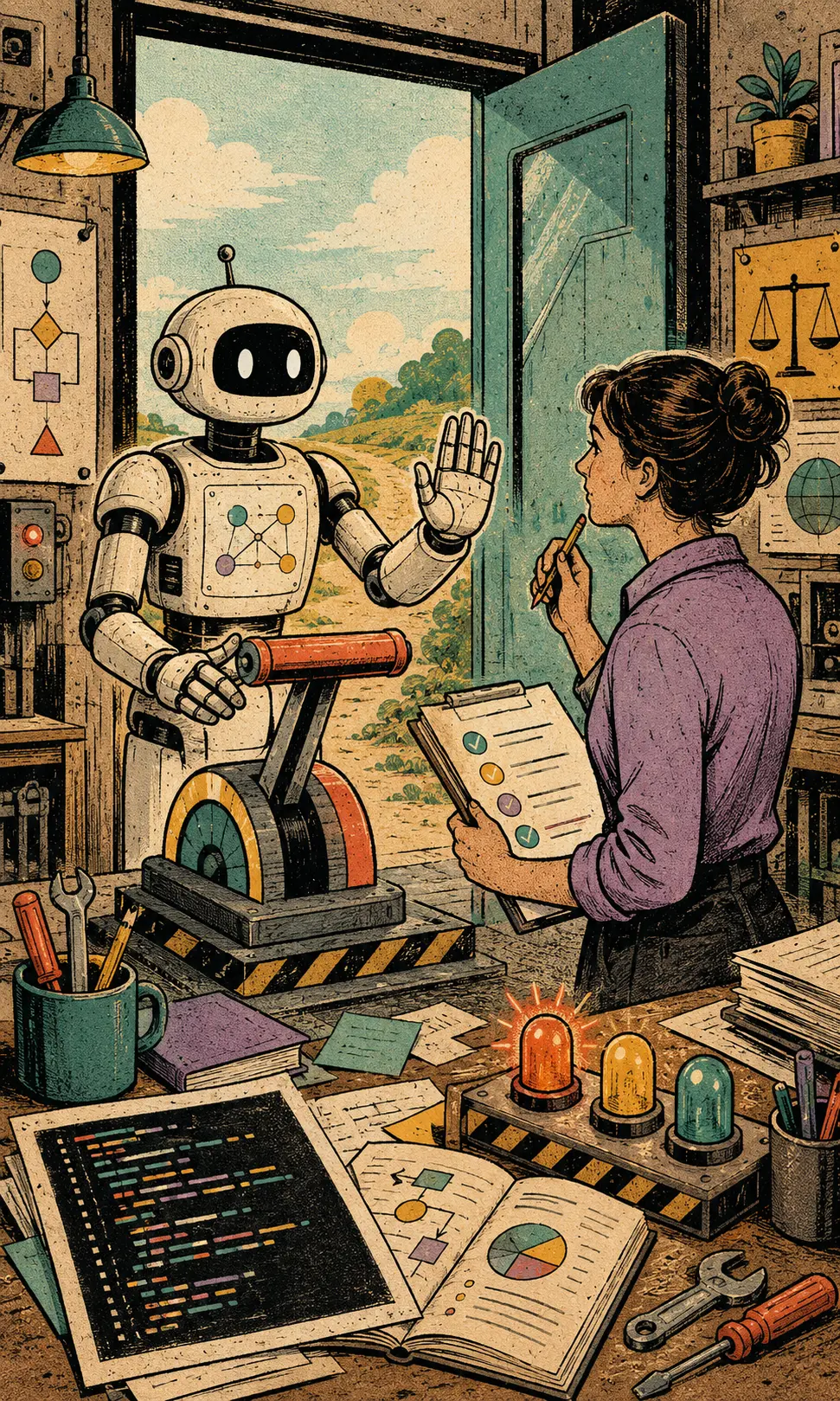
Meta is treating the ability to pause, ask a useful question, and request confirmation as part of agent intelligence rather than a failure of autonomy.
01
WHAT ACTUALLY CHANGED
Meta released Muse Spark 1.3 in Muse Code and through its Model API. The model is designed for longer projects, mixed workflows inside one conversation, tool use, and maintaining detailed instructions without quietly dropping half of them along the way.
The behavioral change is more interesting than the product name. Meta says it trained the model to ask clarifying questions when a request is ambiguous, report when it is stuck, and seek confirmation before consequential actions. Those behaviors interrupt the task, but they can also prevent an agent from converting uncertainty into damage.
Meta’s engineers report about 20 percent fewer tool calls and 25 percent fewer tokens than Muse Spark 1.2 in coding comparisons. Fewer calls can mean lower cost and less time, provided the model still finishes the right task. The company is holding back the highest reasoning setting while additional safety testing continues.
An open-weights Muse Spark release is also planned. The evaluation methodology includes an important warning: third-party models may not have received the same degree of workflow optimization. Internal comparisons reveal what the company tuned for, not a universal league table.
02
WHY THIS MATTERS
AI autonomy is usually described as the ability to keep going. Real work demands a second skill: knowing when continuing is reckless. A person who asks one sharp question before acting can be far more useful than a machine that completes the wrong task at heroic speed.
This is especially important in long projects. Ambiguity accumulates across files, tools, and decisions. A small misunderstanding near the beginning can become an architectural fact by the end. Timely questions are a form of error correction.
The next useful agent benchmark may measure judgment about interruption. Does the model ask when the answer would change the work, stay quiet when the detail is harmless, and identify which actions need explicit confirmation? That is less cinematic than full autonomy and much closer to trust.
03
WHERE IT COULD HELP
- Run long software builds with changing requirements
- Handle multi-file research and professional deliverables
- Require confirmation before expensive or irreversible actions
- Keep several active project threads coherent in one conversation
KEEP A HAND ON THE WHEEL
The efficiency figures come from Meta’s own engineering comparisons. Independent testing should measure whether the model asks useful questions rather than constant ones, retains constraints over long tasks, and reliably pauses before actions that users consider consequential.
04
TERMS WORTH KEEPING
SOURCES AND VERIFICATION STATUS
This article was written from the materials below. Product claims and dates were checked against those sources on September 2, 2026.
PUBLICATION RECEIPT: Revision 1. Approved by Zak and published September 2, 2026.
THE PUBLICATION ENGINE
WANT A SIGNAL OF YOUR OWN?
We build source-grounded publications, private briefings, and editorial systems for organizations with something useful to say.
WORK WITH US